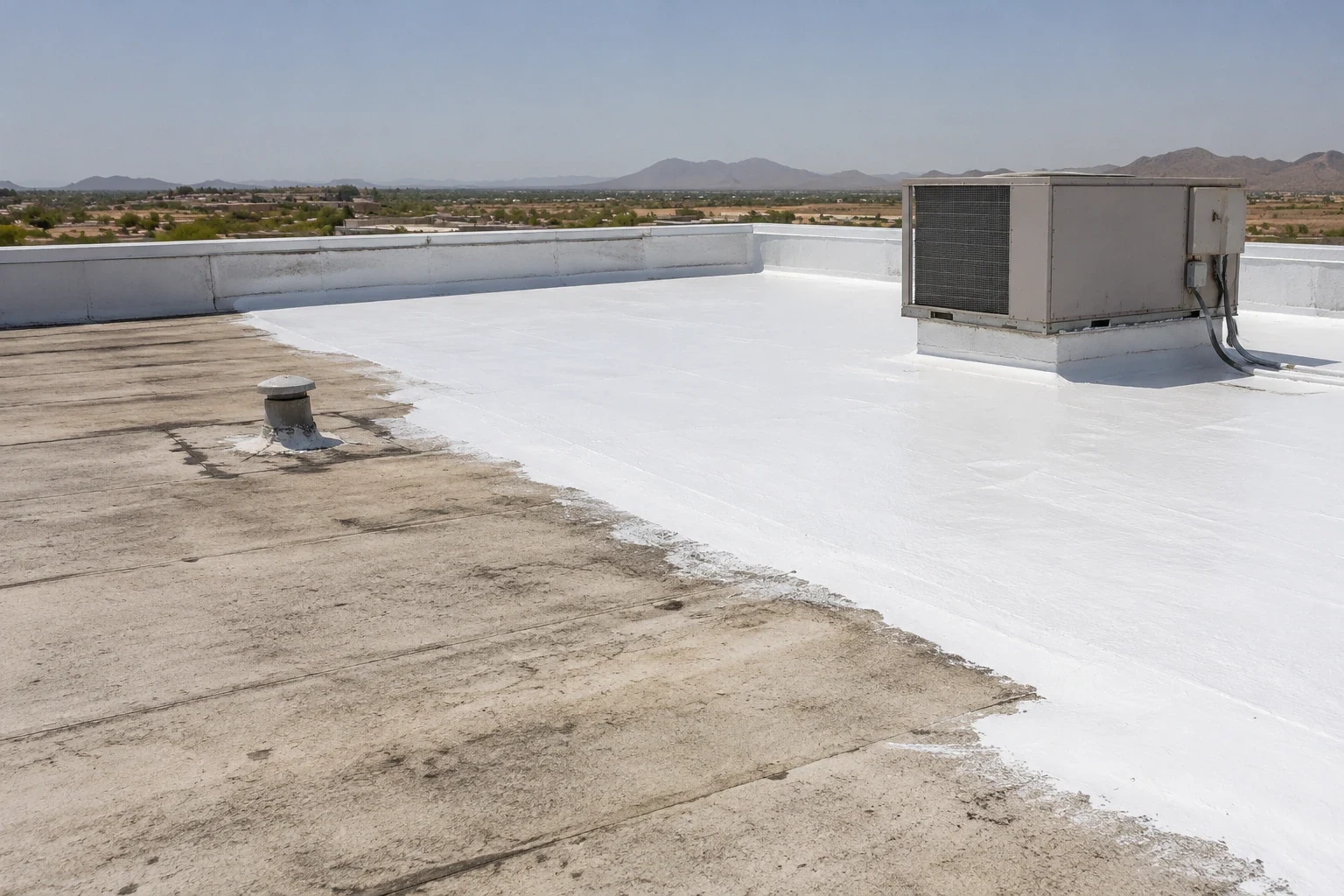
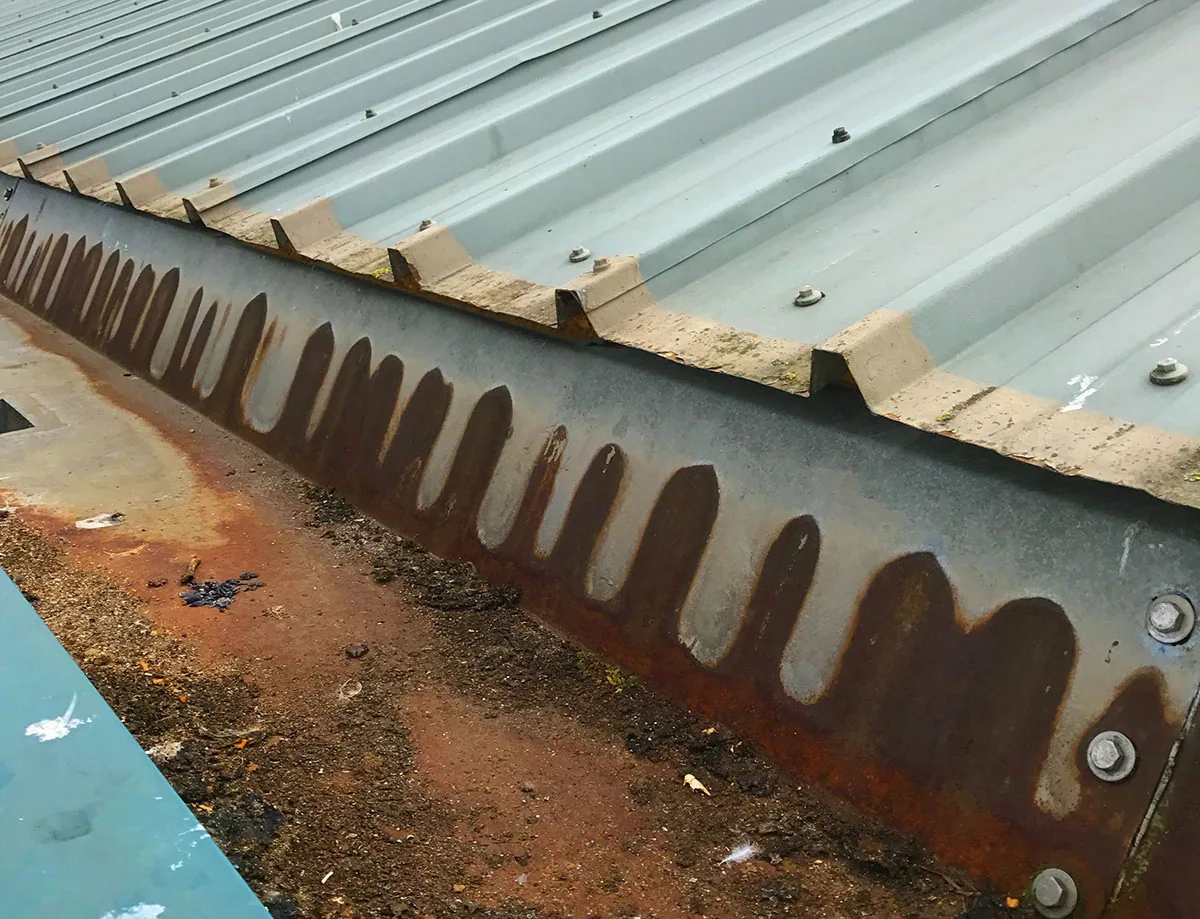
A spray-foam roof relies on the protective coating to shield the foam from sun, water, and foot traffic. A thin or split coating can expose the foam, while a surface repair over wet or damaged material may leave the underlying problem in place. We inspect the coating, foam profile, drainage, and transitions before deciding whether a local repair, recoating, or larger replacement is appropriate.
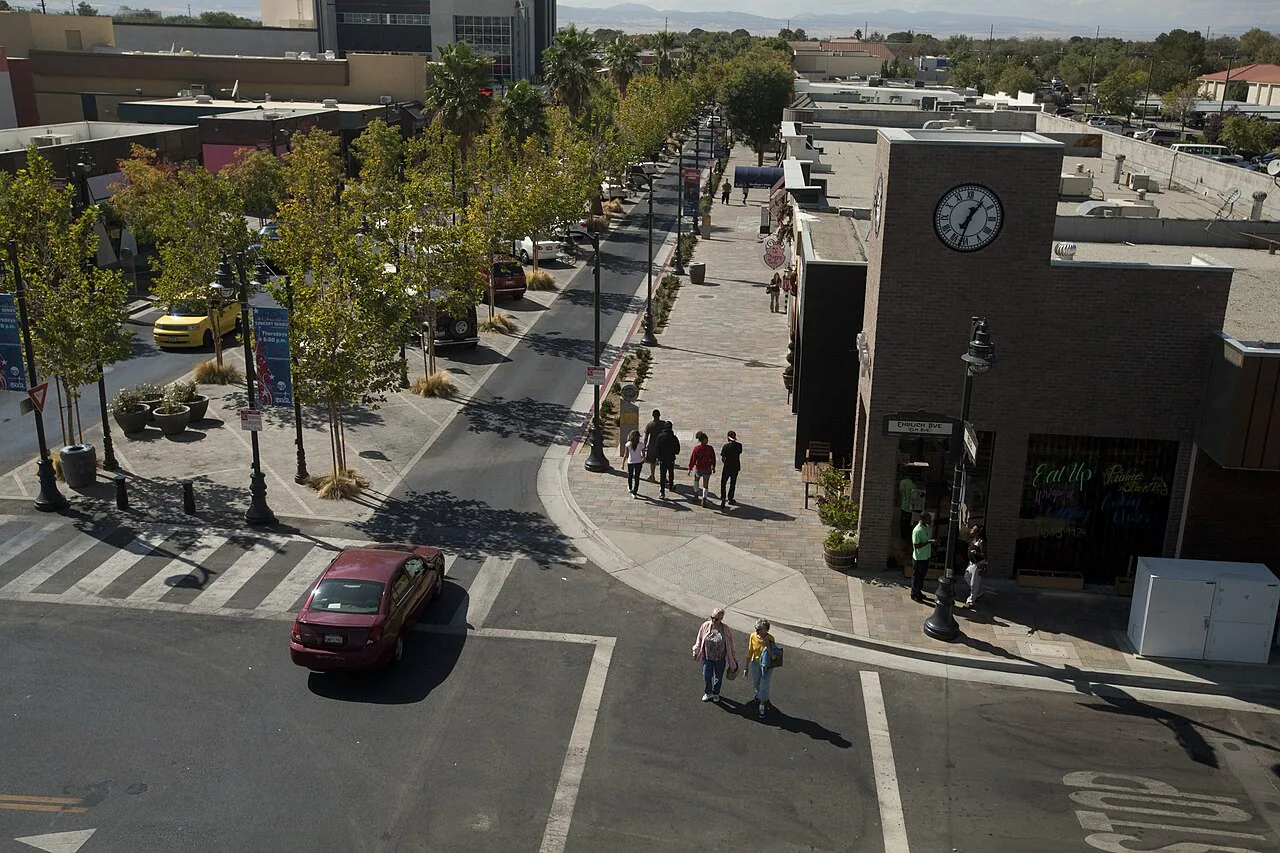
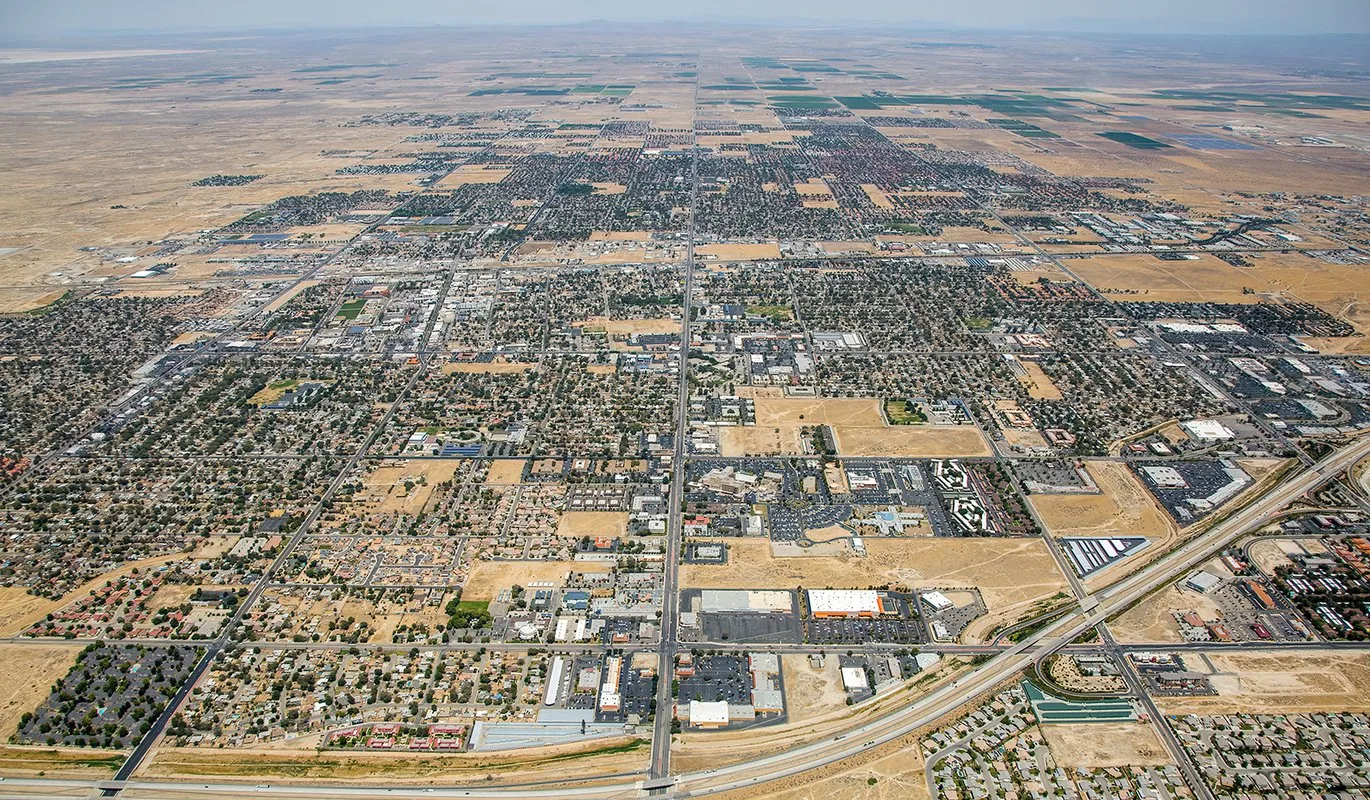
Lancaster’s August normal high at William J. Fox Field is 97.8 degrees, and July averages a high of 90 degrees or more every day. That heat load puts the protective surface through repeated exposure. Around the Fox Field industrial corridor and Lancaster Business Park, rooftop equipment and service routes can also create wear points that need planned access.
Inspect the Protective Layer and Foam Profile
We look for coating erosion, cracks, blisters, pinholes, exposed foam, ponding, and repairs that have separated. The coating thickness can vary across an older roof, especially near drains, ridges, curbs, and areas that receive regular foot traffic. A visual review identifies the affected zones, but representative measurements and test openings may be needed to understand the remaining coating and foam condition.
Exposed foam can absorb moisture and deteriorate under ultraviolet light. We check whether it remains firmly bonded and dry, whether the surface profile still sheds water, and whether previous repairs have cut through stable material. If water has entered below the foam, simply applying more coating is not enough. We identify removal boundaries and show the owner where re-foaming or substrate repair is needed.
Spray foam can create a continuous insulation layer, but a change in slope can redirect runoff or leave a low point. We map water flow and check drains, scuppers, and overflow outlets before selecting a repair. A drainage correction may need to precede coating work where outlet condition is holding water against the foam surface.
Prepare a Dry, Stable Surface for Restoration
Recoating starts with the condition of the old surface. We remove loose coating, dirt, contaminants, and deteriorated foam where the specification requires it, then repair substrate defects and restore the foam contour. Dust left on the surface can interfere with adhesion. We verify preparation in representative areas and identify any coating that cannot serve as a stable base.
The new coating must be compatible with the existing material and applied at the specified coverage and thickness. Product selection depends on exposure, slope, foot traffic, and the details around penetrations. We review manufacturer documents and test compatibility where the old coating is unknown.
At Lancaster properties, hot roof surfaces influence worker safety and application timing. We follow the product’s air and surface temperature limits, moisture requirements, and cure window. Wind can carry overspray beyond the work zone, so we protect nearby equipment, vehicles, intakes, and finished surfaces as the site conditions require. A coating-restoration scope identifies the preparation and application steps rather than treating a new topcoat as the whole job.
Restore Seams, Curbs, and Walk Paths
Foam roofs need compatible flashing at parapets, penetrations, drains, expansion joints, and equipment curbs. We inspect the transition where the foam meets metal or another roof material, then define how the coating and reinforcement will terminate. A crack around a curb may result from movement or an earlier repair that left a sharp edge. The detail should restore a continuous surface without burying access to the equipment.
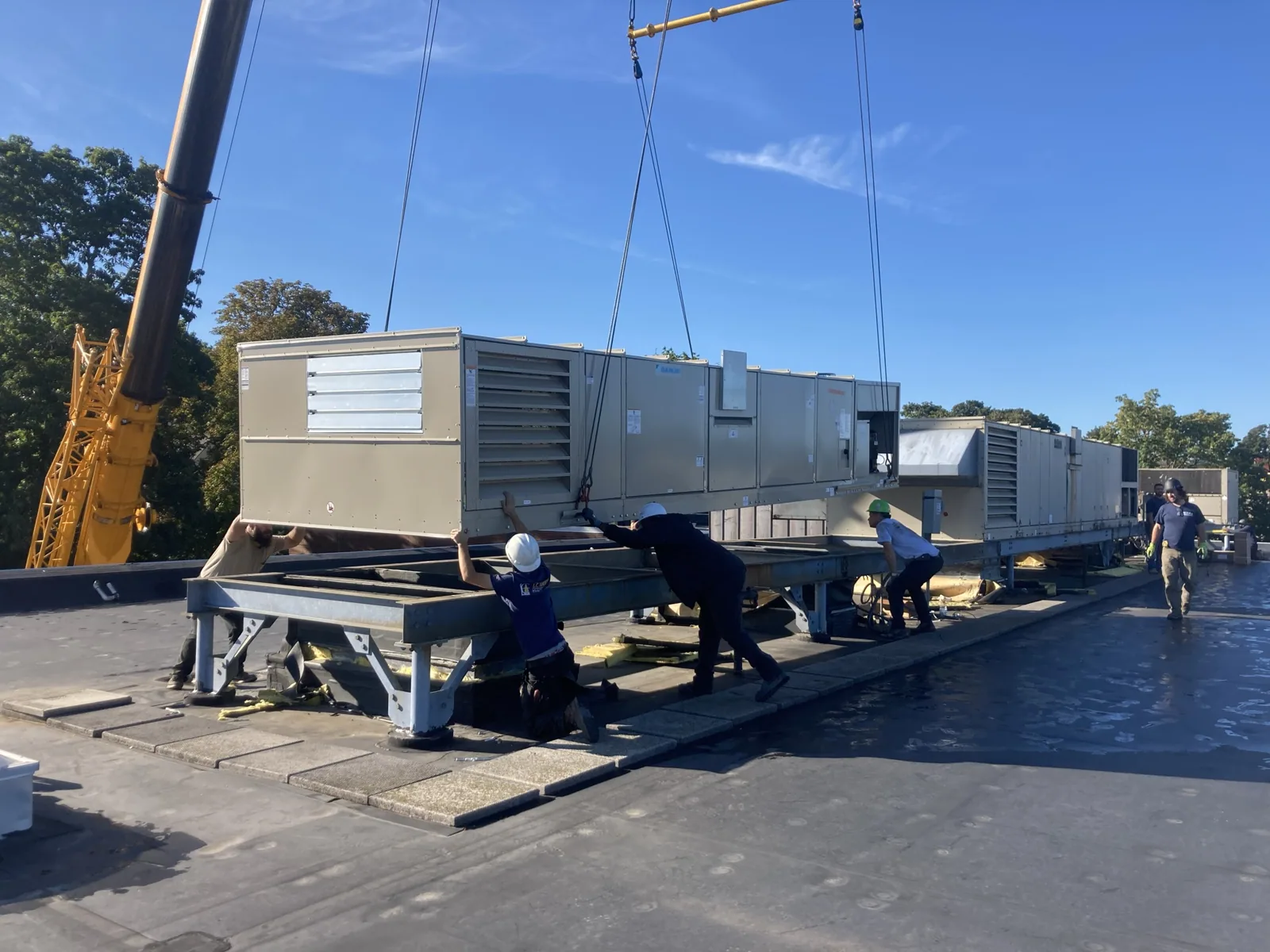
Walk paths concentrate wear. We identify where technicians reach HVAC units, where ladders land, and whether a service route crosses drainage channels. Protection may include a specified walkway coating or durable pads, installed so water can continue to reach outlets. For equipment transitions that need adjustment, curb and support work can be coordinated before the foam repair is completed.
If a roof has several coating repairs, we map each location and identify the material used where records are available. A hands-on inspection can distinguish small surface wear from recurring movement at a curb or edge. Photographs show where a later crew should inspect rather than assume every coating line has the same cause.
Confirm Whether Foam Can Remain
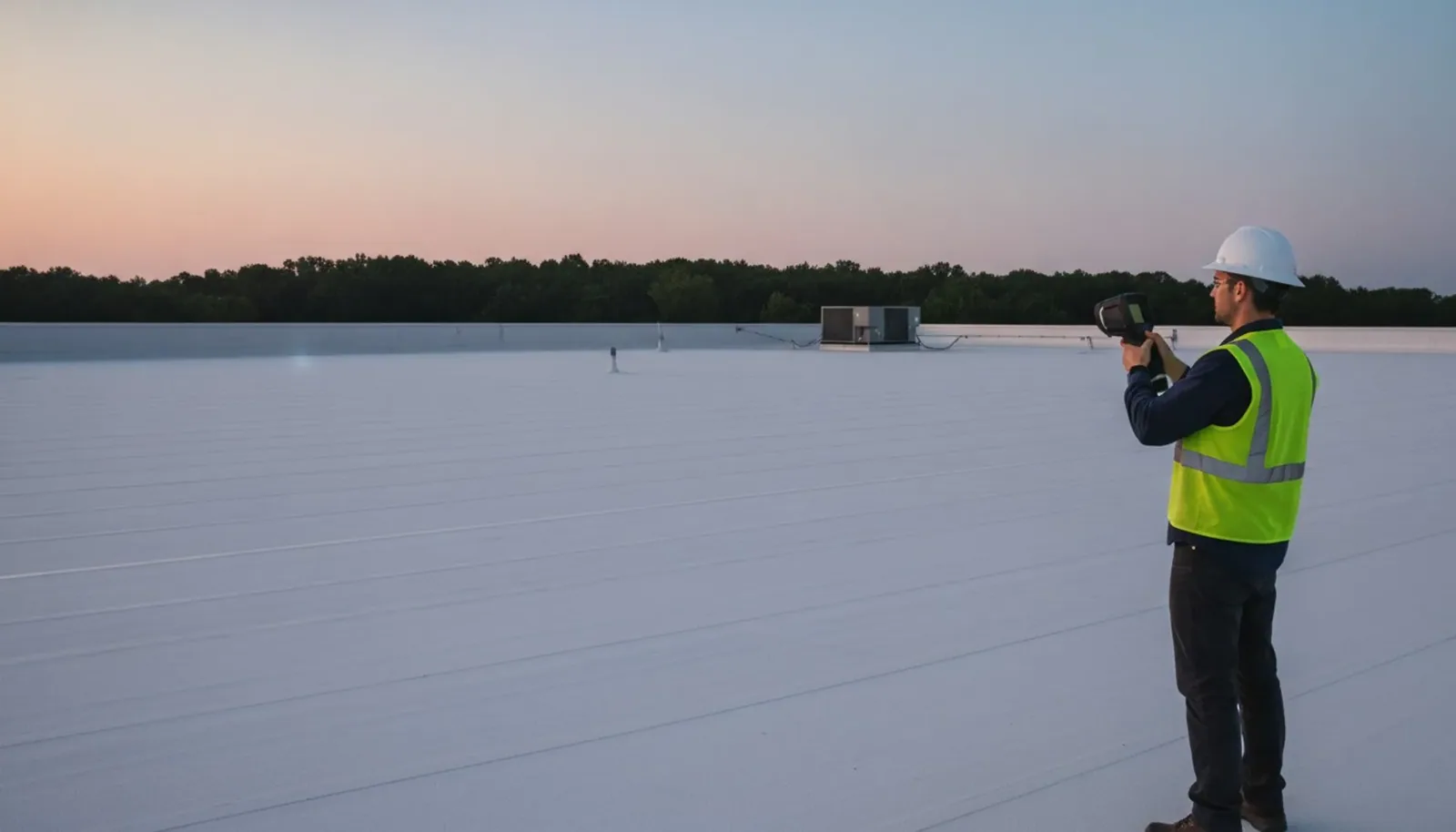
A roof may look dry from above while moisture sits in the foam, cover board, or deck. We compare leak history, thermal patterns, surface condition, and test cuts to determine what is confirmed. Infrared imagery can help prioritize sample points when weather and roof conditions support a meaningful scan; the core reveals the materials at that location. We mark the boundary from evidence and leave untested areas identified as such.
Localized foam damage can be cut back to sound material, re-foamed, shaped to restore the slope, and recoated after preparation. Broad wet areas, loose foam, or deteriorated decking may require removal and a different roof assembly. The owner can compare that work with recoating the sections that remain sound, provided transitions between systems can be detailed reliably. A moisture survey may guide the investigation, while condition documentation keeps confirmed and suspected areas distinct.
For Lancaster projects submitted under the building-code package effective January 1, 2026, the design team confirms applicable California requirements and local amendments. The roofing scope documents the foam and coating assembly, but does not replace code review or energy calculations. Where insulation changes, the project team coordinates the new roof build-up with the required design documents.
Compare Recoat, Repair, and Replacement
Recoat may fit when the foam remains bonded and dry, its slope works, and the existing surface can accept compatible preparation. Local re-foaming is appropriate when damage is limited and the boundary reaches stable material. Replacement becomes more relevant where foam has separated broadly, drainage cannot be corrected through restoration, or the deck and edges need a new system.
We compare these paths by affected area, substrate, preparation, foam thickness, coating layers, flashings, drainage, and access. The proposal states the assumed coating coverage and identifies concealed conditions that could change quantities after opening. If the property wants to phase work, we define boundaries that can be closed and protected each day.
A silicone coating may suit certain restoration projects, while an acrylic system may fit another exposure or slope. Each product has limitations and application requirements. We compare the specified silicone coating or acrylic option against the existing foam and the project’s water-management needs before recommending a finish.
Record the Coating and Repair Boundary
Closeout photos show the foam profile, repaired areas, coating coverage, drains, flashings, and equipment paths. We record the product and application checks required by the project, then identify any areas left for future attention.
Maintenance checks coating wear, exposed foam, ponding, drains, curbs, and walk paths. A new HVAC installation or roof service visit can damage the surface, so the facility team should update the roof record when another trade crosses the membrane. A maintenance program can return to the same repair points and document whether the boundary remains stable.
Send any foam-roof specifications, prior coating records, and leak history when requesting an assessment. We will check surface adhesion, foam condition, drainage, and transitions, then explain which restoration or replacement scope fits the roof.
Commercial Roofing Questions
Can an SPF roof be recoated instead of replaced?
Recoating can work when the foam is bonded and dry, the profile drains, and the old coating can accept compatible preparation. We inspect those conditions and identify repairs needed before a new layer is applied.
What does exposed foam mean for the roof?
The foam can deteriorate when it remains unprotected from sun and water. We inspect its bond, moisture condition, and surrounding coating, then determine whether a local cutback and re-foam or broader replacement is needed.
How often does spray foam roofing need new coating?
The interval depends on product requirements, coating thickness, roof exposure, drainage, and foot traffic. We assess the remaining protective layer and use project records to recommend an inspection or restoration timing.
Can spray foam fix a ponding area?
Foam can be shaped to create slope where the substrate and design allow it, but the discharge path still needs to reach a working drain or scupper. We measure elevations and verify the outlet before restoring the surface.
How do you know whether moisture has reached the roof deck?
A test opening shows the layers at a particular point. Infrared patterns may help choose samples, but the opening and repair record determine what was found and where the confirmed boundary lies.