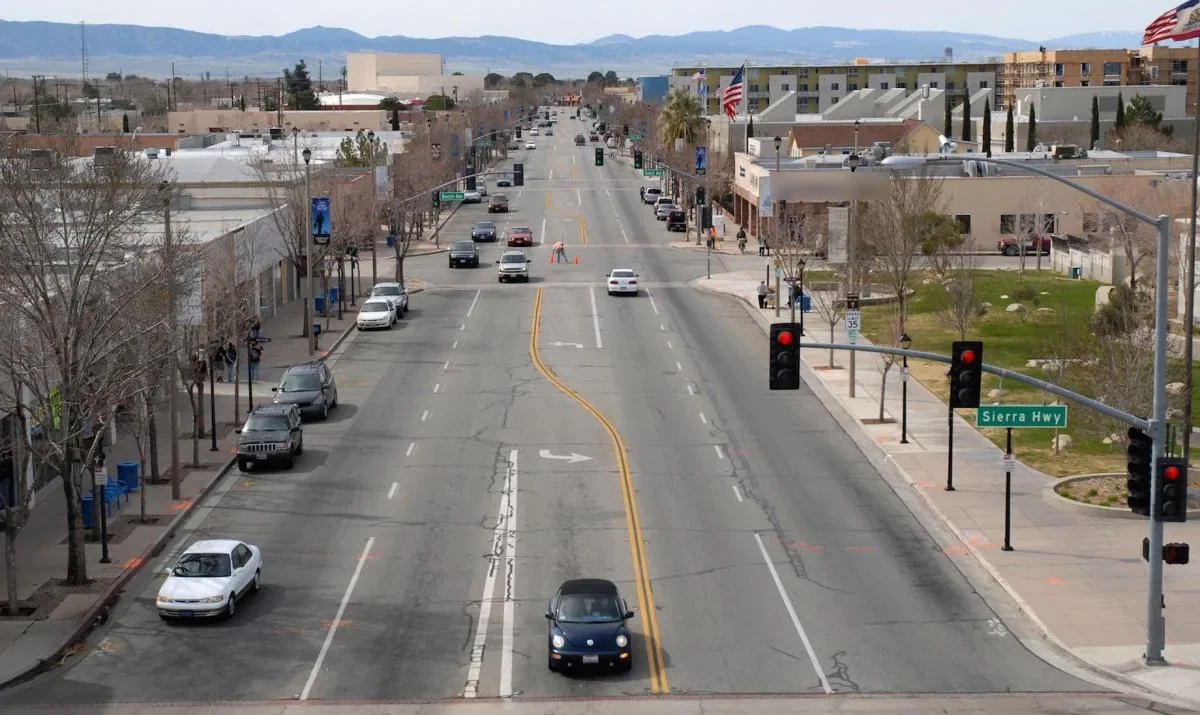
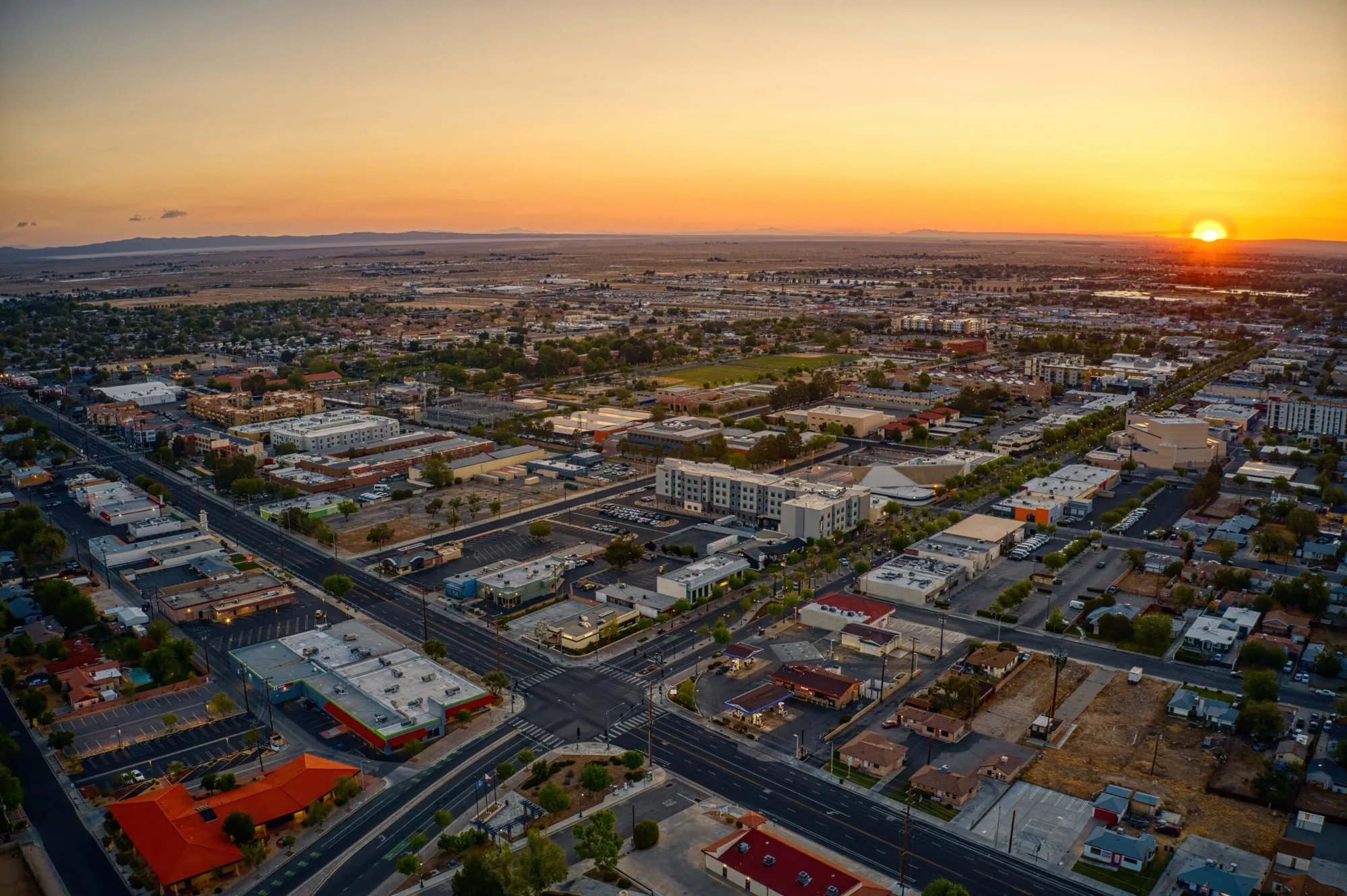
Enterprise Business Park is a 74.02-acre commercial area near Sierra Highway and Avenue K-8 in Lancaster. The city inventory lists office, light-industrial, and retail uses, creating a setting where occupied suites, customer access, service equipment, and loading needs may meet within a compact district. Commercial roofing work here should be planned for the individual property and the people using it, rather than relying on a generic business-park schedule.
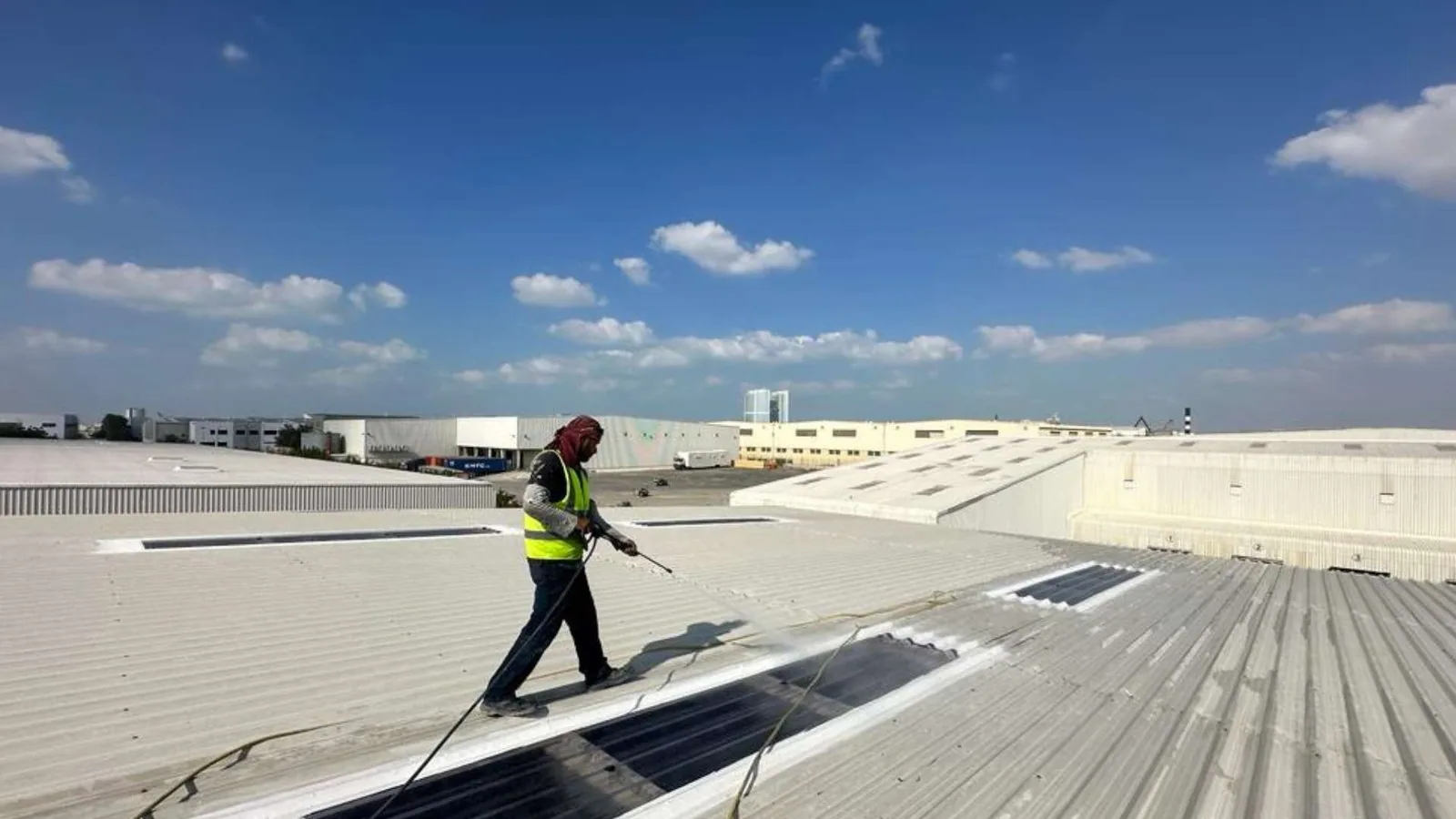
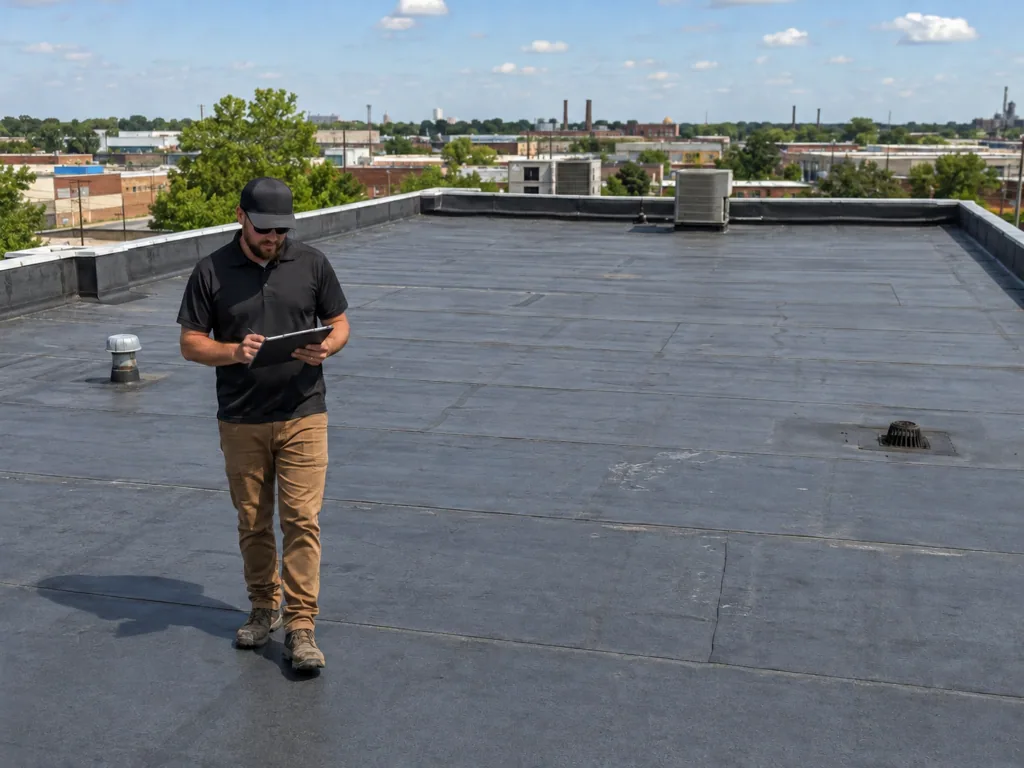
A roof assessment documents what is installed, where the water or deterioration appears, and what work can be completed without disrupting the building more than necessary. We inspect transitions, penetrations, drains, edges, and accessible membrane areas, then connect findings to roof zones. The resulting scope can distinguish urgent leak response from scheduled maintenance or a larger replacement decision.
Coordinate around tenants and customers
An occupied office or retail property requires a clear plan for entry, parking, deliveries, and pedestrian protection. Before work starts, identify customer-facing doors, accessible routes, tenant hours, and areas where noise or odors need advance notice. If equipment or materials must pass through a shared drive, coordinate the route and delivery window with property management. A simple daily map can show which roof zone is active and where temporary restrictions apply. Related planning may include Lancaster Business Park.
Light-industrial space brings other constraints, including vehicle movement, exhaust equipment, and service access. We confirm whether rooftop fans or systems can be shut down and who has authority to approve that interruption. Where a tenant operates sensitive equipment or inventory below the roof, the protection plan should describe the interior area, expected activity, and response if water appears during removal. These details belong in the schedule and site briefing, not only in a contractor's Diligence Notes. Related planning may include Downtown Lancaster.
Use the inspection to define the real repair boundary
Begin with the reported condition and trace it into the roof assembly. Staining inside a suite can be influenced by a penetration, a seam, a drain, or a wall transition outside the apparent ceiling area. We compare interior observations to roof conditions and document the supporting evidence. If testing is appropriate, state its location and limits. The owner can then decide whether the repair is localized, whether more investigation is justified, or whether a larger section has reached the end of practical service. Related planning may include North Lancaster Industrial Center.
A clear estimate names the affected zone and describes preparation, materials, tie-ins, and verification. For instance, correcting a curb flashing does not automatically repair wet insulation or a blocked drain nearby. If removal exposes additional damage, the crew should pause, photograph the finding, and seek authorization before extending the work. This decision point protects both budget control and the quality of the repair because the final scope stays connected to what was found. Related planning may include commercial roof leak repair.
Review drainage and rooftop service routes
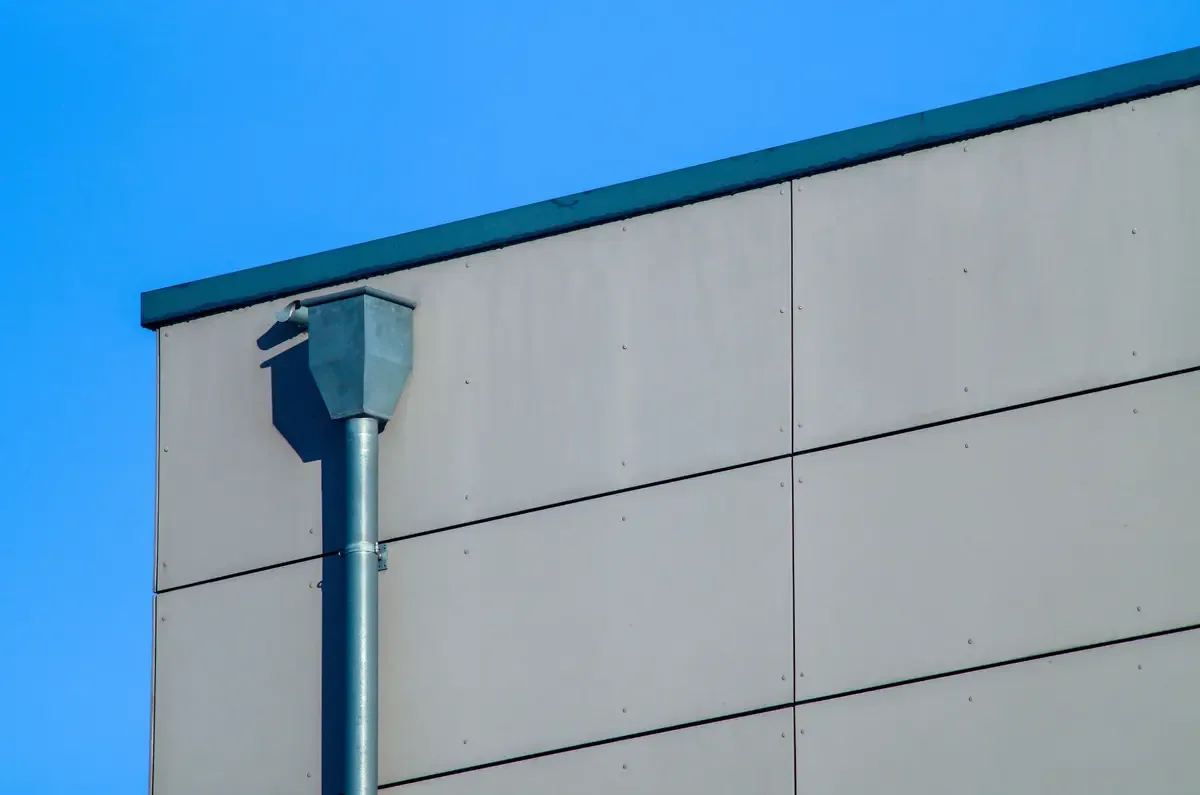
Retail and office roofs can collect debris around parapets, rooftop equipment, and low areas that are difficult to see from a hatch. We check the flow path from high points to drains or scuppers, look for sediment and water lines, and note obstructions caused by abandoned supports or service materials. Lancaster receives relatively little precipitation annually, yet intense short events can reveal poor drainage. The inspection should report outlet condition and any standing water instead of assuming that a dry-weather visit proves the roof sheds water. Related planning may include roof drain service.
Equipment technicians often need a predictable path to fans, condensers, conduits, and controls. A roofing project should preserve that access where possible and restore flashing after service work disturbs it. We mark equipment clusters, identify unsupported piping or exposed penetrations, and note where recurring foot traffic wears the membrane. If a walkway pad or support correction is considered, confirm the load and attachment details before installation so the added component does not create a new leak point. Related planning may include roof condition reports.
Choose a realistic repair or replacement scope
Repair is often appropriate when a defined detail or limited area has failed and surrounding materials remain serviceable. Restoration depends on the condition of the existing surface, attachment, substrate, moisture, drainage, and compatibility of the selected coating or overlay. Replacement may be more appropriate when defects are widespread, insulation is wet, or prior layers prevent a reliable tie-in. We explain the evidence behind the recommendation and identify what is known, what was tested, and what would change the decision. Related planning may include shopping-center roofing.
The city’s listed mix of office, light-industrial, and retail uses does not make neighboring roofs comparable. One building may have an older built-up roof while another has a single-ply membrane installed during a later tenant improvement. We record each assembly separately and avoid carrying assumptions between properties. That is particularly important for portfolio bids: consistent formatting makes costs easier to compare, while building-specific details protect the technical scope from being oversimplified.
Close out the work with tenant-ready communication
Before mobilization, property management should know the expected sequence, access points, tenant notices, protection measures, and after-hours contact. During work, provide a short update when the active zone changes or when concealed conditions alter the plan. At closeout, share photographs, completed repair limits, product information, warranty documentation where applicable, and any remaining recommendations. A useful handoff tells the next manager exactly what was repaired and where the record can be found.
For retail and office tenants, restore routes and confirm that barricades, debris, and temporary materials are removed. For light-industrial occupants, verify service access and communicate equipment status with the responsible operator. A follow-up inspection after significant rain or after a defined interval can check that the correction performed as intended. These steps turn a one-time repair into a reliable maintenance history for the property manager and its tenants.
A property manager can prepare tenants by naming the affected date, roof zone, entry or parking change, and contact for immediate concerns. Avoid promising that no noise or interruption will occur; instead, describe the expected activity and how updates will be provided if the sequence changes. For interior protection, identify the rooms below the work and move sensitive items before removal begins. When a building has multiple tenants, management should establish one person to collect reports so a new ceiling stain is not mistaken for a separate roof leak without investigation.
Commercial Roofing Questions
Can roofing crews work around retail hours?
The schedule can often avoid peak customer periods or use defined work zones. Access, safety, noise, weather, and the type of repair determine what is feasible, so the plan is confirmed with management before mobilization.
Does Enterprise Business Park include only offices?
No. The city inventory identifies office, light-industrial, and retail uses. Each property still requires a building-level review because its roof assembly and operating constraints are site-specific.
What does a tenant need to know before roof work?
Give tenants the dates, affected routes, noise or odor expectations, protection steps, and contact for urgent concerns. If interior protection is needed, identify the rooms and timing before a roof section is opened.
Can you inspect more than one building in the park?
Yes. We can coordinate several roofs in one visit, then keep each property’s findings, photographs, and scope separate for accurate maintenance and budget decisions.
How can we tell whether water entry is resolved?
Closeout documentation should state what was repaired and where. Follow-up observation after rain, review of interior reports, or targeted reinspection can confirm performance; the method depends on the original failure and access.