
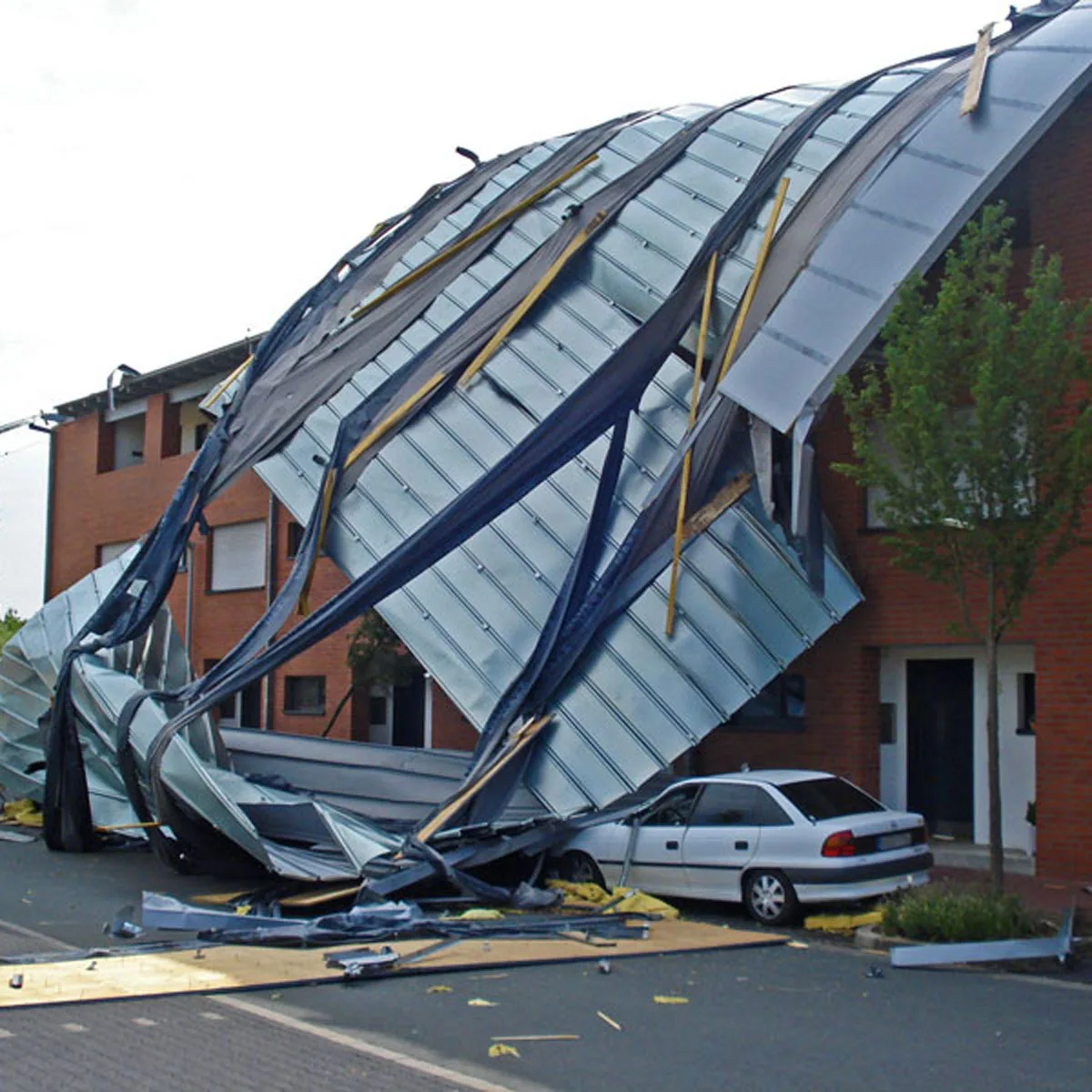
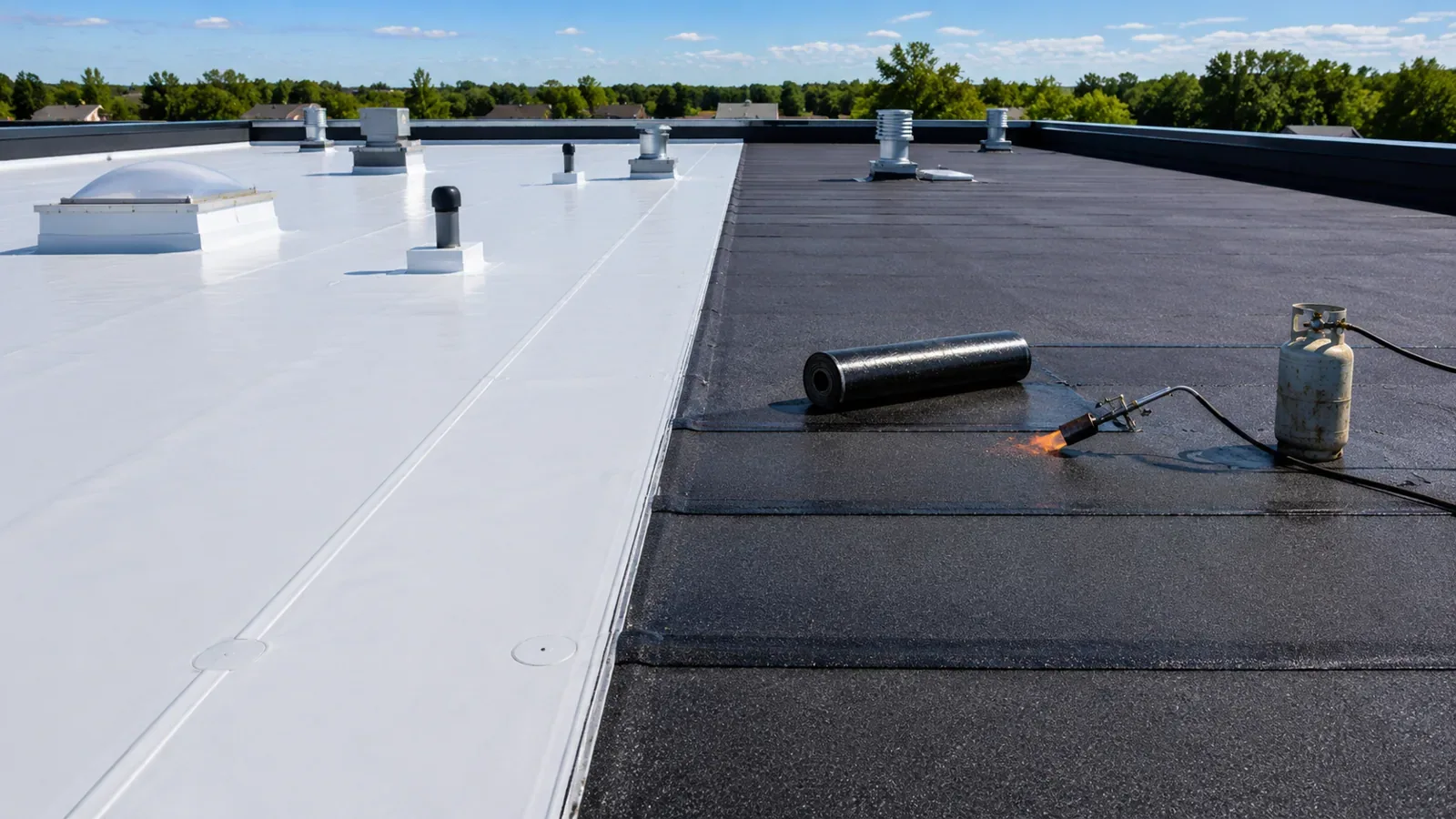
Roof damage can range from an open lap to a puncture, fire exposure, or water trapped below the membrane. The useful response begins with safety, temporary protection when needed, and inspection of the affected area. We document what is visible, test where it changes the work boundary, and separate confirmed roof damage from conditions that need another trade.
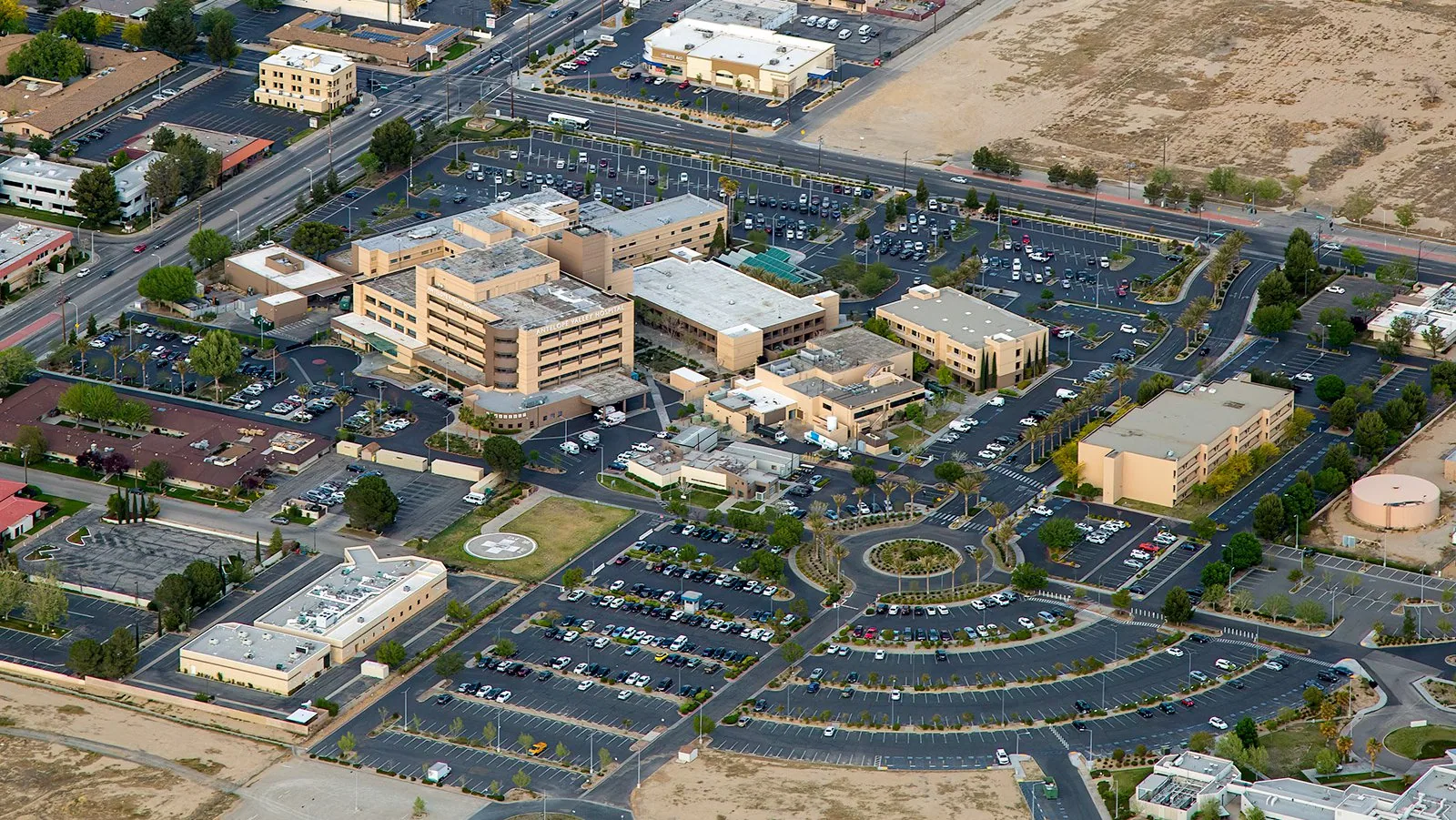
Lancaster's industrial and business park properties have different roof layouts and access needs. Local heat and seasonal rain inform timing, while inspection evidence determines the repair.
Roof Damage Repair
More About Our Roof Damage Repair
Which condition is affecting the roof?
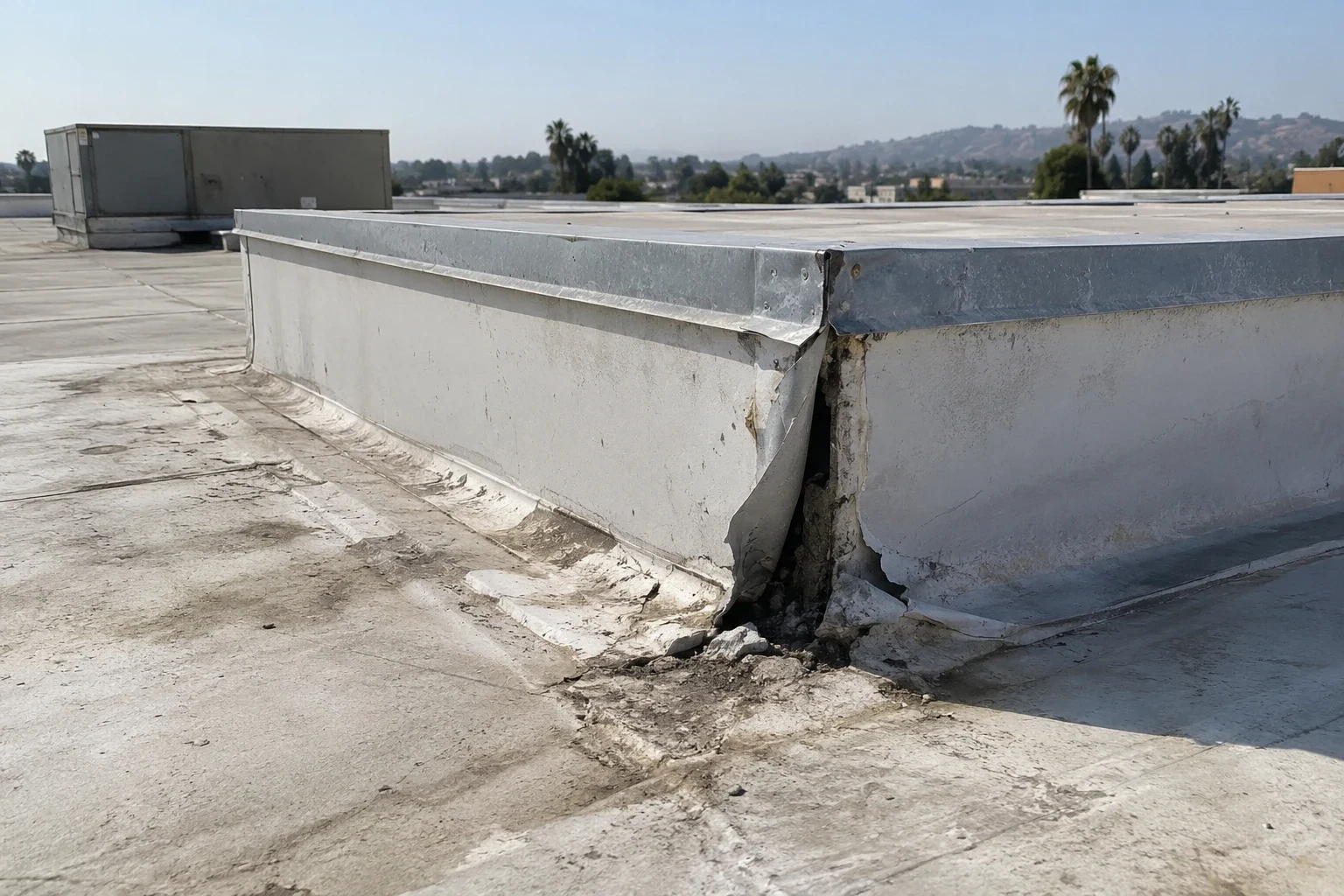
Wind damage can lift edges or displace details; ponding water may signal drainage or slope concerns. Flashing failure and seam separation require inspection of their adjoining roof materials. A puncture can be small at the surface but still require a moisture check below.
When does the building need immediate protection?
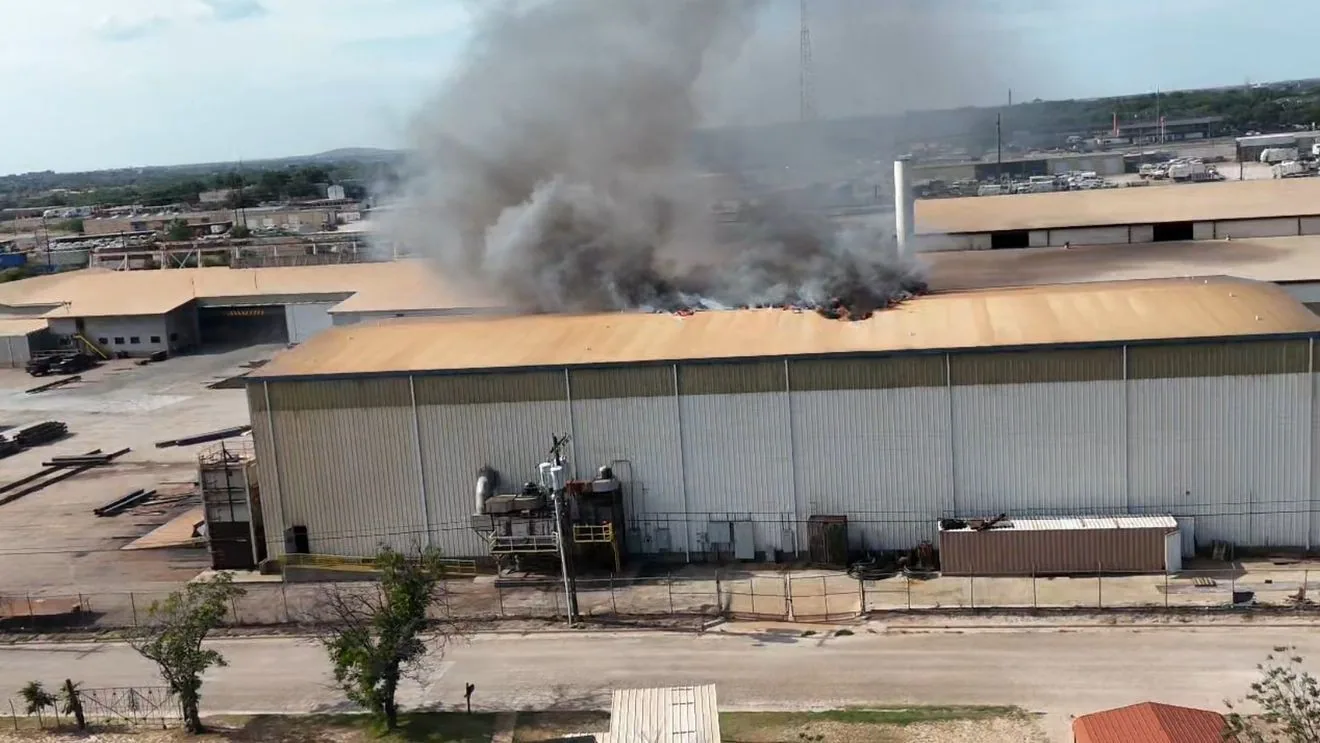
For active water entry, emergency roof repair can reduce further exposure when access is safe. Photograph the roof before covering when practical, record what the temporary measure protects, and identify the permanent work still needed. Fire-damaged areas may need safety clearance before a roofing crew can inspect the assembly.
How is the repair boundary set?
Map the defect, adjoining seams, penetrations, drainage, and interior report. Testing may show whether water or heat affected insulation and substrate beyond the visible area. The report should identify accessible and untested sections, materials, repair limits, and conditions that could change after opening the roof.
A fire damage review separates heat, impact, and suppression water. Heat and UV wear may call for a different inspection than a sudden opening. Each finding should remain tied to its own roof zone and evidence.
Keep temporary and permanent work distinct
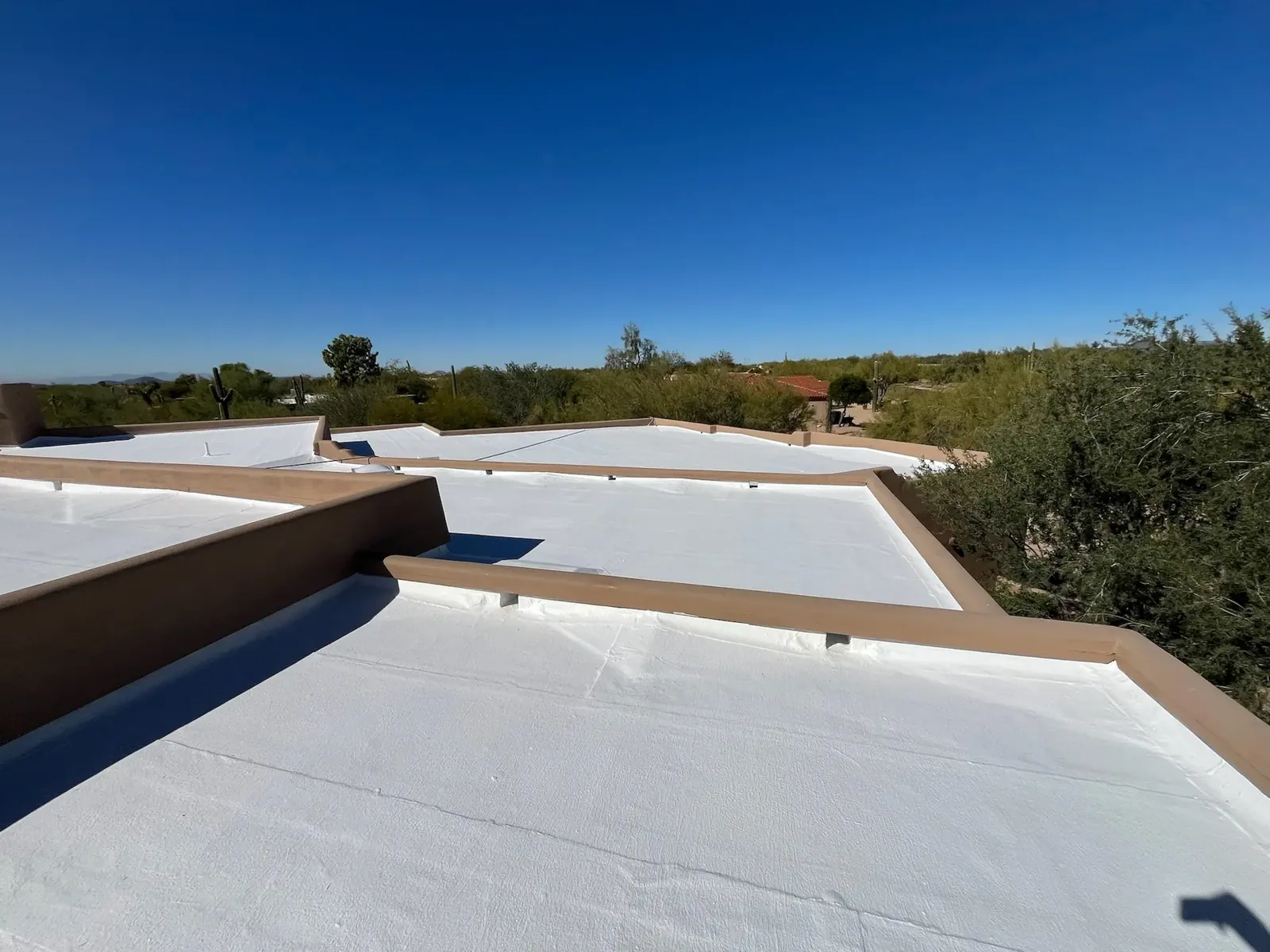
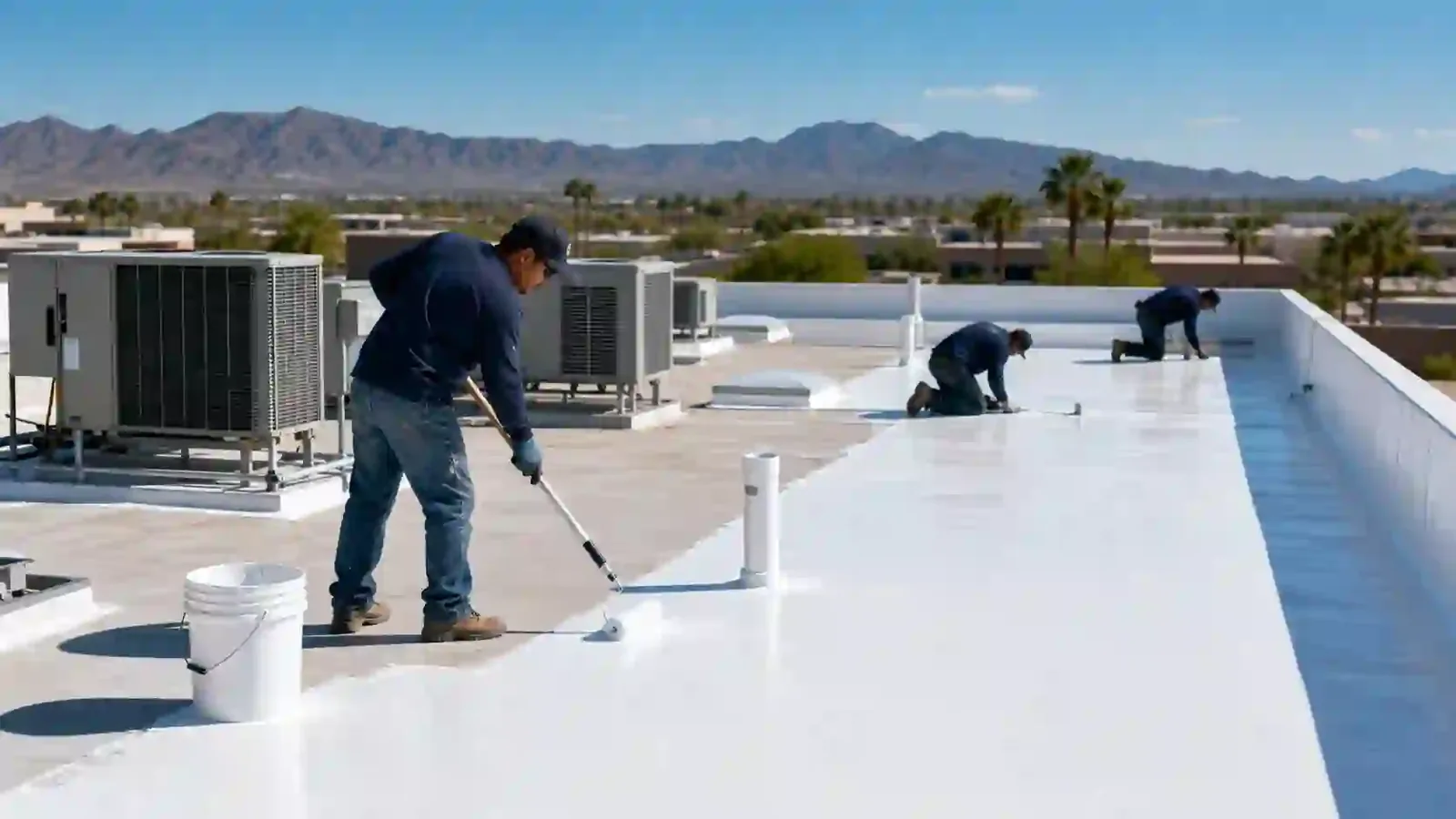
After permanent work, document materials, photos, repaired roof zones, and unresolved conditions. If a temporary patch remains, label it clearly and assign a follow-up. A later inspector should be able to tell whether a defect returned at the same location or appeared somewhere else.
Share roof plans, leak dates, equipment history, and access limits before an assessment. The scope can then address the affected area without assuming the entire roof has the same condition.
Commercial Roofing Questions
Should we cover a roof opening immediately?
Protect an active opening when safe and keep the temporary material clear of drains. Photograph the condition when possible and arrange an inspection for the permanent repair boundary.
Does a damaged area mean the full roof failed?
Not necessarily. Inspect and test surrounding materials, then identify which sections support a broader recommendation.
Can a roof be repaired during occupied operations?
Often, with planning for access, staging, protection, and any space below an opening. The property contact should identify restricted areas and schedule needs.
What should be included in the repair record?
Include the roof-zone reference, photos, materials, work boundary, tests, and conditions left for follow-up. Keep temporary work distinct from permanent correction.
Request a Lancaster roof damage assessment
Share the event or leak date, roof plan, interior reports, and temporary work records. We will inspect the affected areas and document repair needs.


