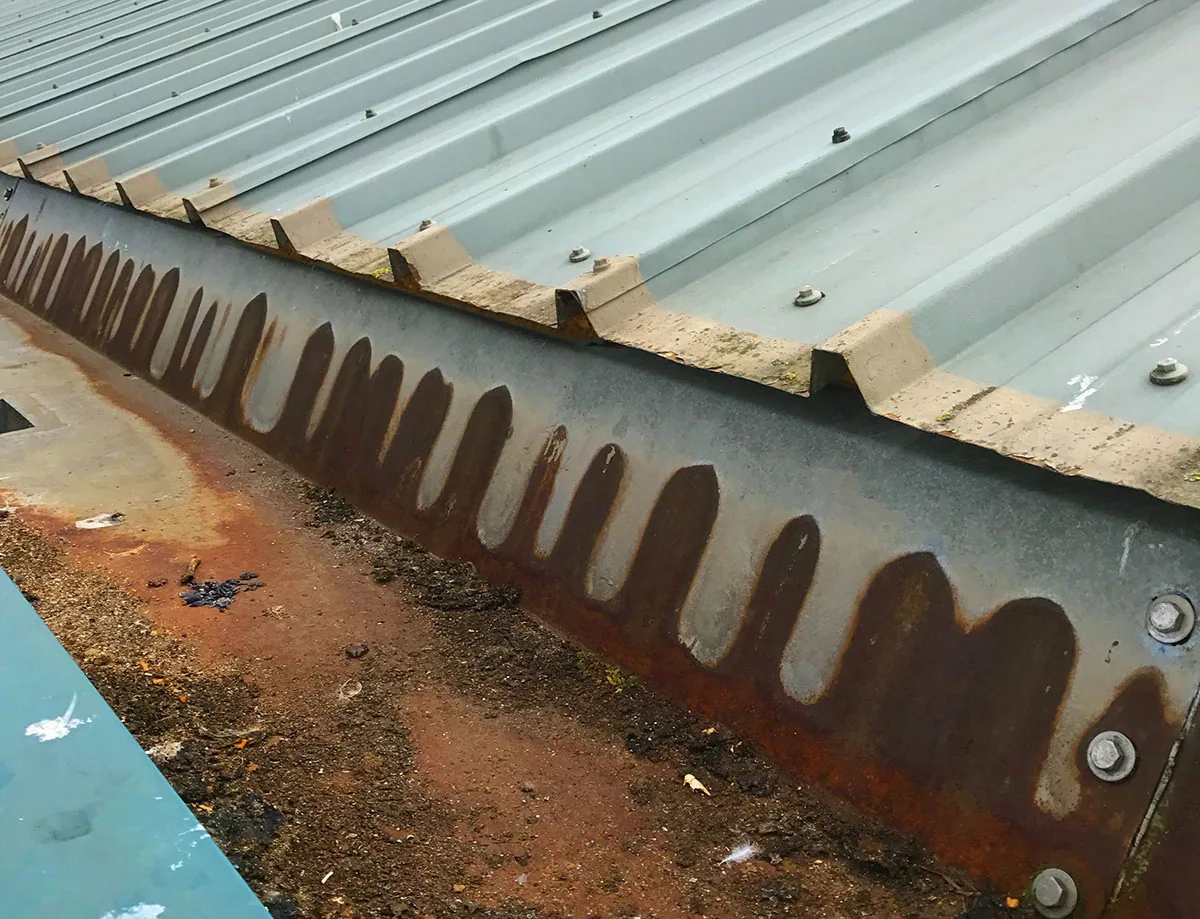
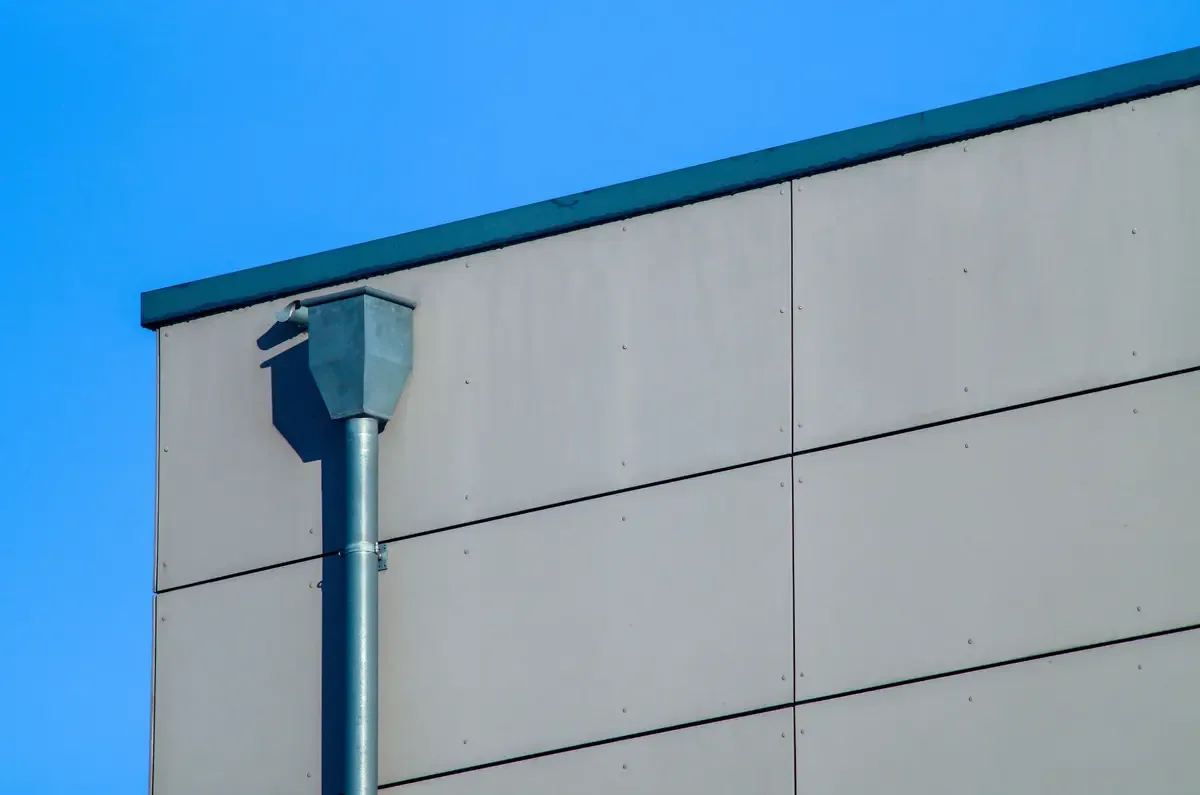
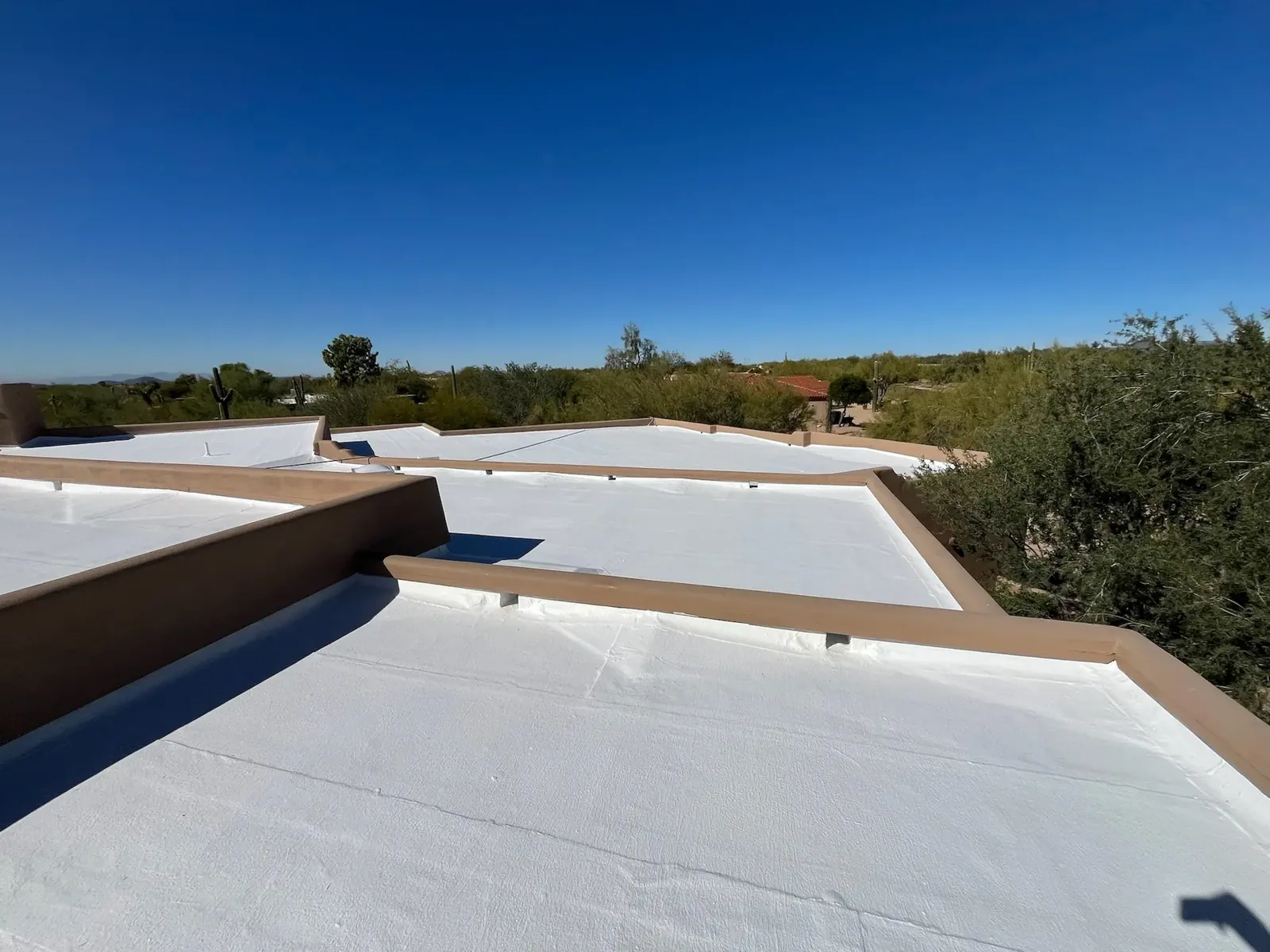
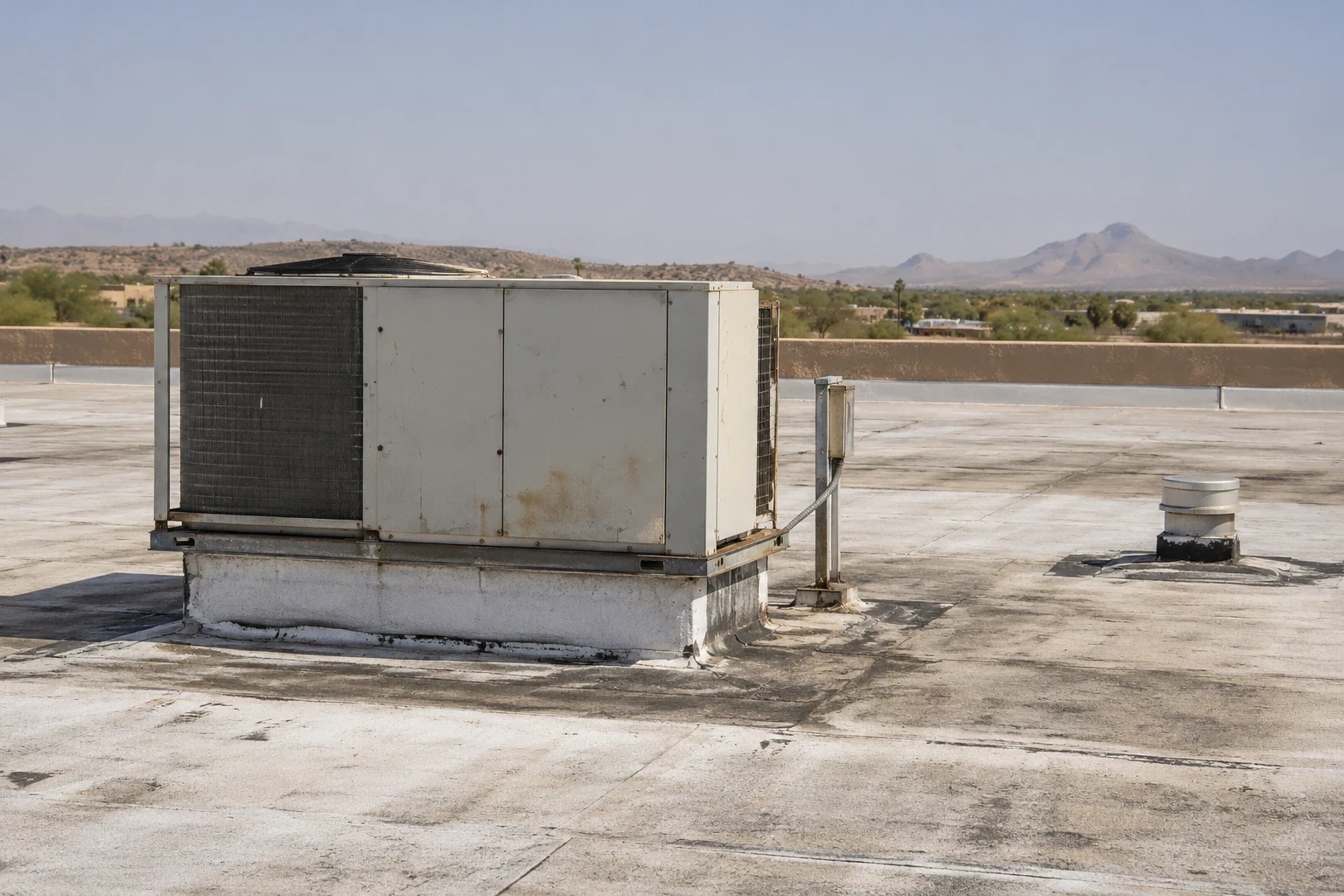
A split flashing detail leaves a small path with a large roof area above it. Water can enter where membrane turns up at a wall, curb, parapet, or pipe, then travel before it reaches a ceiling. We inspect the transition, adjoining surface, and substrate, and compare that evidence with the reported interior condition. The repair boundary should follow the actual failed detail and the material that can support a durable tie-in.

Lancaster's business and industrial planning areas include Lancaster Business Park and North Lancaster Industrial Center. Those settings contain different roof shapes, penetrations, and access patterns. On a Lancaster Business Park property, a low curb may meet office or retail space; a North Lancaster Industrial Center building can have more extensive equipment and piping. The inspection should name the roof transition at issue.
Inspect the Transition from Both Sides
Look at the flashing height, termination bar, counterflashing, fasteners, sealant, and membrane connection. At a curb, check corners and changes in geometry where material must fold or be reinforced. At a wall, inspect whether the termination remains secured and whether adjacent masonry or siding has opened. A nearby stain does not prove which layer failed; compare the roof detail with the interior route and test when the source remains uncertain.
Photograph the detail at close range and in context so the owner can see how it meets the field membrane. Identify if the flashing is concealed by equipment or a recent repair. A roof inspection can document adjacent seams and drainage as well, since water at a wall can originate upslope. The report should distinguish a confirmed separation from a suspected one and list any access limits that prevent a complete view.
Understand Why Flashing Pulls Away
Movement, poor adhesion, incompatible materials, weathering, and service work can all contribute to a flashing defect. A pipe or curb that moves independently of the roof can stress the membrane at its connection. Older sealant may crack or lose contact, while a patch over contaminated or damp material may not bond. The repair should address the mechanism visible at the detail rather than add another layer over a loose edge.
Lancaster's summer temperature range puts repeated movement on exposed seams and terminations. The William J. Fox Field station's normal August high reaches 97.8 degrees Fahrenheit, and its January normal overnight minimum is 31.3 degrees. A flashing repair needs a compatible material and a secure transition that can accommodate expected movement. If the substrate is wet or unstable, replacing surface sealant alone will not restore the attachment beneath it.
Trace Moisture Beyond the Wall or Curb
Once the suspected opening is found, determine whether water remains in insulation or has reached the deck. A moisture survey or selective opening can help establish the wet boundary, but the test area and limitations should be recorded. If the interior stain appears at a different location, follow framing lines, seams, and drainage paths rather than expanding the repair based only on the ceiling mark.
The roof plan should show where the flashing ends, what field area drains toward it, and which overflow paths remain open. Lancaster's normal precipitation is concentrated in the cool months, so a detail that looks dry during summer may still be exposed under a later storm. A drain and scupper check can rule out a nearby outlet issue, while ponding water evaluation can address a low point separately. Keep the cause assessment tied to observed conditions.
Rebuild a Sound Tie-In
Remove loose or incompatible material until the repair reaches a clean, sound surface. Replace damaged flashing or reinforcement as the roof system requires, prepare the substrate, and restore the termination without trapping water. At corners and irregular curbs, detail continuity matters; gaps, fishmouths, and sharp folds can leave a new path. The proposal should state the material, preparation, fastening or bonding method, and the boundary that will be restored.
A commercial roof repair may be enough for one isolated transition when nearby membrane is stable. If flashing failures recur at several details or moisture extends beneath the field, compare a broader repair with replacement planning. A wind damage review may be relevant when a lifted edge or movement contributed to the separation. The scope should separate flashing work from any wall, equipment, or interior correction by another trade.
Coordinate Equipment and Building Use
Before work, identify roof access, equipment shutdowns, nearby exhaust or piping, interior protection, and who can release the affected area. A flashing repair near an air intake or occupied room may need a specific window. Confirm whether a mechanical contractor must isolate a line or brace a support before the roofer can restore the transition. Include those dependencies in the work plan so no one leaves a temporary opening unprotected.
North Lancaster's industrial context can mean process lines and roof equipment share a crowded area; Lancaster Business Park includes office, light industrial, and retail uses that may share tenant routes. A manufacturing facility roof plan should identify equipment clearances, and property management coordination can establish who approves tenant access. The report should say if a nearby service detail was not part of the flashing repair, especially where other trades may return.
Photograph the Completed Detail
After repair, capture the prepared substrate where practical, the finished flashing, termination, corner work, and the adjoining membrane. Record the materials, exact roof zone, and any unresolved moisture or inaccessible area. If the owner later sees a stain, these details help determine whether water followed the same path or entered elsewhere. Keep temporary measures clearly labeled so they do not become confused with permanent work.
A maintenance review can revisit known transitions before the wetter part of the year. The useful checklist is specific: confirm attachment, inspect sealant that remains part of the system, and verify that drains or overflows nearby stay clear. Record any equipment changes that could move the curb or introduce a new penetration. A repair history tied to the roof plan helps the next facilities manager see what was rebuilt and what still needs investigation.
Questions About Flashing Failure
Flashing is a transition, not a generic patch area. These answers explain what affects diagnosis, repair extent, and the decision to investigate beyond one detail.
Commercial Roofing Questions
Can a new bead of sealant fix flashing that is pulling away?
Only if the underlying detail remains secure and the system permits that repair. Loose or contaminated material usually needs to be removed so the new flashing can bond or fasten to a sound surface.
Why is the ceiling stain away from the flashing?
Water can move along a deck, framing member, or insulation joint before it reaches an interior finish. Compare the roof detail with the path above the room and use testing if the source remains unclear.
Does every failed flashing require a large roof repair?
No. A contained detail may be repaired locally when the substrate and adjacent membrane are serviceable. Moisture or repeated movement beyond that boundary can change the scope.
Should the equipment contractor handle a curb leak?
The scope should assign support, piping, curb, and roof-plane responsibilities before work starts. Coordinate each trade, then identify who restores the flashing connection.
What should the repair closeout show?
Keep close-up and context photos, materials, roof-zone reference, work limits, and any conditions left for testing. Note whether the repair is permanent or temporary.
When should we test below the flashing?
Testing is useful when the wet area is uncertain, the substrate may be involved, or a broader repair decision depends on the moisture boundary. Record locations and limitations so results are interpreted in context.