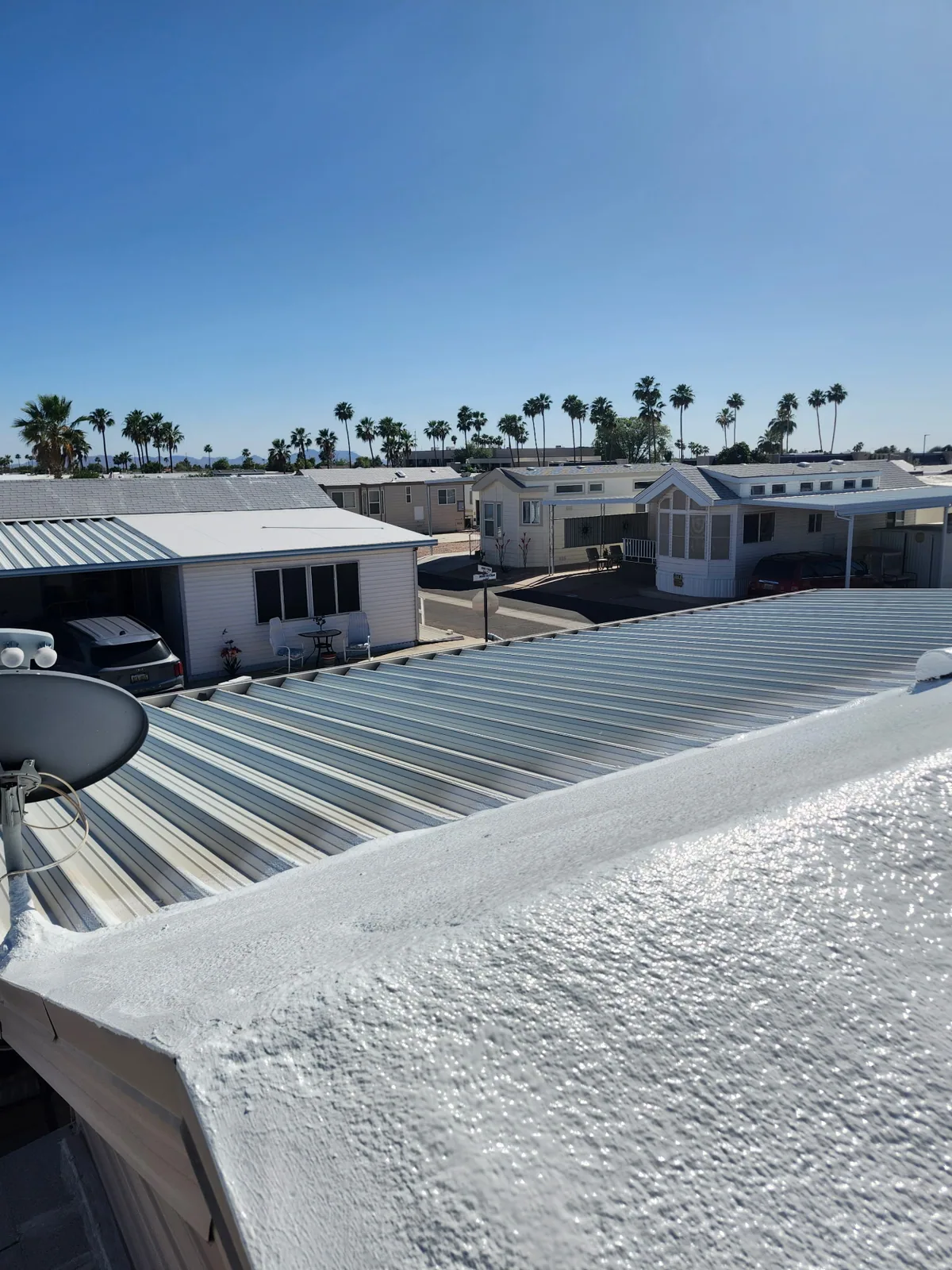
An acrylic coating can restore a suitable roof surface, but it cannot correct every seam, low area, or wet layer beneath it. The decision depends on the existing membrane, slope, water exposure, preparation needs, and product specification. We inspect those conditions first, test whether the surface can accept the proposed material, and show which repairs must be completed before a coating is applied.

Lancaster’s planning inventory includes commercial, medical, and business-park districts. At Lancaster Business Park, an office, retail, or light-industrial roof may have different service routes and drainage layouts. The nearby Lancaster Health District also includes medical offices and supporting commercial uses, where scheduling and interior protection can affect the application plan.
Check the Roof Surface Before Choosing Acrylic
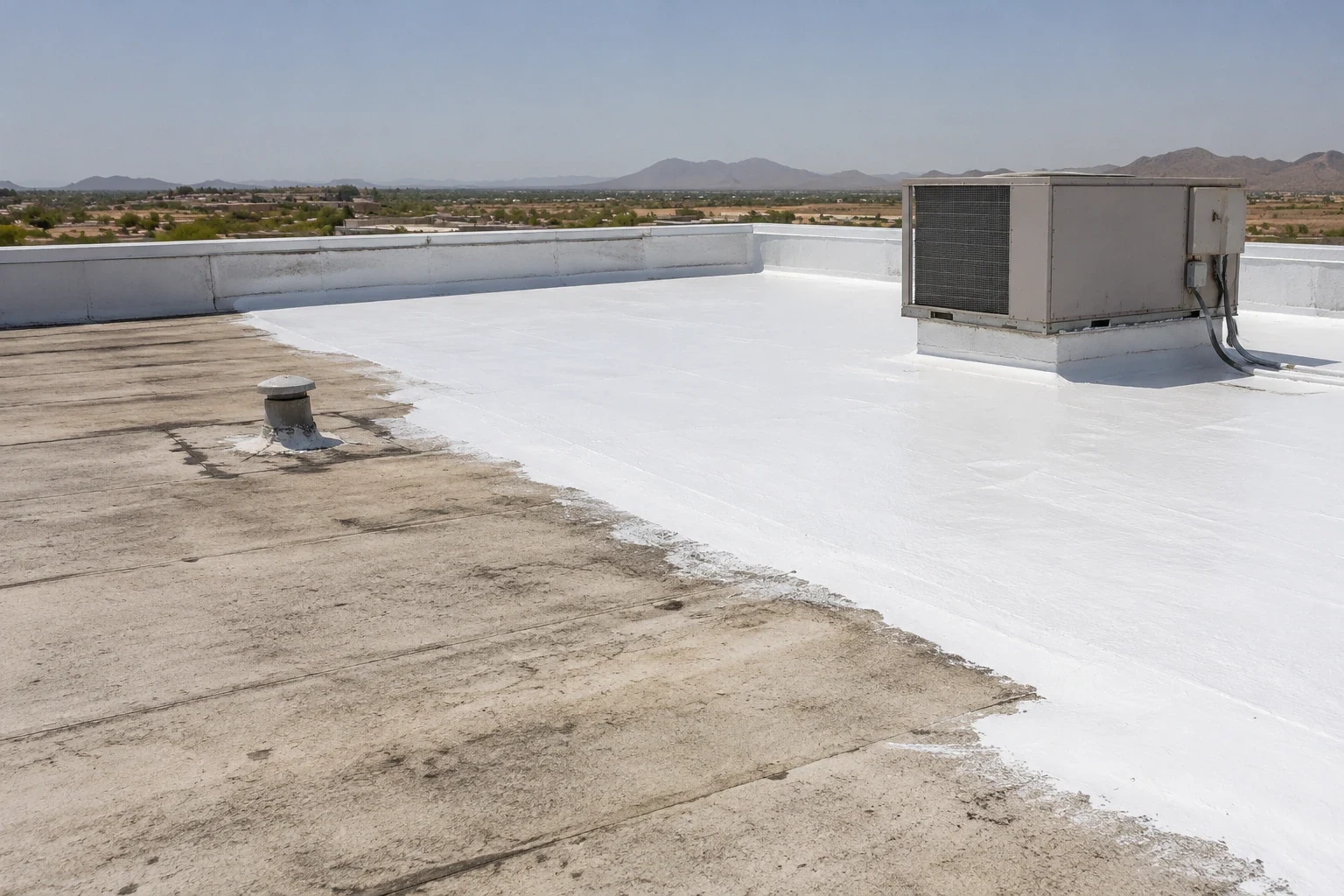
Acrylic coatings are water-based products with specific application and cure requirements. We identify the membrane or metal substrate, old repairs, prior coating, and surface contamination before choosing a primer. The product documents set the compatible surfaces and required preparation. Where the existing finish is unknown, a representative adhesion test can show whether the prepared area accepts the proposed coating.
We inspect for peeling, chalking, cracks, rust, open seams, blisters, and areas where the old layer has separated. A coating should not bridge an unstable seam or hide soft insulation. If the roof has wet material below the membrane, testing and removal need to be scoped before the coating closes the surface. The report records confirmed conditions separately from sections that were not opened.
Metal roofs need attention at fasteners, panel laps, and cut edges. Single-ply membranes have different surface and welding details. A compatible acrylic system may be specified for some roofs, but preparation, reinforcement, and transition materials vary. We verify the product requirements for the actual surface rather than assume that a generic acrylic label establishes a bond.
Match Water Exposure to the Product Limits
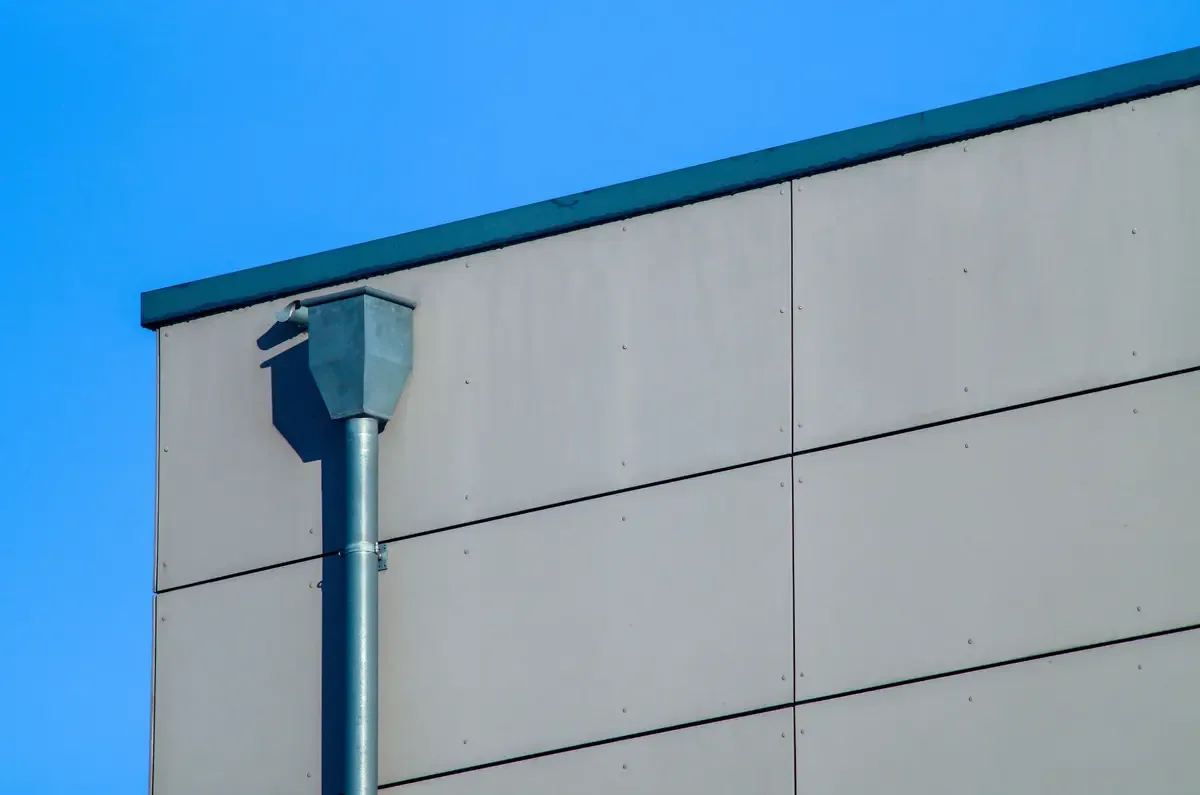
Roof slope matters because water can remain in low spots after a storm. We map drains, scuppers, overflows, and ponding, then check the selected coating’s water exposure limits. If drainage is poor, applying acrylic over the same geometry may not solve the problem. We identify whether a drain correction, tapered insulation, or a different restoration system should be considered before the surface is recoated.
At William J. Fox Field, Lancaster’s normal annual precipitation is 6.81 inches, and most of it occurs from November through March. A dry stretch does not remove the need to prepare seams and outlets before seasonal rain. We inspect where water collects and whether prior patches have changed the flow path. Drain and scupper work can be coordinated when an outlet, overflow, or debris condition needs correction.
For a roof with occasional standing water, product data and manufacturer guidance matter. Some acrylic products have limits on prolonged ponding, while others may allow specific conditions. We state the selected product and the roof zones it covers, then note any areas where drainage must improve before application. The owner can compare that scope with a coating chemistry designed for a different exposure.
Repair Seams and Transitions Before Application
Preparation may include cleaning, removing loose coating, treating rust, repairing membrane seams, and reinforcing selected transitions. We identify how far preparation extends and what must be dry before primer or base coat is applied. Dust and residue can reduce adhesion, so the crew checks the prepared surface rather than rely on a wash alone. Repairs are given time to cure before the coating covers them.
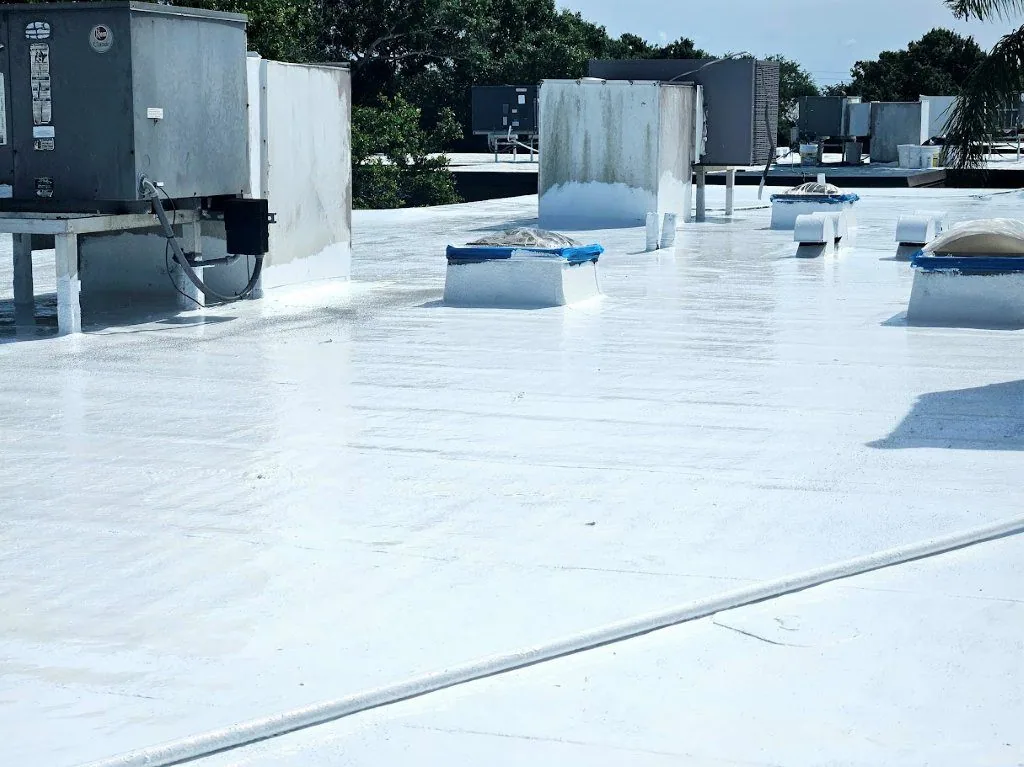
Curbs, parapets, pipes, and drains each need a compatible flashing detail. At the Lancaster Health District, occupied medical offices may need advance coordination for ventilation, access, and interior protection. We schedule those measures with the building contact and protect intakes or adjacent finishes as the product and site require. A coating restoration plan identifies repair, reinforcement, and field-application work by roof zone.
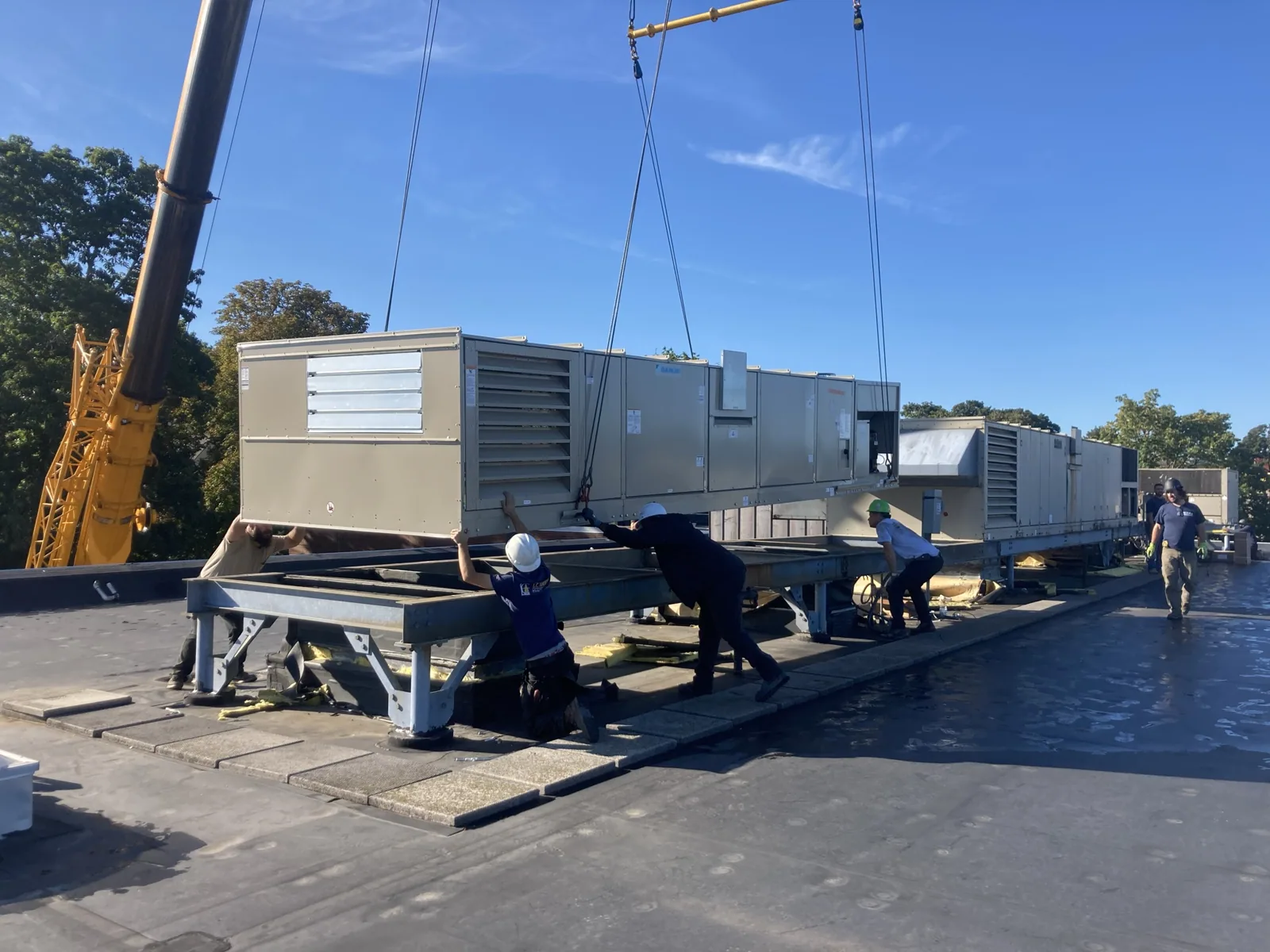
Foot traffic can wear a coating around HVAC equipment and access hatches. We locate the service path, identify where walk pads or a specified walkway coating are needed, and confirm that protection will not interrupt drainage. If a curb or support moves, equipment support work should be completed before the coating detail is finished.
Plan the Application for Weather and Access
Acrylic application requires conditions within the product’s limits for air temperature, surface temperature, moisture, and cure time. We check the roof surface and forecast, then schedule work so each coated area has the time it needs before rain or dew. Lancaster’s sun can heat a roof above the surrounding air temperature; crew safety and application behavior are included in the daily plan.
Wind can move spray beyond the intended area, so we select an application method and protection plan for the property. We identify nearby equipment, vehicles, intakes, and pedestrian routes, then stage containers and lifts accordingly. If weather changes, the crew closes the active boundary or pauses rather than spread material over a surface that cannot cure as specified.
Coverage is checked as the crew works. The project specification identifies required passes, reinforcement, and the target dry-film thickness. We document product batches and application areas when the contract requires it. The closeout should also state which areas were excluded because their condition, slope, or moisture did not support coating.
Compare Acrylic With Other Restoration Options
Acrylic may fit when the existing roof is stable, the prepared surface is compatible, and the water exposure stays within the product’s limits. A different coating chemistry or membrane can be more appropriate when standing water, chemical exposure, or substrate condition changes the requirements. We compare the specified product with the actual assembly and state what the coating will and will not address.
Silicone may suit a different water exposure, while silicone coatings and spray-foam systems follow their own preparation and maintenance requirements. A roof inspection can document seams, insulation, and drainage before the owner chooses a surface restoration. If the membrane is broadly deteriorated or moisture has spread below it, a replacement assessment may offer a clearer boundary than coating.
The proposal separates surface preparation, repair, coating coverage, reinforcement, drainage work, and access. It lists compatibility tests and any areas that remain unverified. That allows the owner to compare offers using the same roof zones and to see whether the planned coating includes repairs or only the top layer.
Keep Product and Maintenance Details on File
Closeout records the coating product, preparation, repairs, application areas, and checks required by the project. Photos show drains, seams, curbs, and representative coverage with enough context to locate each detail later. We note areas that were excluded or require testing so the owner can plan separate work without assuming the entire roof received the same treatment.
Maintenance checks peeling, surface wear, ponding, seams, flashing corners, and footpaths. A new rooftop unit or service route can damage a finished surface, so the maintenance file should capture work performed by other trades. Preventive roof maintenance can revisit those locations and record changes before water reaches the membrane below.
Send the roof plan, available coating records, and any leak notes before a Lancaster assessment. We will review the surface, water path, and proposed product, then identify preparation and application steps supported by inspection.
Commercial Roofing Questions
Can acrylic coating go over a commercial membrane?
It may be suitable for some membranes when the surface is stable, properly prepared, and compatible with the selected product. We verify the roof type, repair history, and adhesion before specifying an application.
Can acrylic coating be used where water ponds?
The product’s water-exposure limits and the roof’s drainage control that choice. We map low areas and outlets first, then identify whether slope or drainage work is needed before coating.
How long does acrylic coating take to cure?
Cure depends on the specified product, temperature, humidity, surface moisture, and coat thickness. We schedule work using the technical data and check weather before applying each section.
Does acrylic coating stop a leak by itself?
Only when the leak source is a compatible surface defect that has been properly repaired. We inspect seams, flashings, and concealed layers before deciding whether coating belongs in the repair.
What should I compare in acrylic coating bids?
Compare preparation, seam and flashing repairs, primer, coverage, reinforcement, dry-film requirements, excluded areas, and maintenance terms. The product and roof zones should be clear in each proposal.