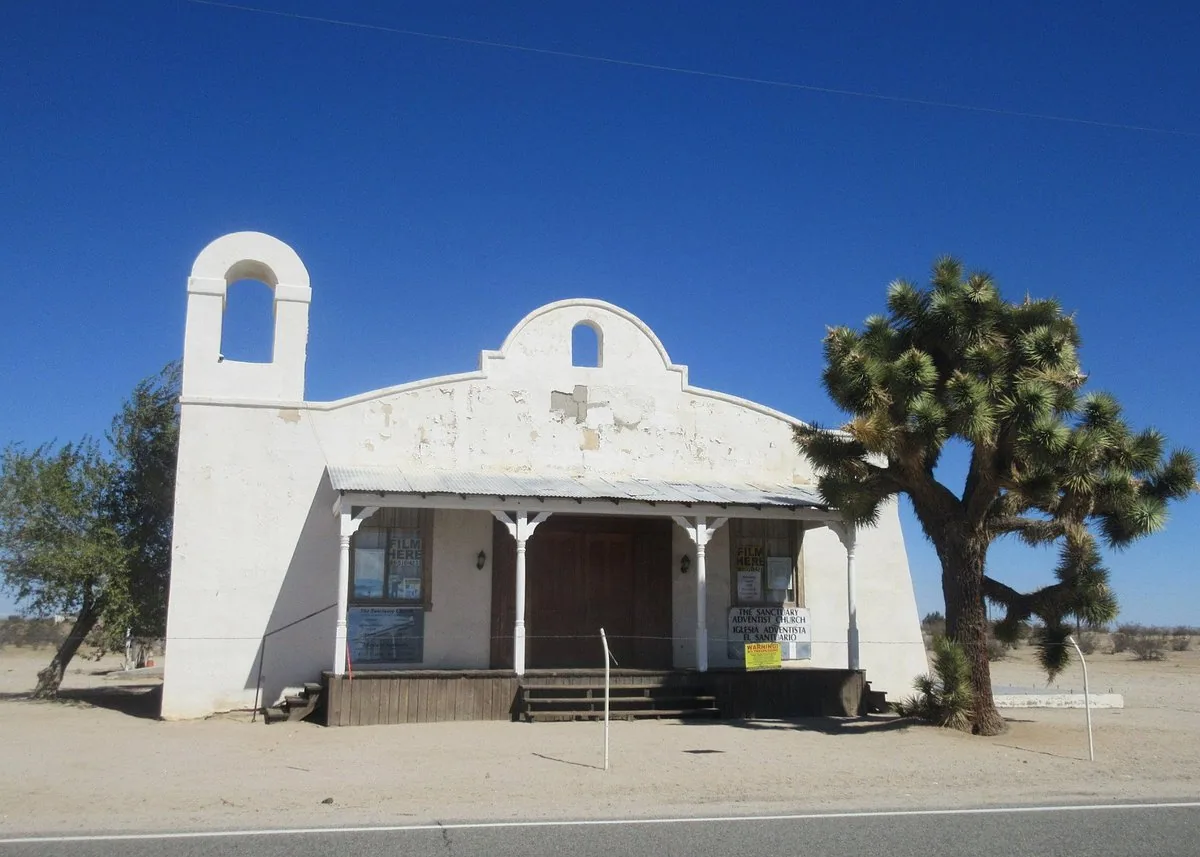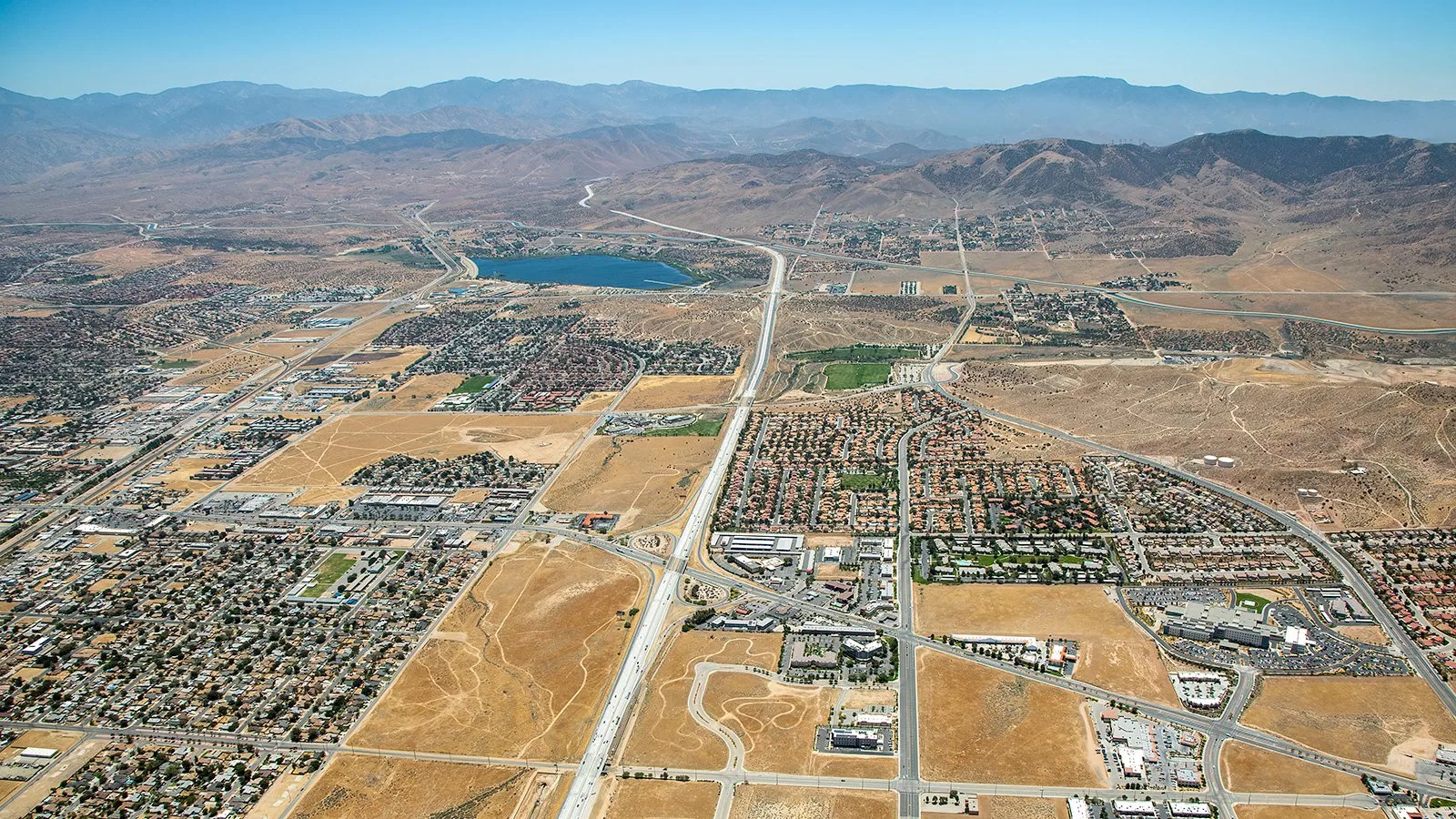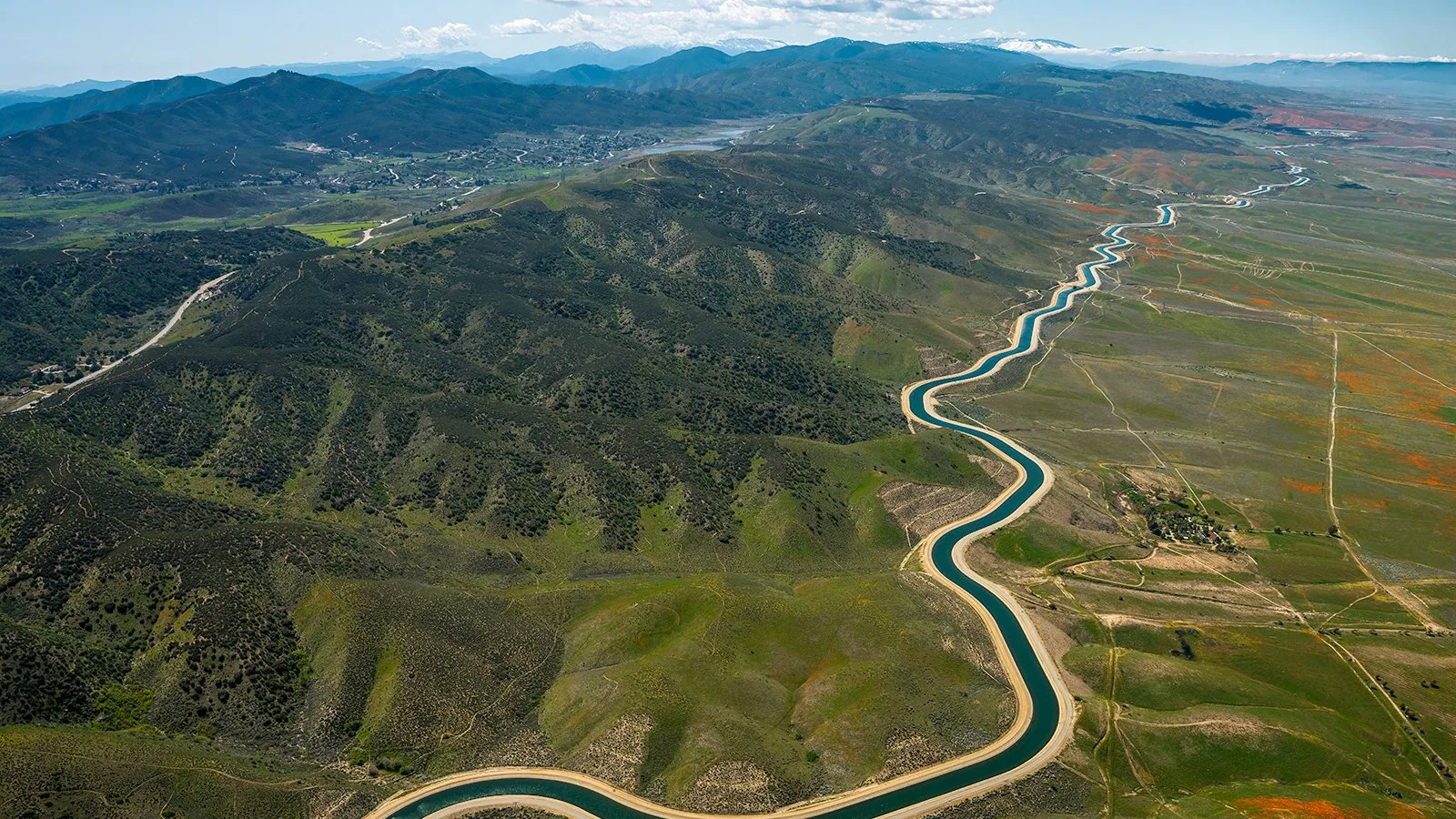
A split beside a roof penetration can admit water even when the surrounding membrane field appears intact. Correcting that detail starts with confirming the substrate, movement, and surrounding materials, then defining the repair limit. Llano is a distinct community along Pearblossom Highway, also State Route 138. The County describes some portions as partly developed with light agriculture and large-lot homes, while other portions remain largely undeveloped. Those facts define the broader service area; they do not identify the type or condition of a particular commercial roof.
We review the property itself, record visible assembly components, and compare reported leaks with roof seams, edges, drains, and equipment details. The Lancaster station's normal August high of 97.8 degrees is a regional reference for summer heat loading on exposed roof materials. The number belongs to Lancaster, so we keep it attributed there while using the regional climate context to inform the inspection. A separate Pearblossom roof assessment can be documented independently for a property along the same highway.
Establish what is visible and what is concealed
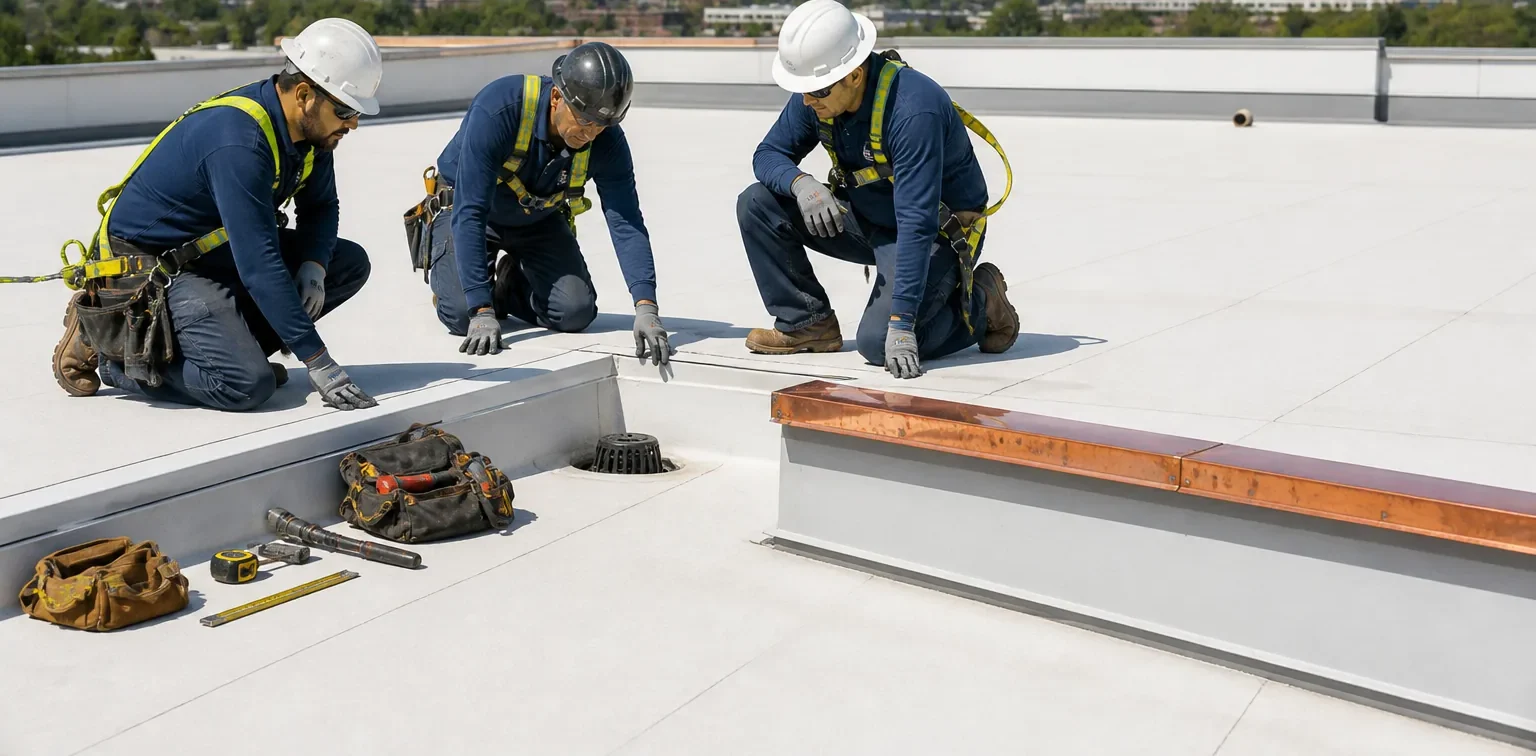
Our inspection begins with safe access and a brief review of the owner's concerns, prior repairs, and operating limits. On the roof, we note the membrane or metal system where it can be identified, then inspect laps, flashings, curbs, penetrations, drains, edges, and prior patch areas. Each photo should be tied to a roof zone and include enough context for someone else to find the condition. If a section cannot be accessed or a layer is concealed, that boundary is listed as an open item for the owner.
Because Llano includes both partly developed and largely undeveloped portions, we avoid assuming that every property presents the same access or operating pattern. The building contact can explain whether staff, customers, deliveries, or another trade need to remain clear of the work area. We coordinate roof access, material staging, and interior protection around that site's requirements. A commercial roof inspection turns observations into a report with a defined next action instead of a general condition label.
Separate the roof defect from the interior symptom
Water can move along insulation or a deck before it appears inside. A leak report therefore needs its date, location, and any recent roof or equipment work, then a field comparison with the details above and around the space. We follow the likely drainage and water paths, inspect seams and transitions, and note where moisture readings or test cuts may answer a remaining question. The report identifies which areas were checked and what the available evidence can support.
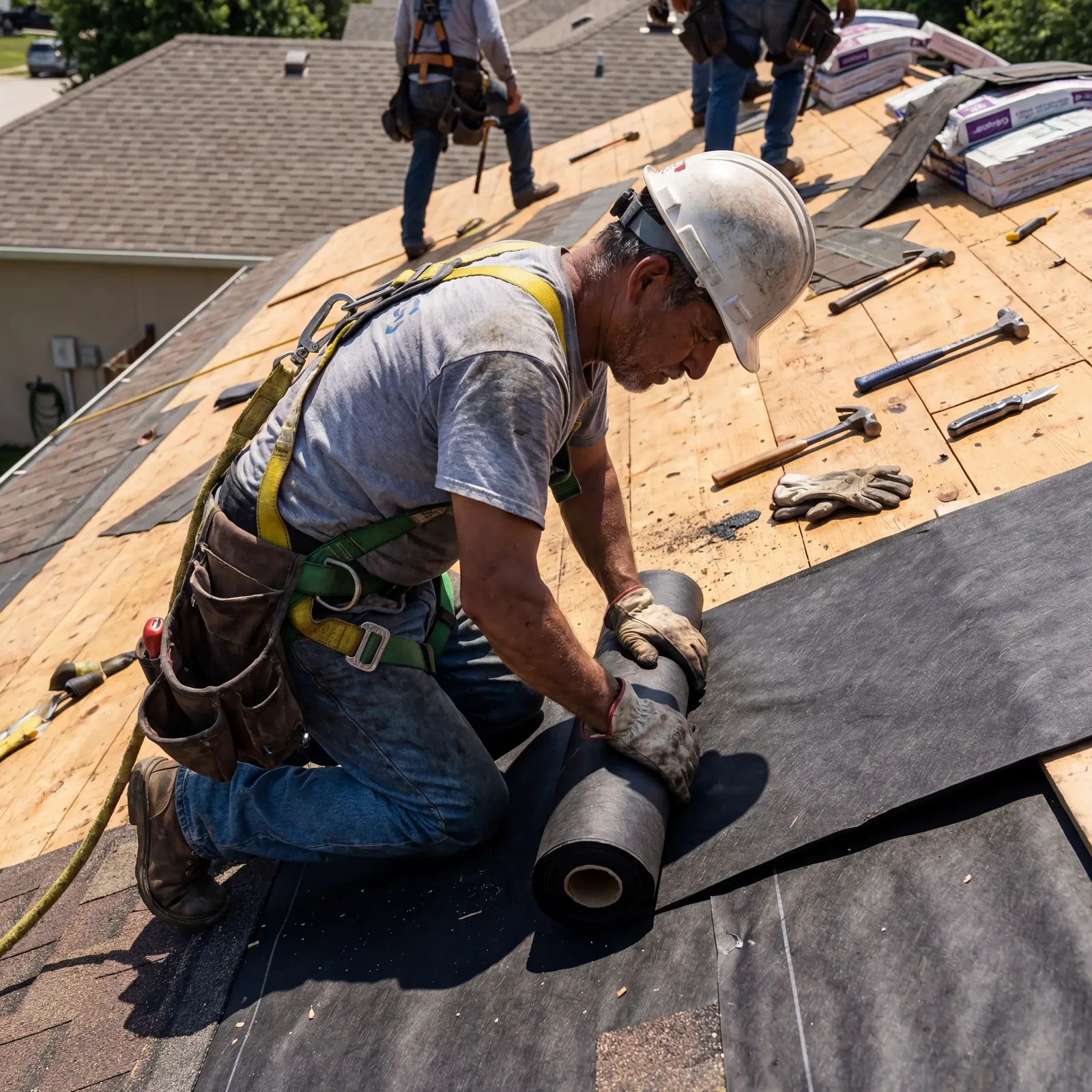
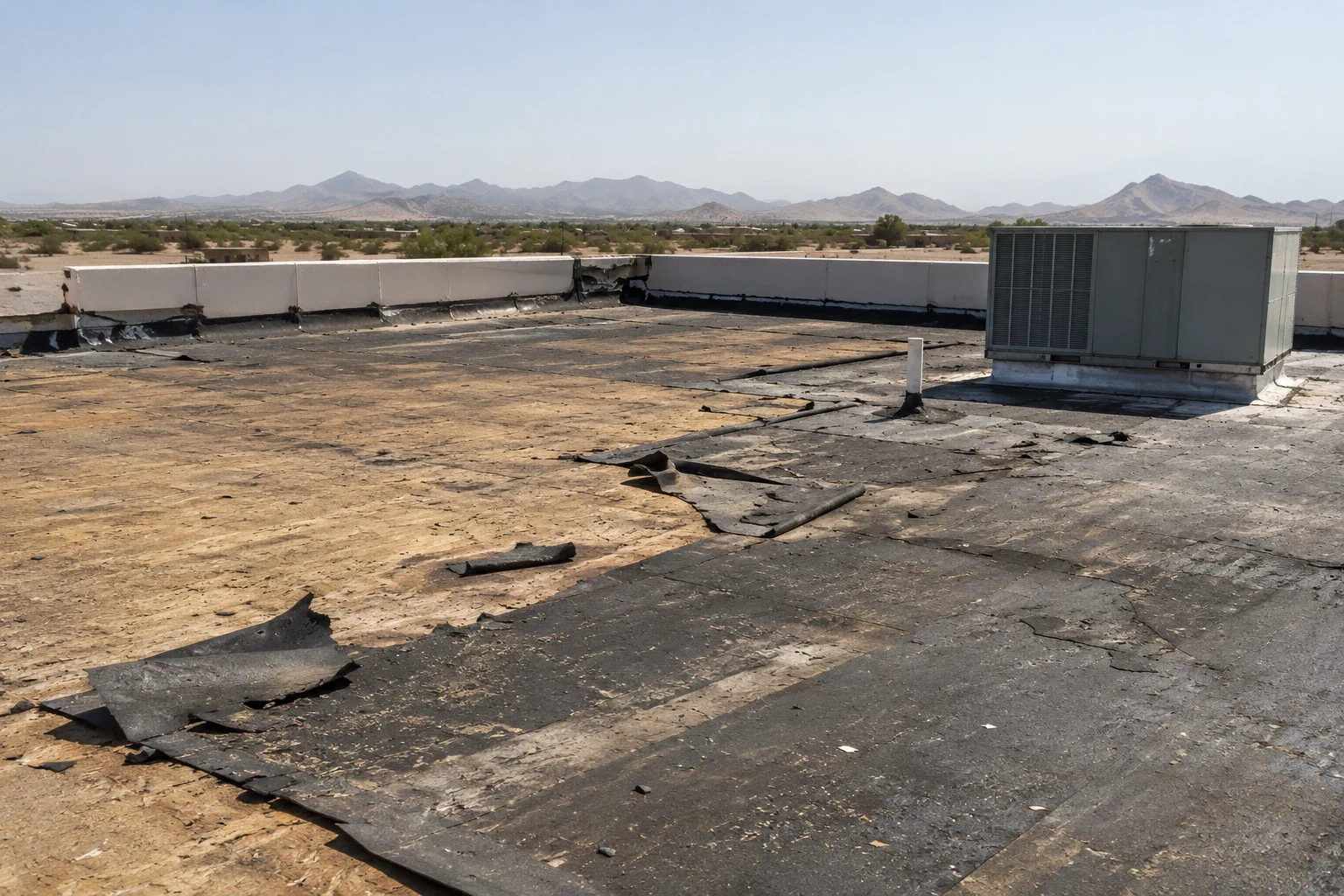
If the failed area is local and surrounding materials remain sound, the repair can focus on that detail. If water has reached insulation or the deck, the work may need to widen to reach dry, stable material. We photograph concealed conditions as the roof is opened and stop for owner approval before adding work outside the original scope. For active water entry, emergency roof repair can protect the interior and stabilize the opening; the permanent scope follows after the assembly has been examined.
Check seams, edges, and drainage after heat exposure
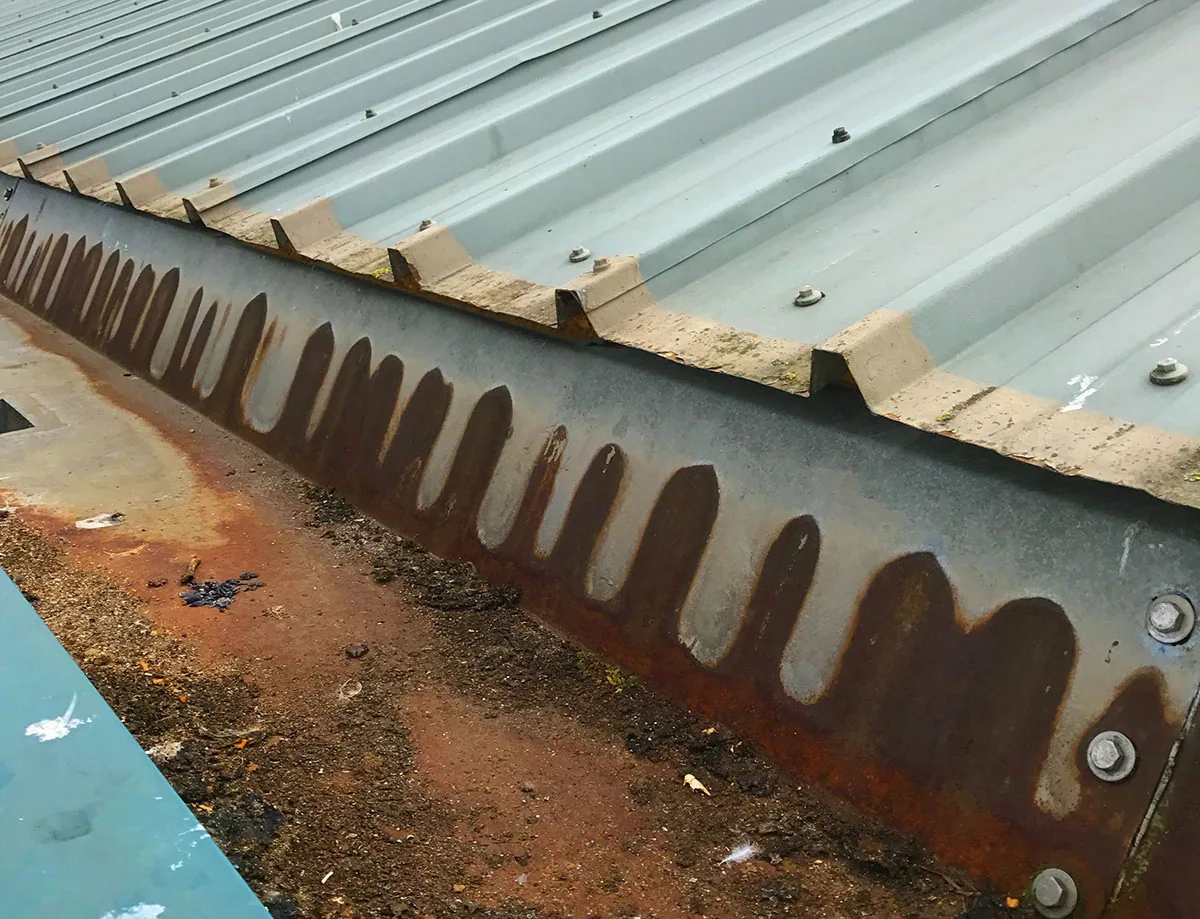
Exposed materials take on heat through the day and release it as conditions cool. That cycle can load membrane seams, metal edges, sealants, and roof-to-wall connections at different rates. Seasonal change loads membrane, metal, and flashing at different rates. After repeated summer heat, we inspect for open laps, split sealant, loose edge metal, and separation at roof-to-wall transitions. On a Llano property, the inspection also records displaced fasteners and movement around supports.
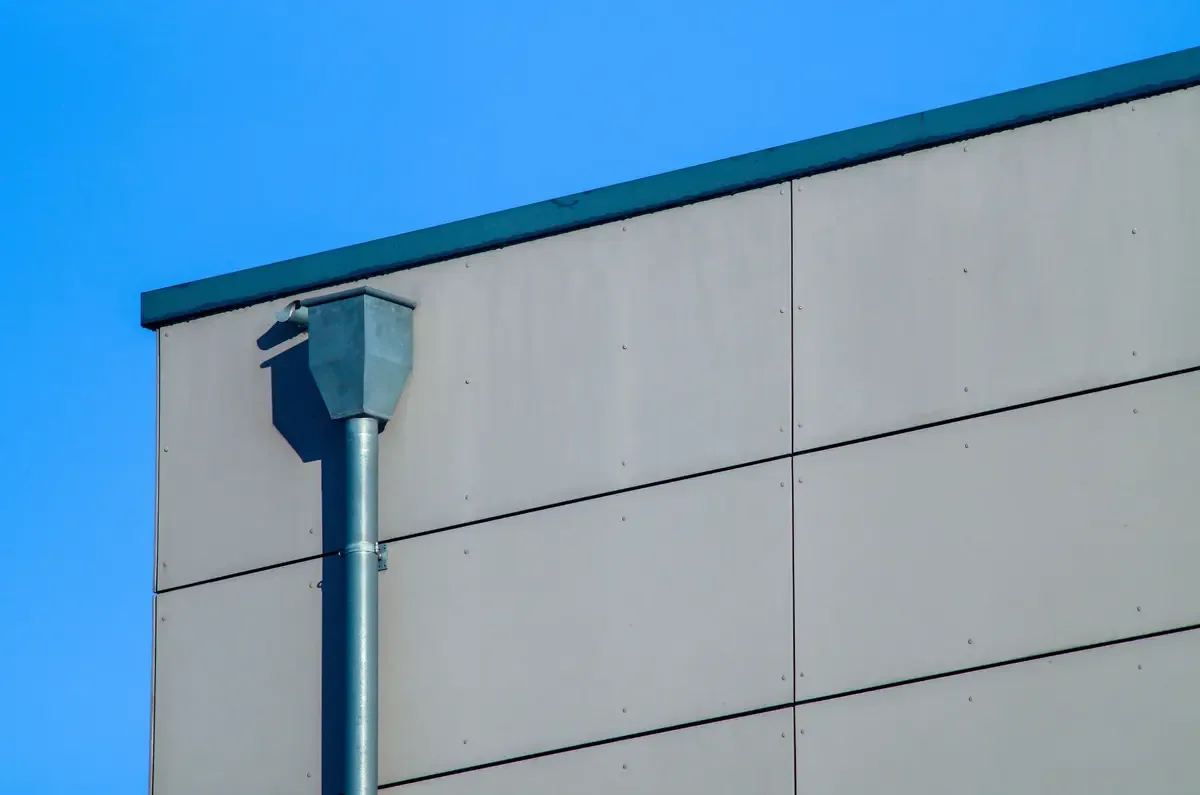
Drainage remains part of the same review. The Lancaster station records a modest 6.81-inch annual precipitation normal, concentrated mostly from November through March, but roof outlets still need to clear when a storm arrives. We inspect the path from each low area to the drain or scupper, check for debris or patch material that blocks flow, and record water marks that suggest a recurring issue. Roof drain and scupper repair can address an outlet or flow problem, while preventive roof maintenance helps track the surrounding details over time.
Match the proposal to roof evidence
A proposal should name the damaged area, the preparation required, the materials used, and the test or inspection that will confirm the repair. A split seam, loose wall flashing, punctured membrane, and failed drain connection need different details. We identify where new material will meet the existing assembly and whether the current surface is clean and stable enough for that tie-in. If compatibility cannot be confirmed visually, we explain what additional check would change the product or the work boundary.
For widespread moisture, recurring failures, or a roof with several incompatible repair areas, the owner may want a capital comparison. We check the existing layers, attachment, drainage, deck, and any permit requirements before discussing a recover. Replacement planning should include safe removal, temporary weather protection, equipment coordination, and an orderly sequence across roof zones. The 2025 California Building Codes became mandatory for Lancaster submittals on January 1, 2026, with city amendments; confirm the codes and permit authority that apply to a Llano project. Our commercial roof replacement scope explains the site-specific decisions behind a broader renewal.
Preserve a record for the next roof decision
A repair record should include labeled photographs, the roof-zone boundary, materials installed, and any condition left for follow-up. The property manager can keep it with the roof plan, warranty file, maintenance history, and interior water reports. If a later inspection identifies a similar symptom, the earlier record helps determine whether the same detail has failed again or a different path is involved. That distinction can change whether the next visit is a small service call or a broader evaluation. We list roof-zone photographs in walk order so an owner can match each approval item to the same detail during closeout.
For a commercial roof in Llano, share the property's location, roof access, leak history, and operating constraints before scheduling. We inspect what can be seen, identify any testing that could change the decision, and provide a written scope with clear approval points. If ownership manages a second property near the Lancaster market, a Antelope Acres roof inspection should keep its own photos and findings. Condition reporting gives each property a useful record without blending separate assemblies or budgets.
Commercial Roofing Questions
Does the County's description of Llano tell you what commercial roofs are present?
No. It describes the community's land-use character, not individual roof assemblies. We confirm the specific building's membrane, drainage, penetrations, and substrate during the inspection.
Can we get service near Pearblossom Highway and State Route 138?
We confirm the property location and access details when scheduling. Llano is identified along Pearblossom Highway, also State Route 138, and the inspection is scoped to the building the owner identifies.
What should we provide if a roof leak has happened more than once?
Send the dates, interior locations, photos, prior invoices, and roof plans you have. Those details help us compare the reported pattern with the roof surface and determine where testing may be useful.
How can we tell whether a roof repair is holding?
The closeout record names the repair boundary and includes photos of the finished tie-in. A later visit can compare that area with the baseline and note whether the detail remains stable or has moved again.
Should we coat a roof that has several active leaks?
First we locate each entry path and determine whether the membrane, substrate, and insulation can support a coating system. Widespread moisture, weak attachment, or failing transitions can require repair or removal before any coating is considered.