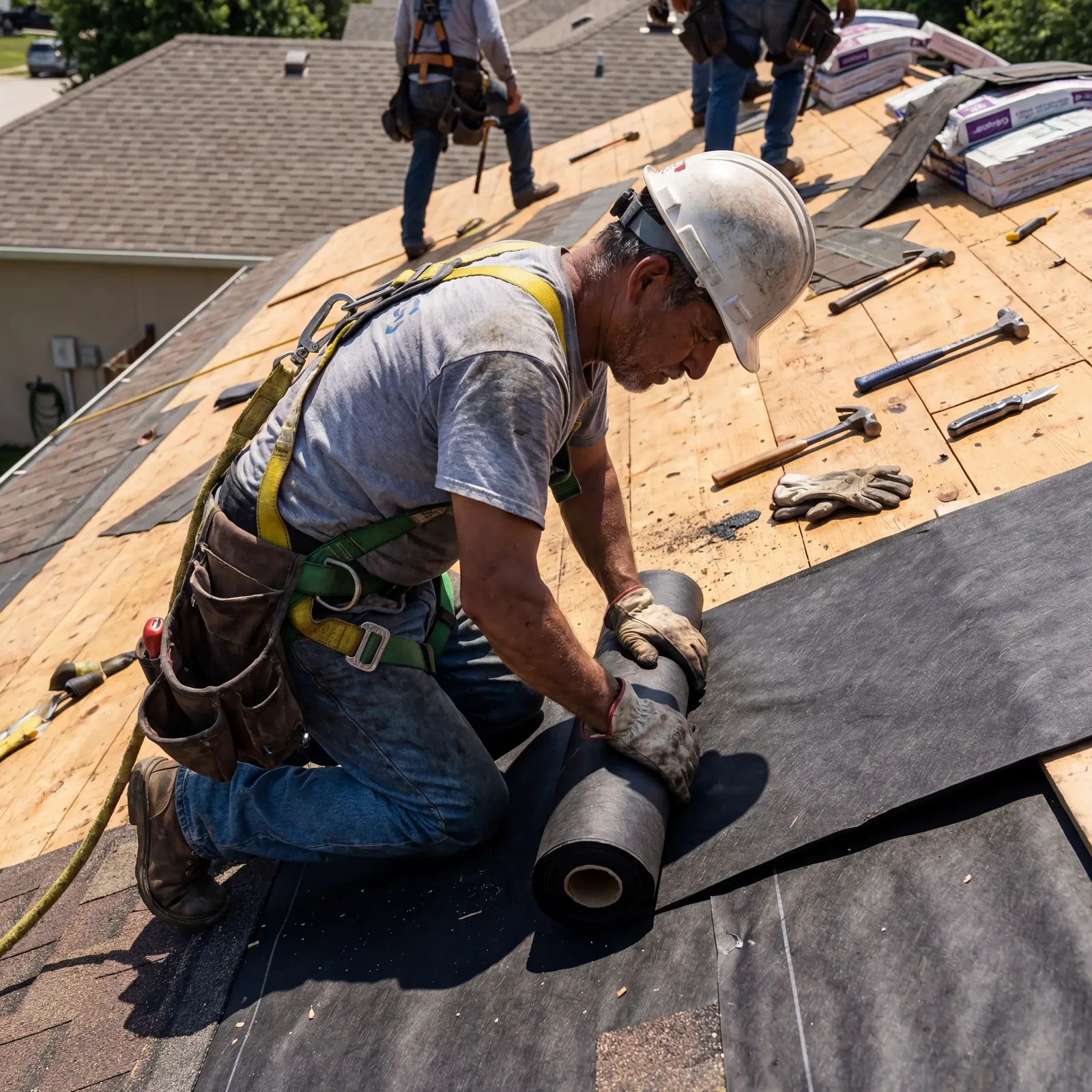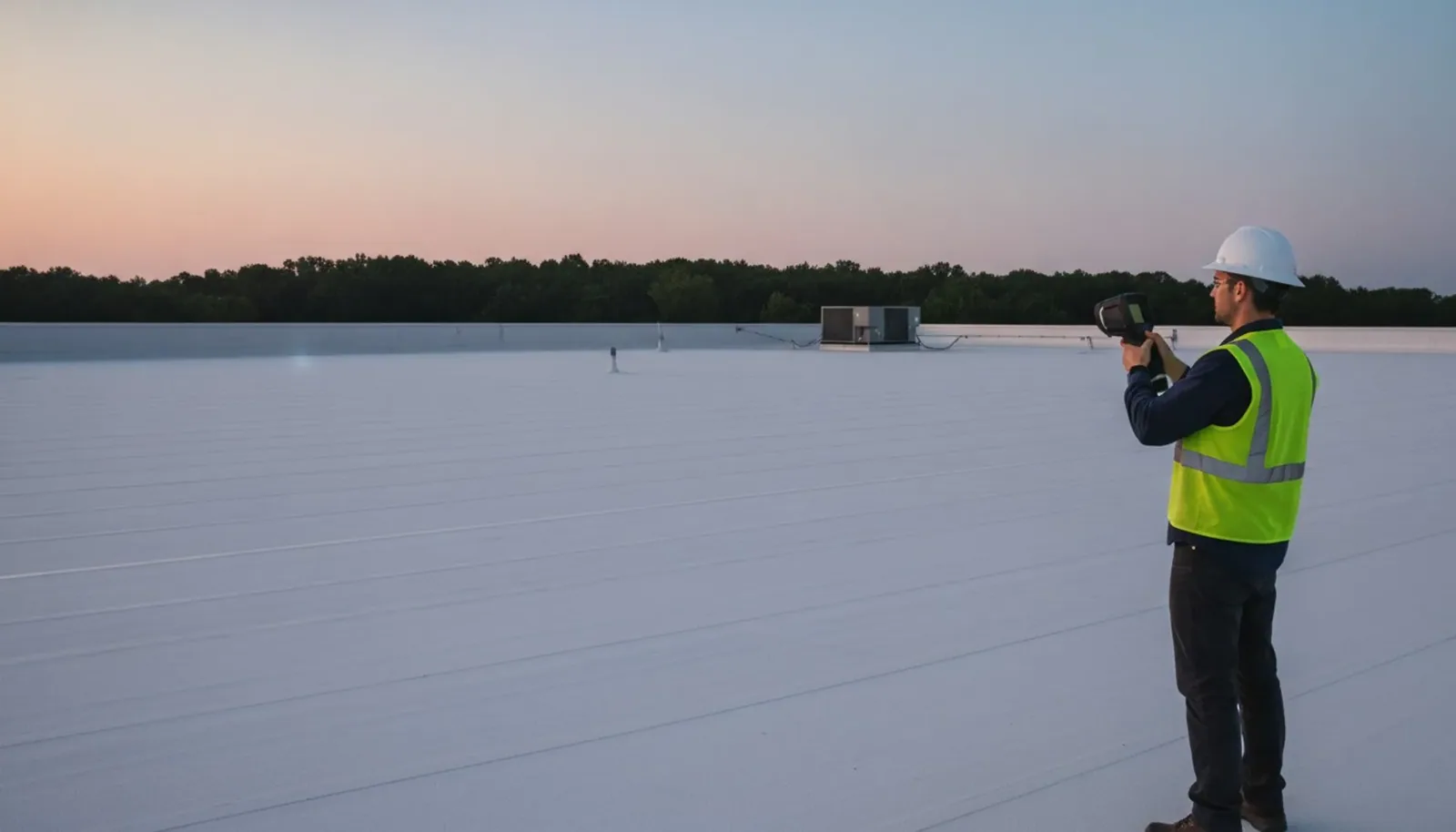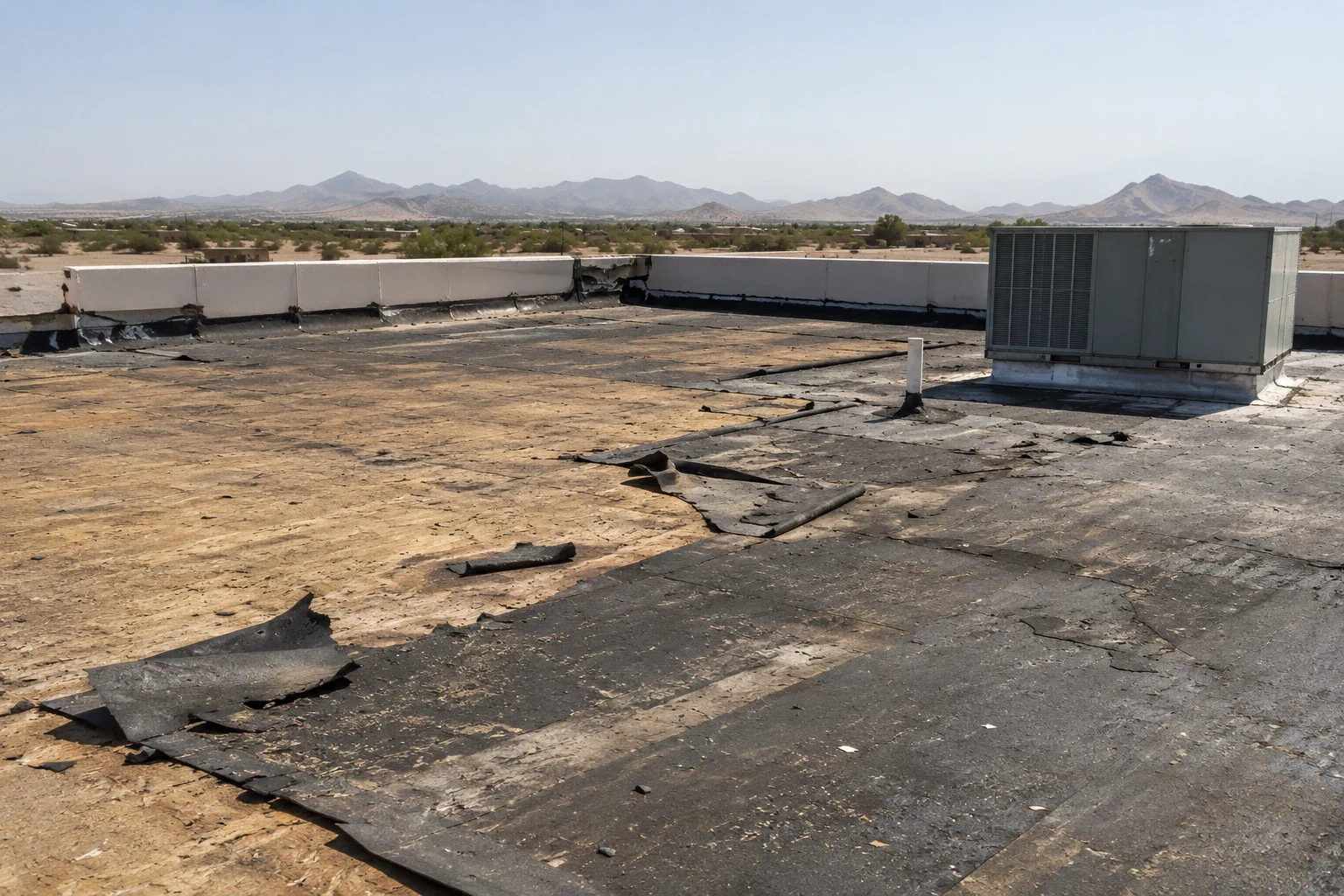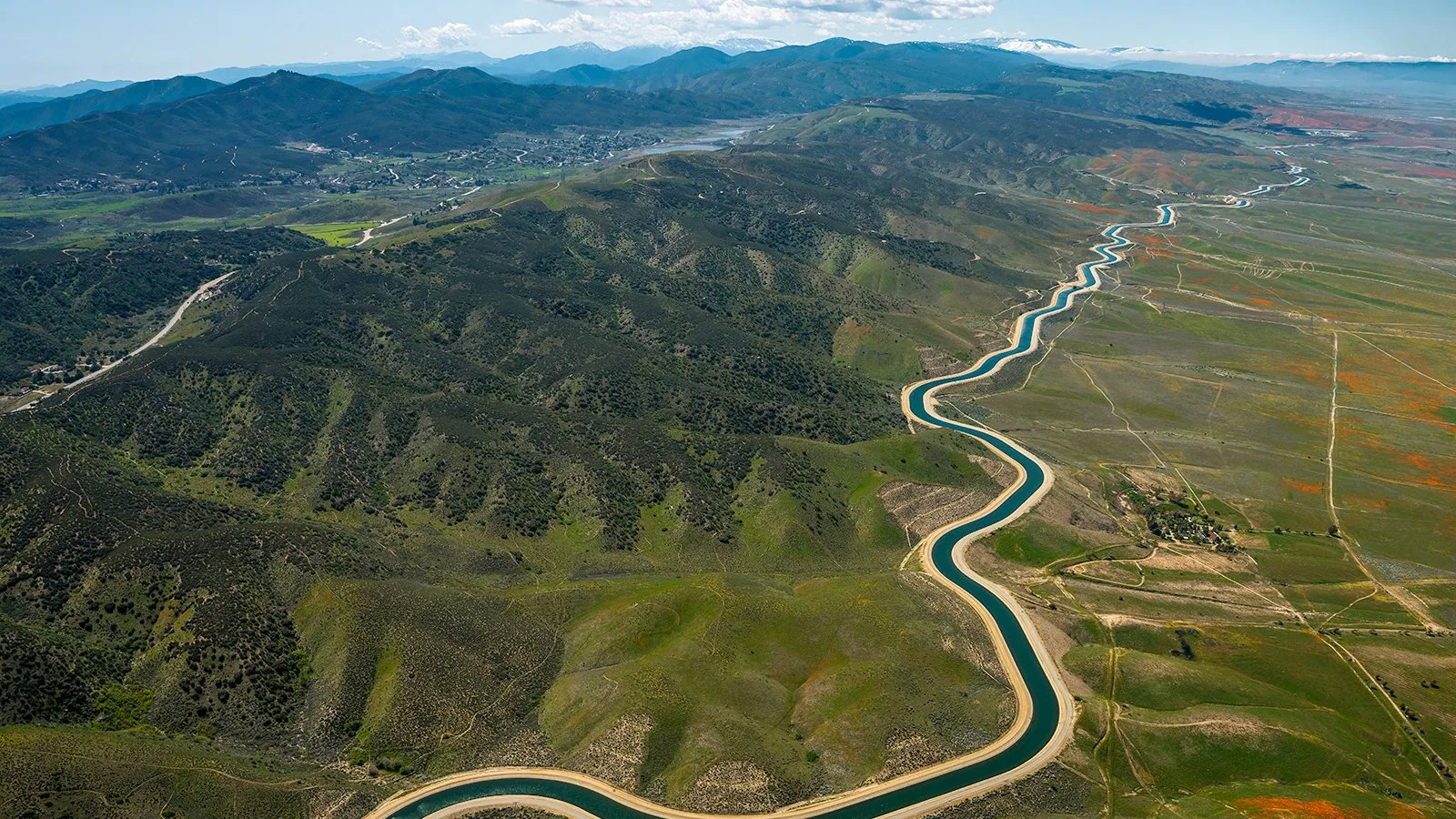
A storm can move edge metal, lift membrane, break flashing, or send debris into roof drains. We record what changed and where water could enter, then separate temporary stabilization from permanent work. The scope identifies affected sections and repair details rather than treating every roof mark as storm damage.
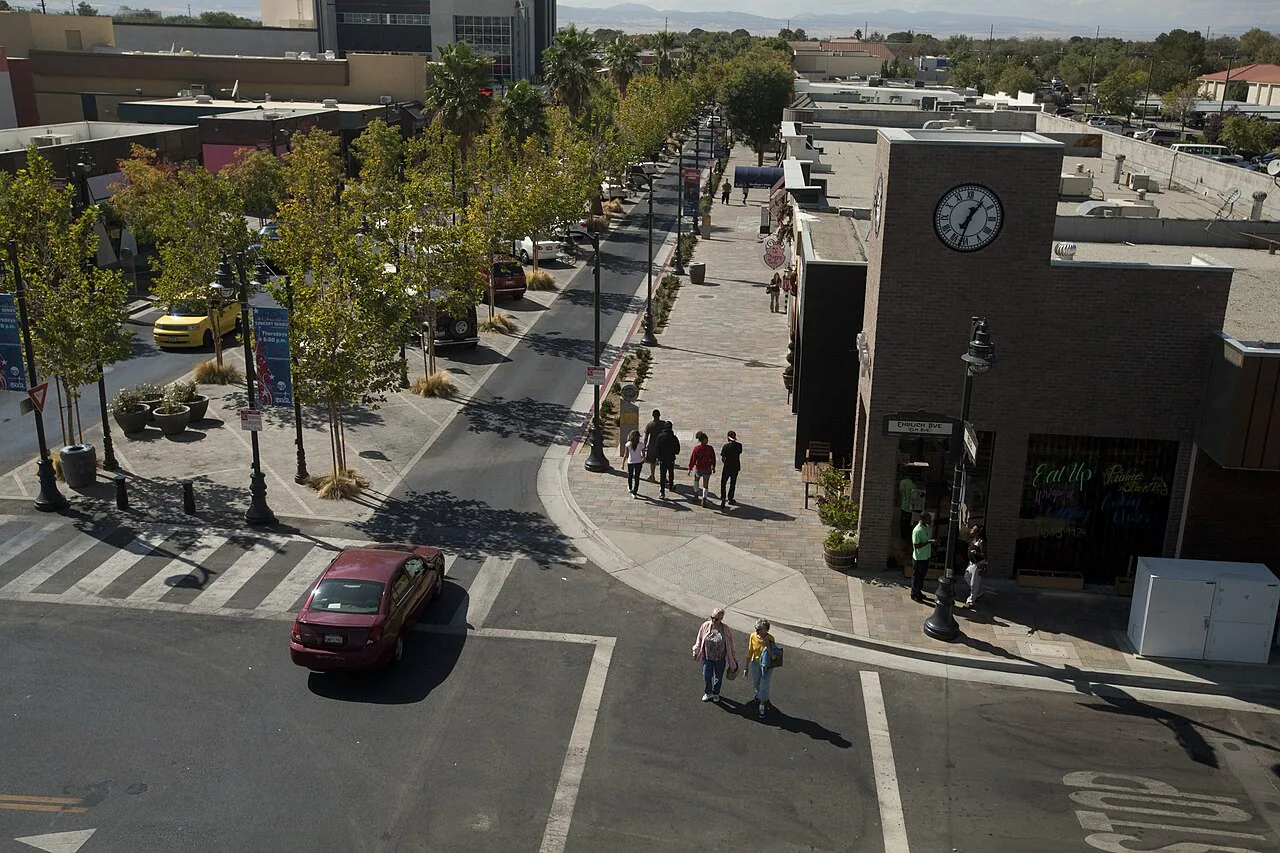
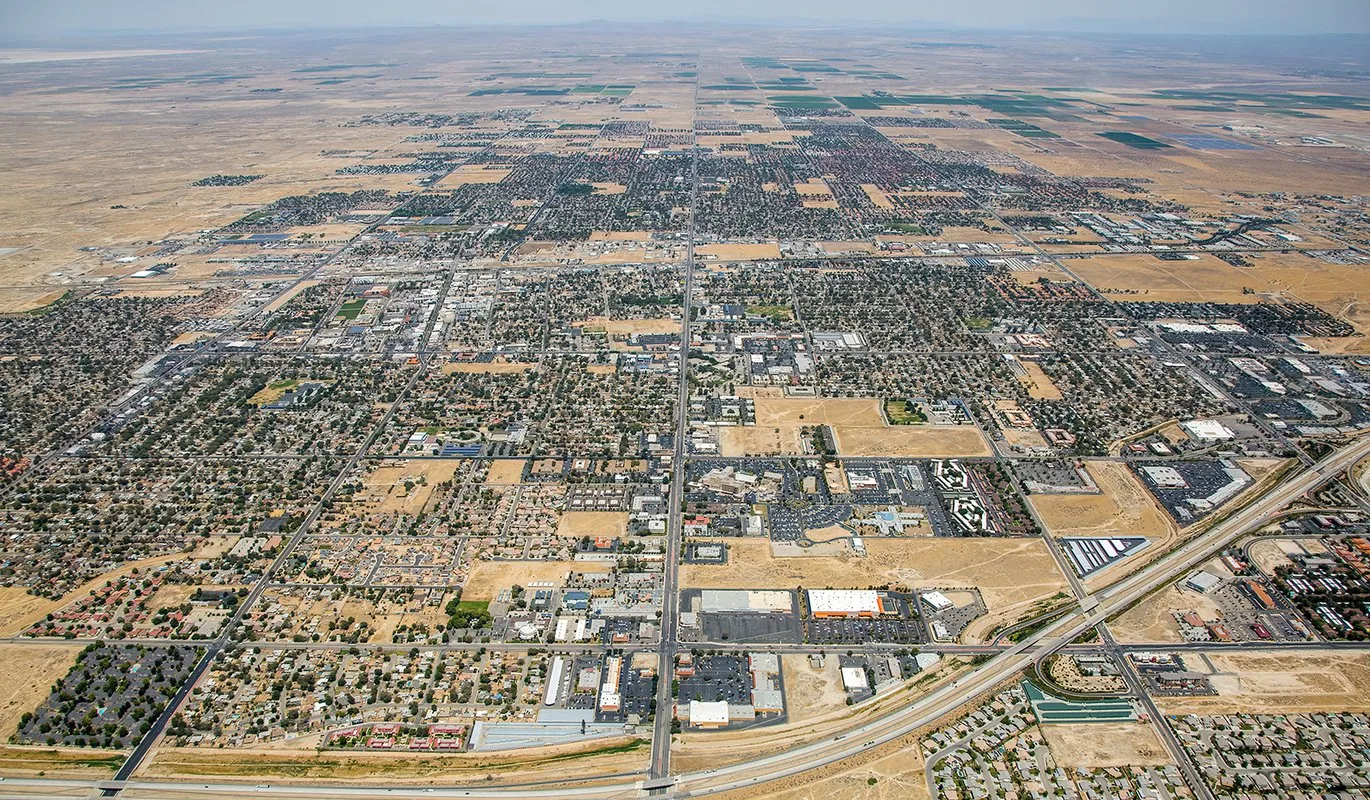
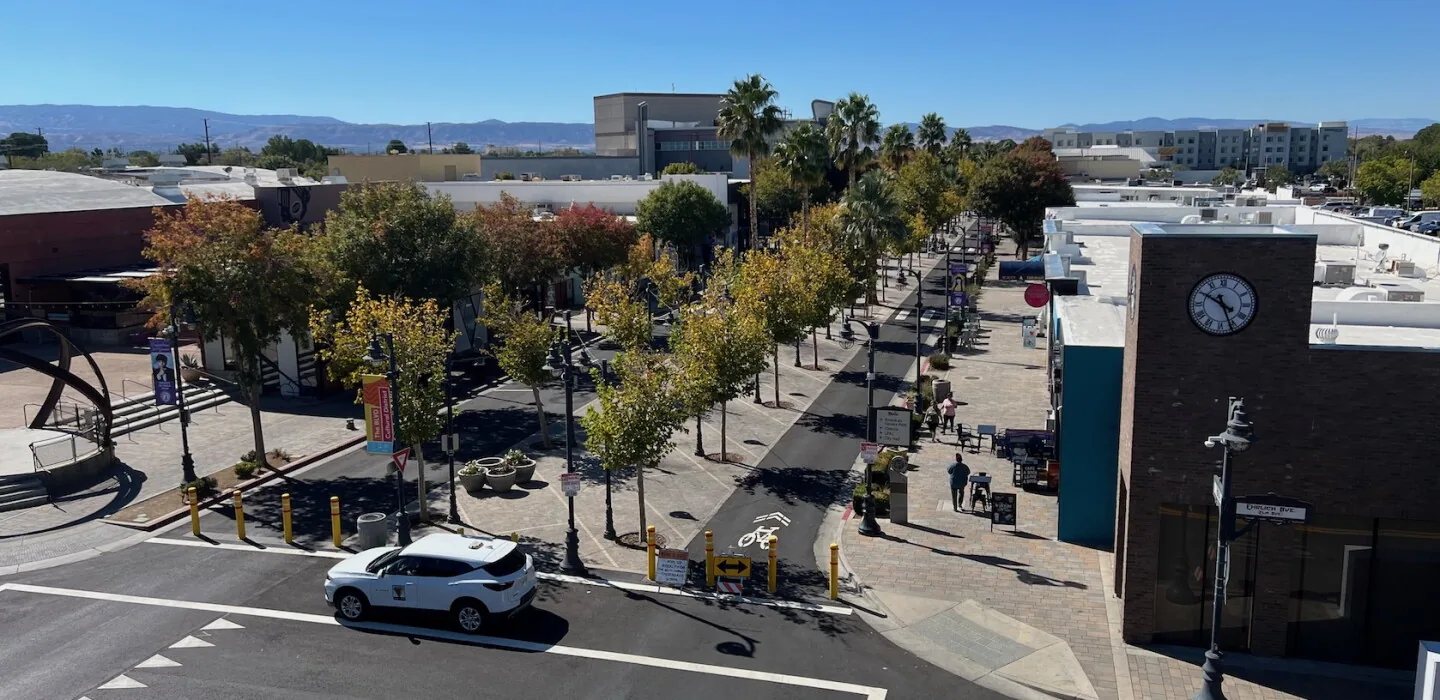
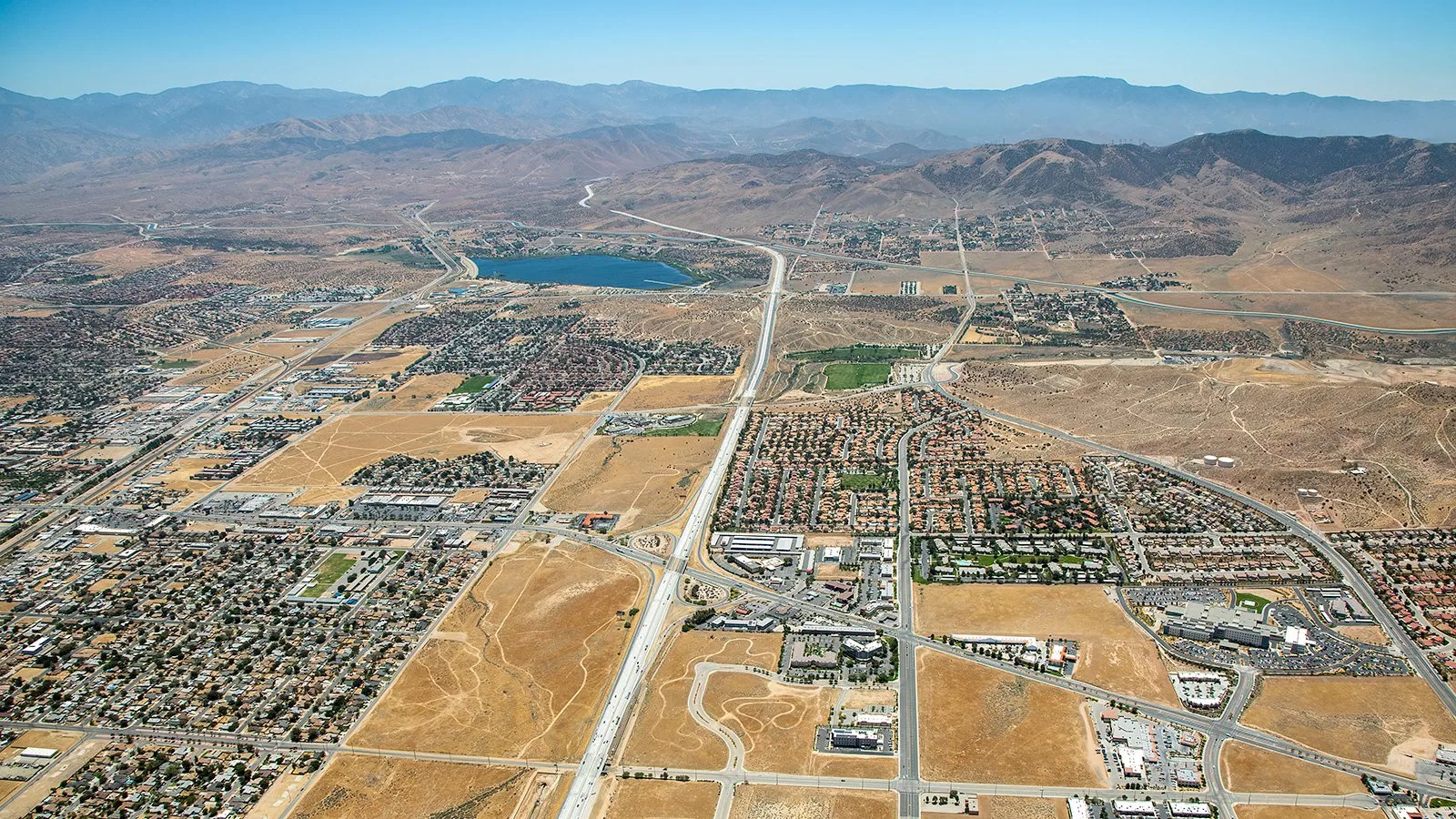
Lancaster properties include industrial, office, medical, and business-park uses. Each roof responds differently to exposure and construction details. We compare the building’s existing record with post-storm observations before recommending work. At the Fox Field industrial corridor, varied roof layouts make that comparison especially useful. If water is entering now, our emergency roof response can stabilize the opening during assessment.
Start with Safe Access and a Clear Timeline
Keep staff off a roof during lightning, high winds, standing water, or uncertain access. Inside, avoid wet electrical fixtures and sagging ceilings. The property contact can photograph conditions from a safe place, note when water appeared, and identify affected rooms or equipment. That timeline helps distinguish a new leak from an existing one.
Before the roof walk, we review plans, maintenance records, repair photographs, and recent work orders. HVAC or solar work may have opened the roof recently. We ask where temporary repairs were placed and whether equipment moved before narrowing the inspection. When dates are available, we compare the prior image with the current roof view so the scope can identify what changed and what was already present.
At Lancaster Business Park, the plan spans wholesale trade, light fabrication, research, office work, and trade schools. We coordinate roof access with the facility contact, noting loading areas, air intakes, sensitive rooms, and work that cannot stop. The report lists sections that remain inaccessible until conditions improve.
Read the Roof for a Specific Failure Pattern
Wind inspection focuses on edges, corners, seams, flashings, and components exposed to uplift. We look for loose metal, displaced terminations, lifted membrane, open laps, damaged coping, and moved fasteners. A lifted corner may be isolated or continue along a seam, so we photograph it and check adjacent areas before setting a repair size. We inspect the underside of loose metal where safe, since the edge alone may not show the attachment condition.
For impact concerns, we check punctures, fractured coating, damaged metal, and marks on equipment. A surface impression alone does not prove membrane failure. We compare roof evidence with the assembly and interior reports, then identify where testing or closer examination is needed.
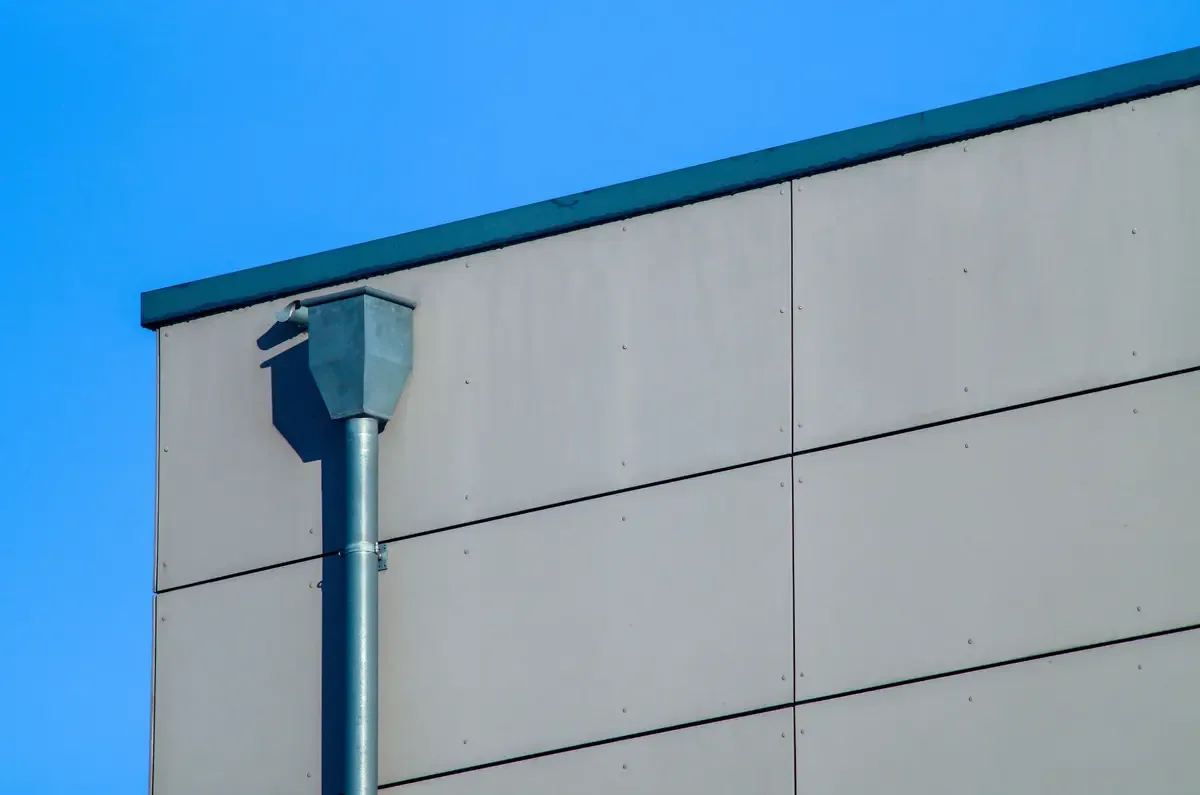
Debris can block drains or cut the membrane. We note whether outlets and overflow routes still work. A drainage problem can worsen an opening even if it did not start it. Drain and scupper repair can address damaged outlets and nearby flashing.
Stabilize Openings Without Hiding the Evidence
If water is active, we reduce exposure with a temporary cover or dry-in suited to conditions. We photograph the opening first, mark the cover, and note what remains exposed. A tarp needs a sound boundary and must preserve drainage; it does not prove the roof is permanently repaired.
We protect the space below where practical by moving stock, placing containment, or coordinating a brief equipment shutdown. If access is unsafe, we explain the limit and plan the next inspection window. The record states what was covered and which details remain unchecked.
When the cover comes off, we inspect the underlying surface for moisture or separation. Wet insulation can extend beyond the visible opening. A focused infrared moisture survey and confirmation testing can help establish the removal boundary.
Write the Permanent Repair Around the Assembly
The repair must match the roof assembly. A membrane may need a welded or adhered tie-in; metal can require panel, fastener, or flashing work. We identify the assembly and whether prior patches affect the bond. Scope may include membrane, flashing, edge metal, insulation, cover board, or fastening corrections, with removal limits tied to sound material. The proposal identifies how temporary work is removed and how new material meets an existing termination.
On a membrane roof, repair may require more than a small patch. We check that the substrate is firm and dry and that adjacent details connect to the repair. A weak boundary can reopen.
If deterioration spans areas, repeated local repairs may not fit. A replacement assessment compares damaged and serviceable sections. If the assembly is sound and dry, recover planning can review layer, drainage, and code requirements.
Keep the Condition Record Separate from the Claim Decision
We document observed damage with dated photographs, roof labels, and condition notes, distinguishing temporary protection from permanent repairs. If the owner is discussing a claim, those materials may support the property file. Coverage depends on the policy and insurer; our roof observations do not promise an outcome.
A useful proposal shows access, removal, replacement layers, temporary measures, and concealed conditions that could change work after opening. When inspection supports it, we separate storm-related repair from existing maintenance. Claim documentation support can organize findings for the adjuster or property manager.
The city building division says the code set that took effect for new submittals on January 1, 2026 includes California’s 2025 building and energy provisions, with Lancaster amendments. We record existing conditions; the owner and design team determine what permit review applies.
Verify the Repair and Carry Forward Open Items
At closeout, we photograph completed seams, flashings, metal edges, and drainage details. The record lists temporary work removed, materials installed where known, and conditions needing follow-up. If water returns, those photographs help distinguish a reopened detail from a separate path. A roof condition report keeps the assessment with prior repairs.
For isolated damage, the owner can monitor adjacent transitions. When several sections are affected, we organize remaining repairs by location and urgency. The record remains useful after the claim or emergency window closes, when maintenance staff need to know what changed. We can also note access constraints or temporary measures that should be removed during the next visit.
Call for a Lancaster storm inspection when components have moved, water is entering, or debris affects drainage. We will document the condition and explain the permanent repair supported by the findings.
Commercial Roofing Questions
How do you distinguish storm damage from an older roof condition?
We compare the inspection with prior records, repair history, visible deterioration, and the reported timing. Photographs document what we observed, but the cause may remain uncertain where the roof was not previously recorded. We identify that limit in the findings so the property team can separate confirmed work from questions that need more evidence.
Can you stop a leak before the full storm assessment is complete?
When access and weather allow, we can install temporary protection and record the opening before covering it. The permanent repair follows after we can inspect the underlying materials and define the affected boundary.
Will your report decide whether insurance covers the roof work?
No. We document roof conditions and repair needs. The insurer applies the policy and makes the coverage decision; our findings do not promise a claim outcome.
What if storm damage is found above a tenant or production area?
We coordinate access and interior protection with the property contact, including any equipment interruption needed for safe work. The response record identifies affected spaces and the measures used to limit exposure.
When should a damaged roof be replaced instead of repaired?
Replacement deserves review when deterioration or moisture extends across multiple sections, the substrate is compromised, or repeated repairs no longer leave a sound assembly. We base that comparison on inspected conditions and the owner’s operating priorities.