The roof perimeter is a working transition. Edge metal, coping, fascia, gutters, and downspouts have to manage water while staying attached through movement and exposure. A loose joint can admit water behind the membrane; a blocked gutter can send runoff back toward the wall. We inspect the perimeter as a connected assembly, then define whether the right scope is fastening, flashing repair, metal replacement, or a change to the discharge path.
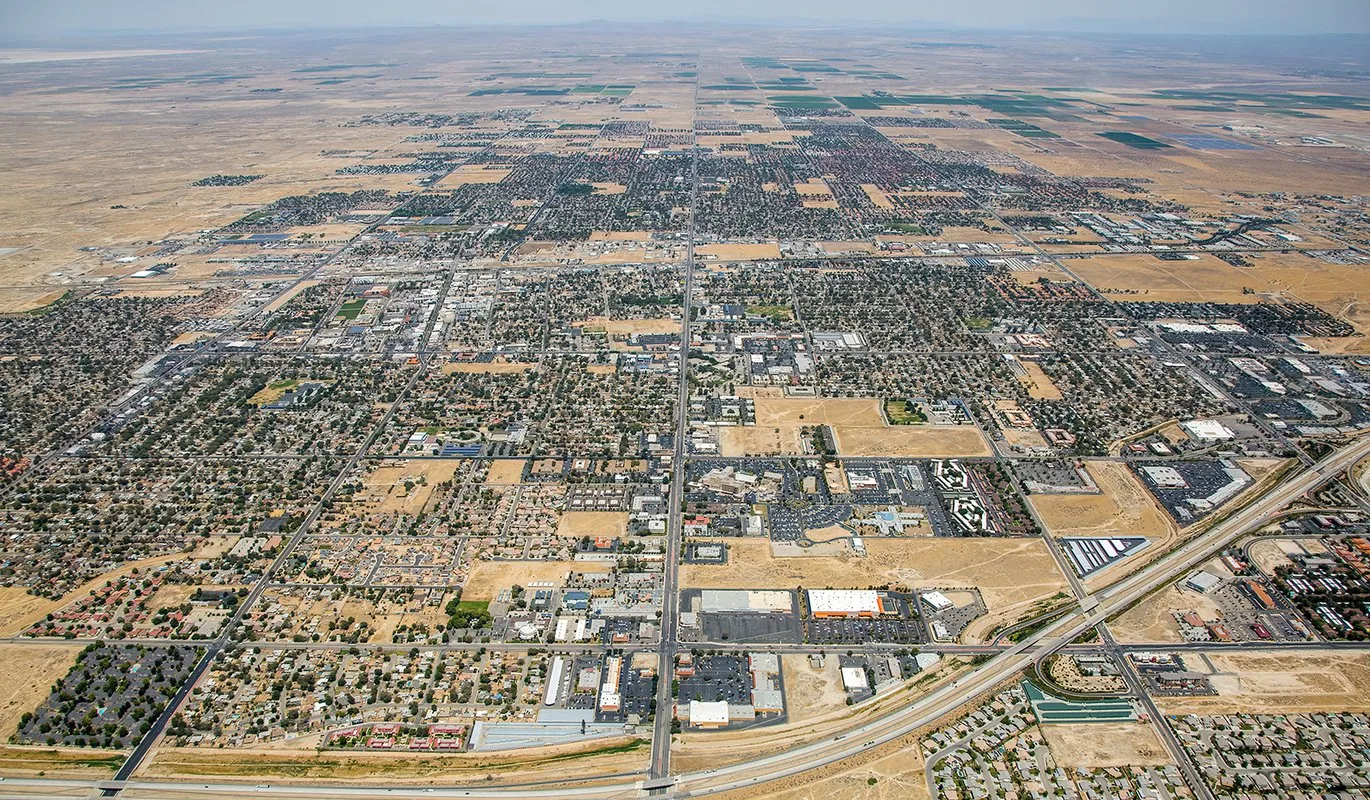
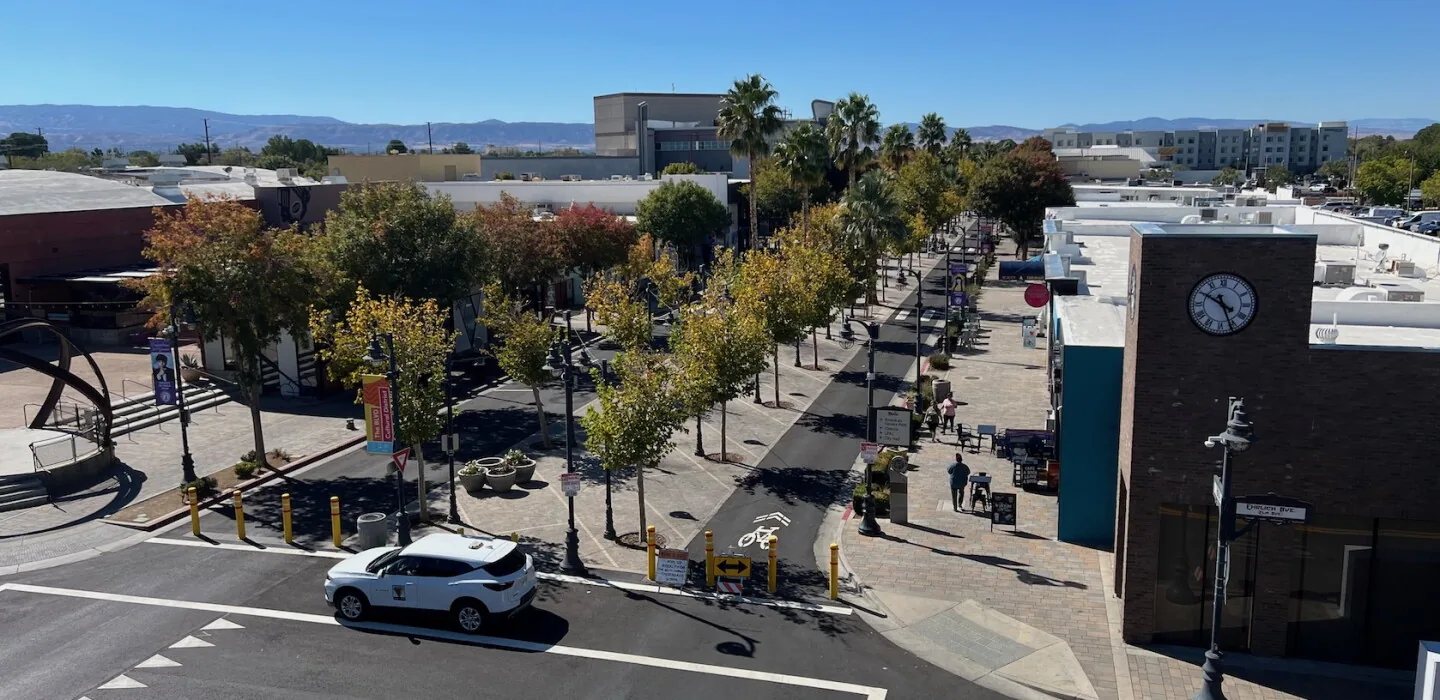
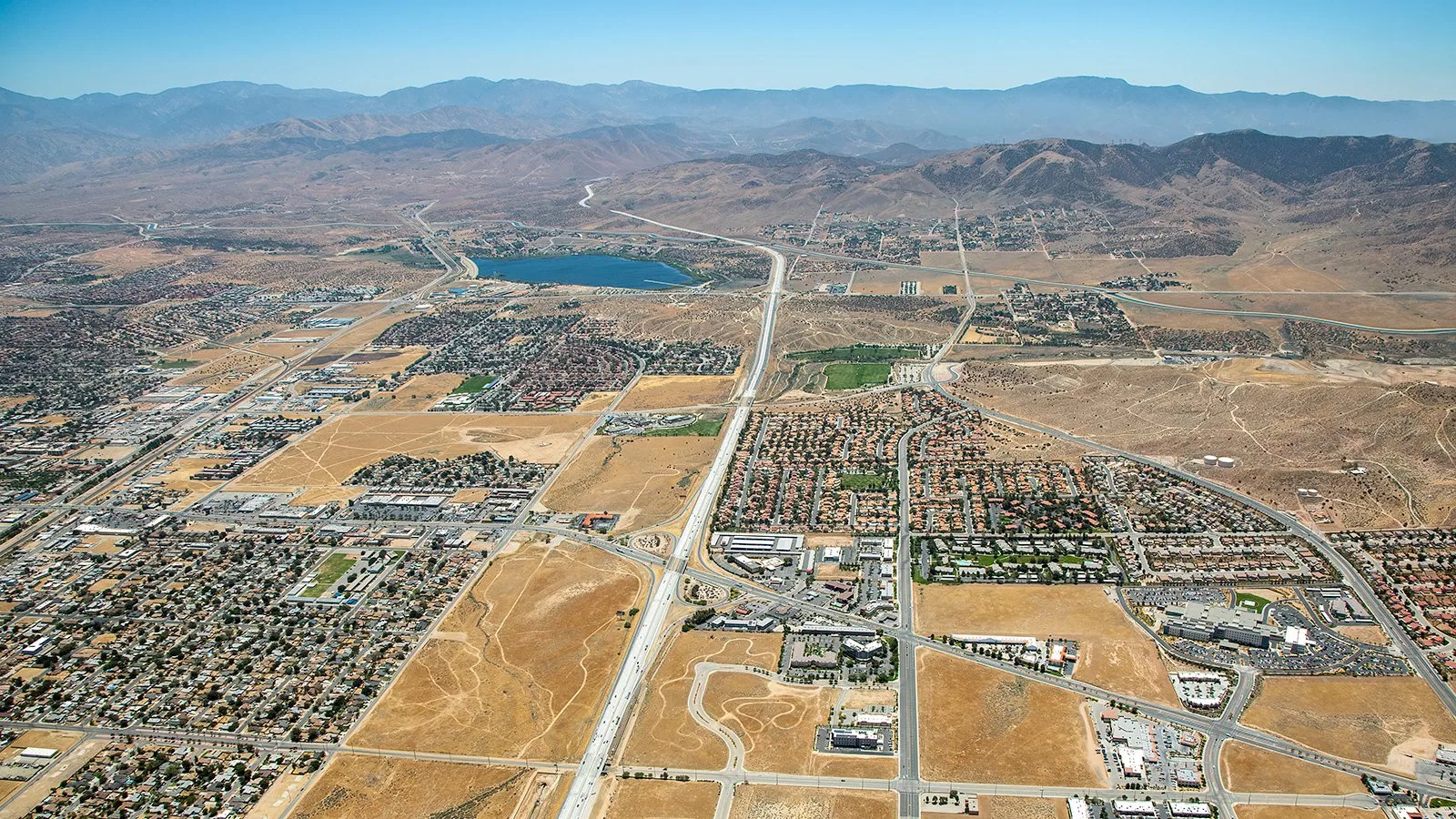
Lancaster’s commercial stock ranges from industrial properties in the Fox Field industrial corridor to the retail, office, and civic uses in Downtown Lancaster. Roof shape and wall construction change how the edge detail is built. We match the repair to the membrane or metal system and document how water leaves the roof, so the new edge works with the assembly rather than covering a failed connection.
Inspect the Edge as a Full Connection
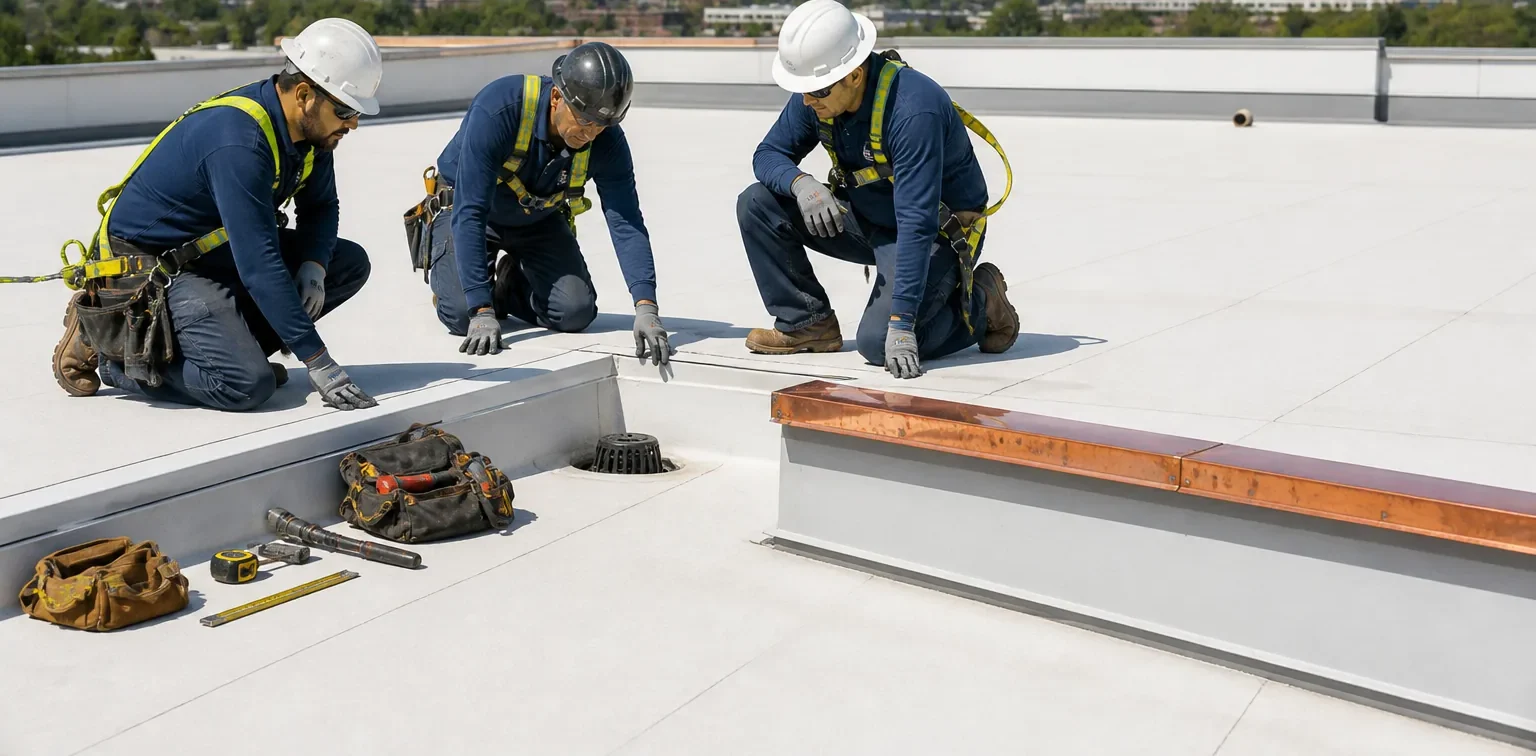
At a roof edge, we check the metal profile, seams, fasteners, cleats, termination bar, membrane turn-up, and connection to the wall or deck. The inspection looks for loose sections, open joints, corrosion, bent metal, sealant failure, and signs that wind has lifted the edge. We photograph corners and changes in direction because those are places where adjacent pieces meet and water can work behind the surface.
A parapet coping cap needs secure attachment and a joint detail that allows movement without opening a water path. We look for split seams, loose cleats, missing end dams, and gaps at corners or transitions. If the membrane terminates beneath the coping, we check that it remains connected and protected. Replacing only the visible cap may leave an underlying membrane or wall flashing failure untouched.
At a low-slope edge, the membrane may turn over a nailer or connect to a gravel stop or fascia. The metal must fit the roof thickness and attachment method. We check whether a prior recover changed the finished height or left a short metal leg. If the detail was altered by another trade, we identify where the new work should tie into sound membrane and whether the deck or blocking needs repair.
Give Runoff a Reliable Route Down
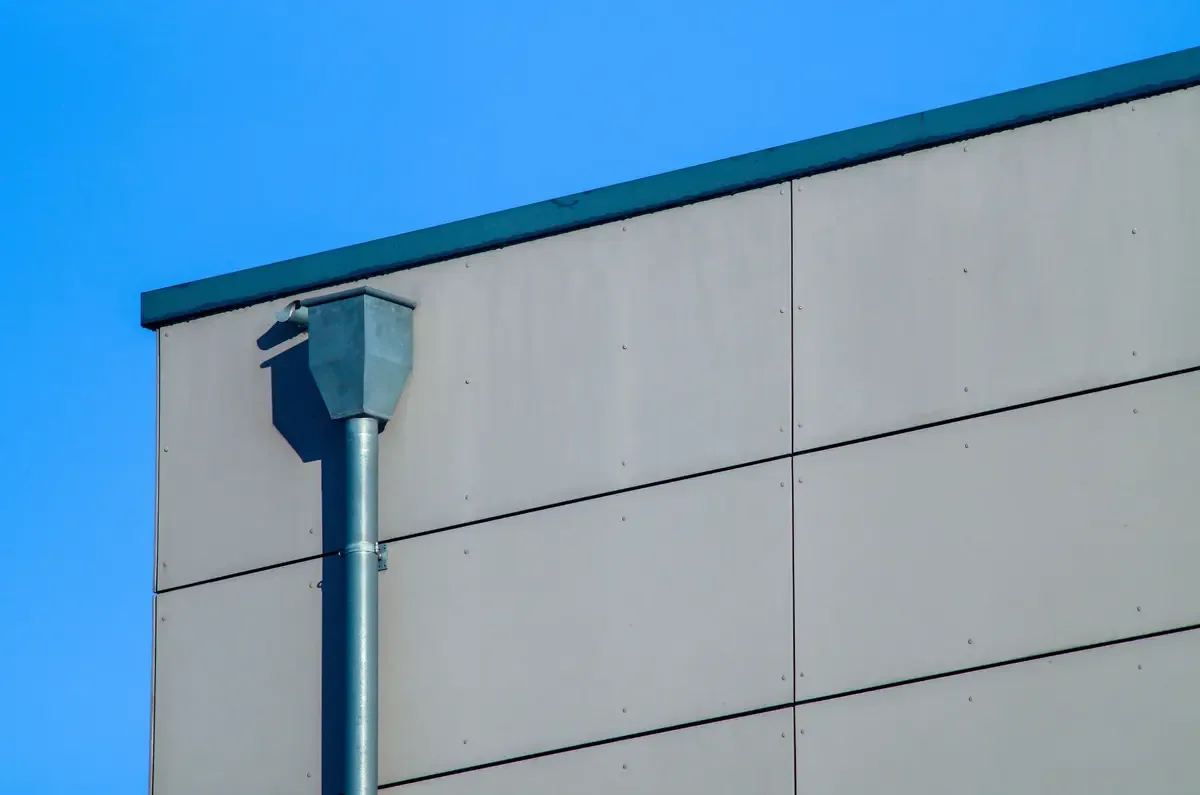
Gutters collect water at the perimeter and need a steady slope toward an outlet. We inspect hangers, seams, end caps, downspout connections, and discharge points for separation, blockage, or corrosion. A gutter that holds water may have a hanger out of line or a section that has settled. A loose downspout can spill at the wall or pull away where it meets the leader.
We check where runoff lands. Water that discharges beside an entrance, against a wall, or onto a lower roof can create a recurring building problem even when the gutter itself is intact. The repair plan may include a new outlet, an extension, or coordination with site drainage. We document the route and any access needed below the roof. For an occupied property, the crew protects sidewalks and loading areas while removing debris or metal sections.
Lancaster’s normal rainfall is concentrated from November through March, so gutter and downspout checks are useful before the seasonal wet period. We clear loose debris where included and look for staining that indicates overflow. If the roof’s primary drain or scupper is also involved, drain and scupper repair can address the connected roof-level outlet.
Choose Metal and Fastening for the Detail
Edge systems can use different metals, profiles, cleats, and fasteners. We identify what is present and whether dissimilar materials or prior repairs may affect the connection. The replacement needs adequate overlap and secure attachment to the structural edge or blocking. Sealant can close a compatible joint, but it should not be the only restraint keeping a loose metal piece in place.
Thermal movement matters at long runs and corners. NOAA's 1991-2020 normals at William J. Fox Field show a sizeable seasonal shift: the January daily minimum is 31.3°F and the July minimum is 67.2°F. The perimeter detail must accommodate movement without pulling the membrane termination or opening a seam. We inspect corners, splice plates, and fastener lines for distortion and use the selected system’s required attachment and lap details.
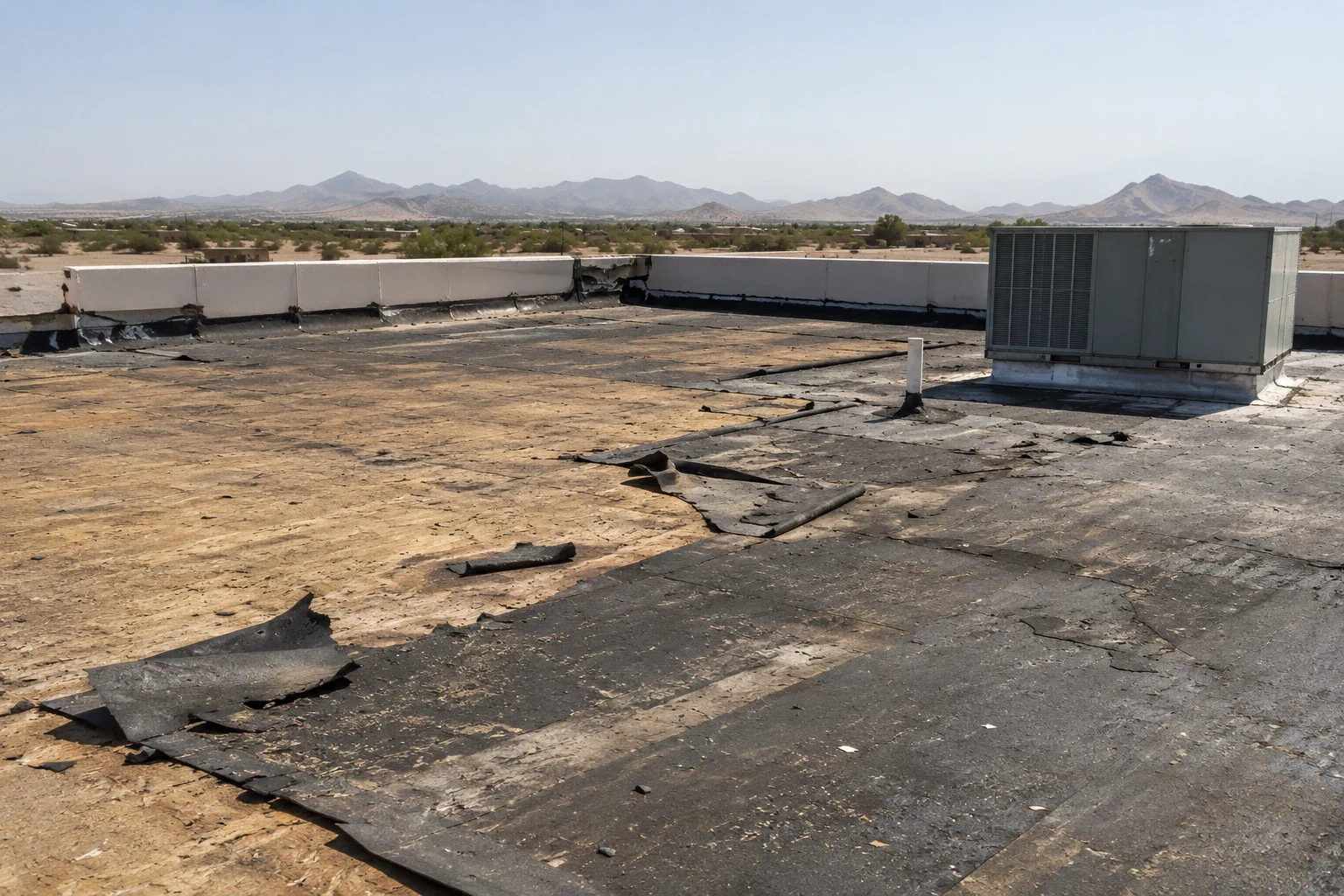
Where membrane meets edge metal, the tie-in method depends on the roof type. A thermoplastic membrane may need a welded connection; EPDM or modified bitumen calls for its own compatible termination. We verify that the field membrane is sound before closing the edge. If the membrane is brittle, wet, or delaminated, a metal-only repair can leave the more important failure in place.
Set the Work Boundary and Access Plan
A perimeter scope should identify the roof elevations, linear sections, corners, transitions, and discharge points included. We note whether metal will be removed, reused, or replaced; how the membrane termination will be restored; and what blocking or substrate work is allowed. If the existing metal conceals damage, the proposal states how we will photograph the condition and confirm the additional work before proceeding.
Access planning depends on the building. Lancaster’s Downtown plan includes retail, office, residential, and civic uses. Work above storefronts or public entrances requires protected pedestrian paths and coordination with the property contact. Industrial locations may need lifting equipment and a clear route away from loading traffic. We confirm the staging area, roof access, fall protection, and any business hours that affect the sequence.
If the edge repair is part of a reroof, the new membrane thickness may change the finished profile and metal dimensions. We coordinate perimeter metal with insulation, cover board, and roof transitions before installation. A tapered insulation and cover board plan can affect edge height, while replacement work may allow a continuous perimeter detail instead of a patch around the old system.
Verify the Edge after the Repair
At completion, we check that metal sections are secure, seams and joints are closed, membrane transitions are connected, and gutters or downspouts discharge as planned. We photograph corners, splice points, terminations, and outlets. The property record identifies the repaired run and notes any adjacent area that still needs attention. That detail helps the next maintenance visit distinguish the new connection from older metal nearby.
Recurring movement or overflow can point to a larger issue with the edge assembly, drainage slope, or roof height. We carry those observations into preventive roof maintenance or a broader roof inspection. A condition report can retain before-and-after photographs with the roof history, making future leak calls easier to compare with the completed work.
Request an assessment when coping shifts, edge metal lifts, or gutters overflow. We will inspect the roof-to-wall transition, trace the discharge route, and define the repair scope around the condition we find.
Commercial Roofing Questions
Can you replace coping without replacing the roof membrane?
Sometimes. We inspect how the membrane terminates beneath the cap and whether the underlying flashing and blocking remain sound. If that connection has failed, the scope needs to restore it along with the coping.
Why does water spill from a gutter that looks intact?
The gutter may have a blocked outlet, a changed slope, a loose joint, or more runoff than its discharge path can handle. We check the full route, including downspout connections and where water reaches grade.
Is sealant enough to secure loose edge metal?
Sealant closes a compatible joint but does not replace mechanical attachment. We inspect the cleats, fasteners, substrate, and metal profile before choosing a repair method.
Will new roof insulation change the edge detail?
Added insulation can raise the finished roof surface and change the metal leg or membrane termination needed. We coordinate edge dimensions with the planned assembly before ordering material.
What should we do if runoff reaches an entrance?
We trace the gutter or downspout route and identify whether the outlet, extension, or site drainage needs correction. The repair plan accounts for pedestrian protection while crews work above the entrance.