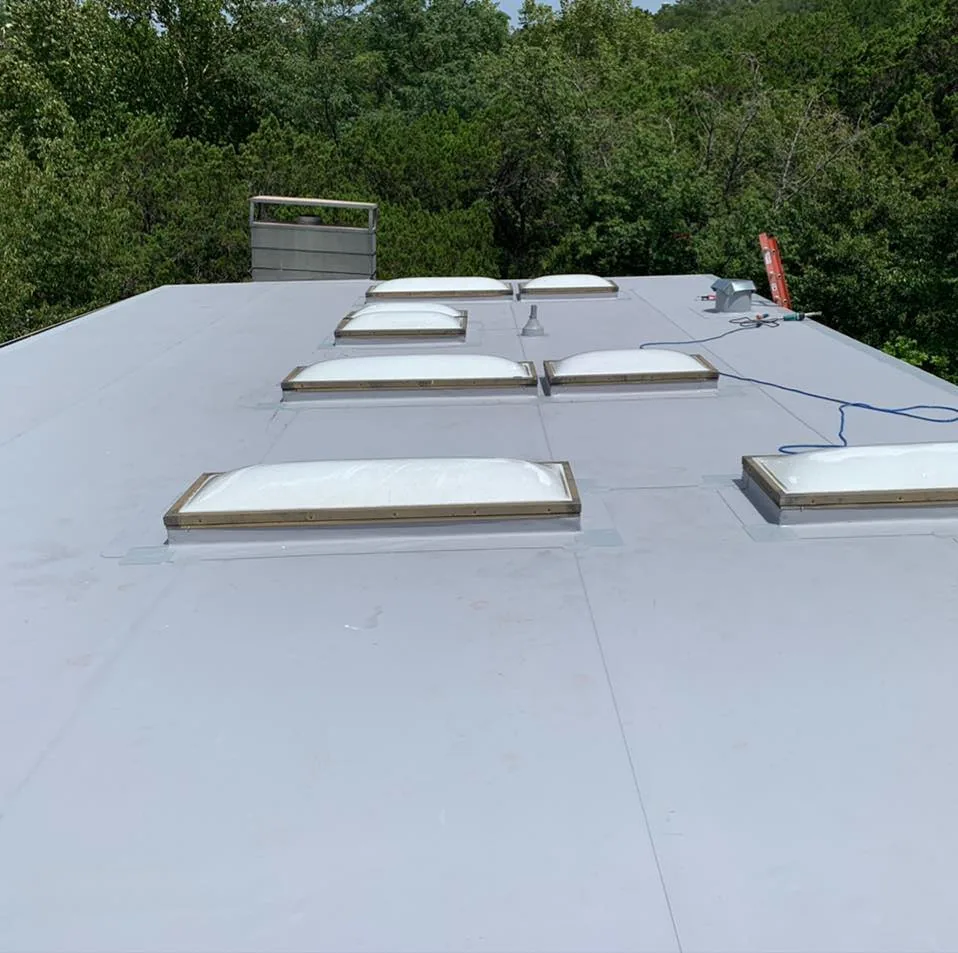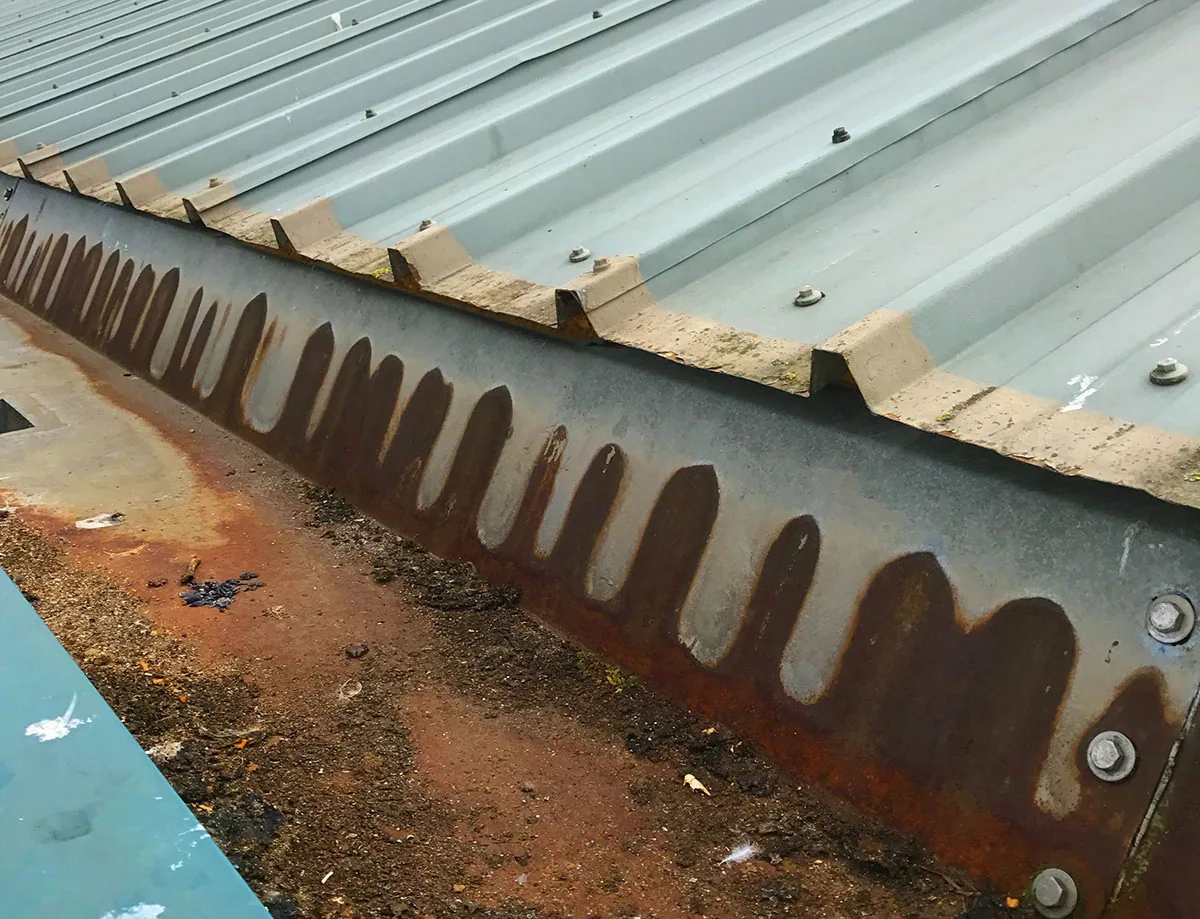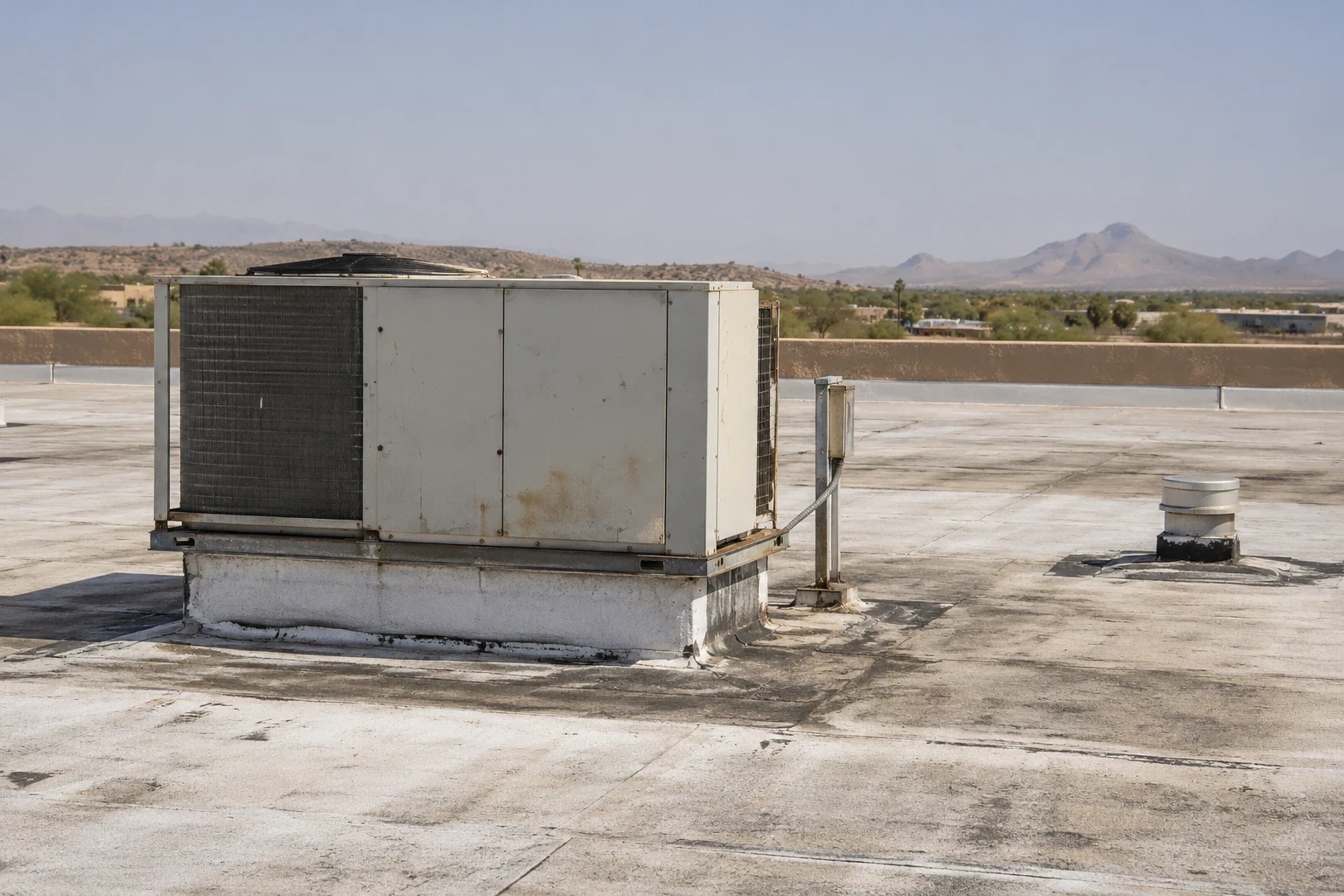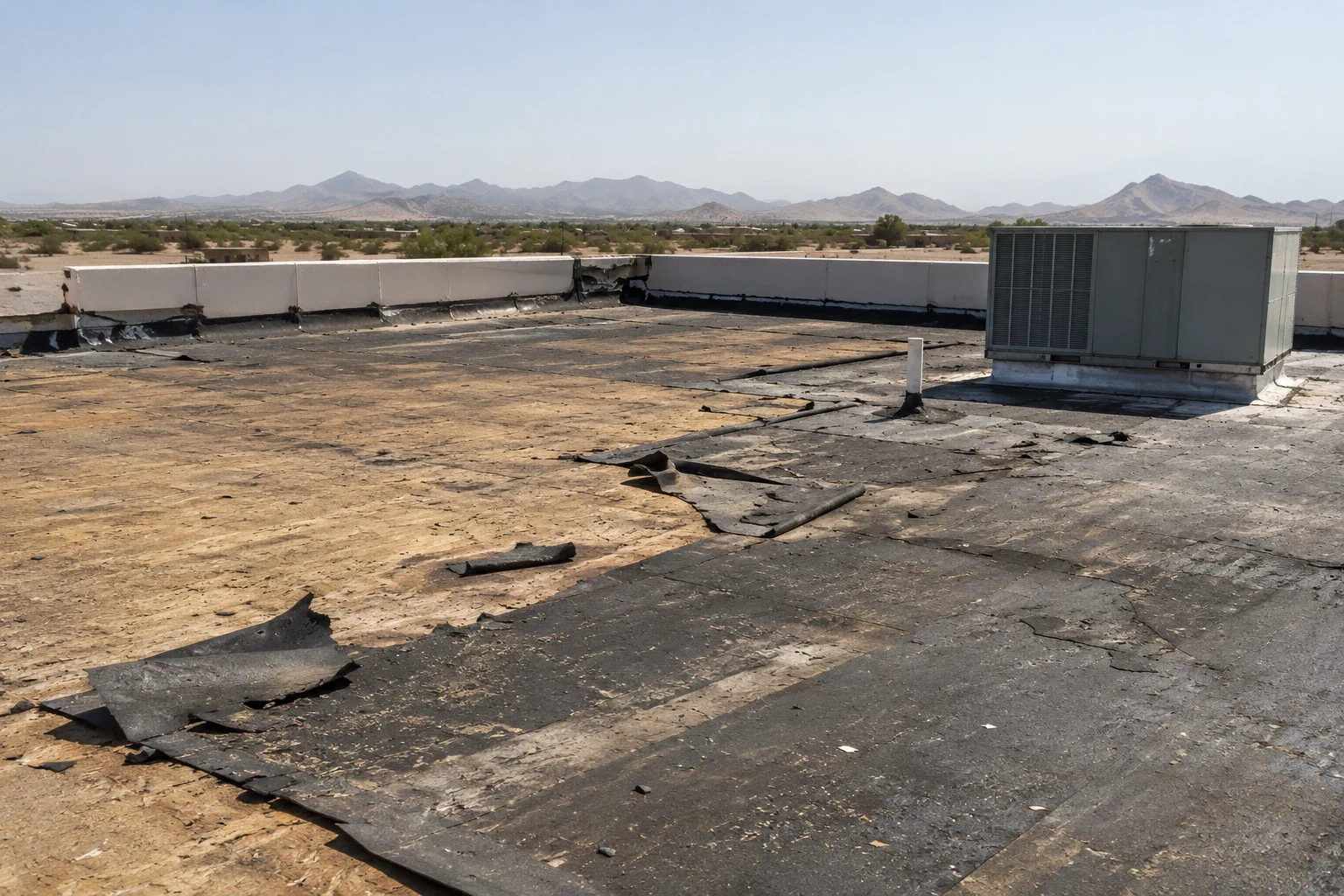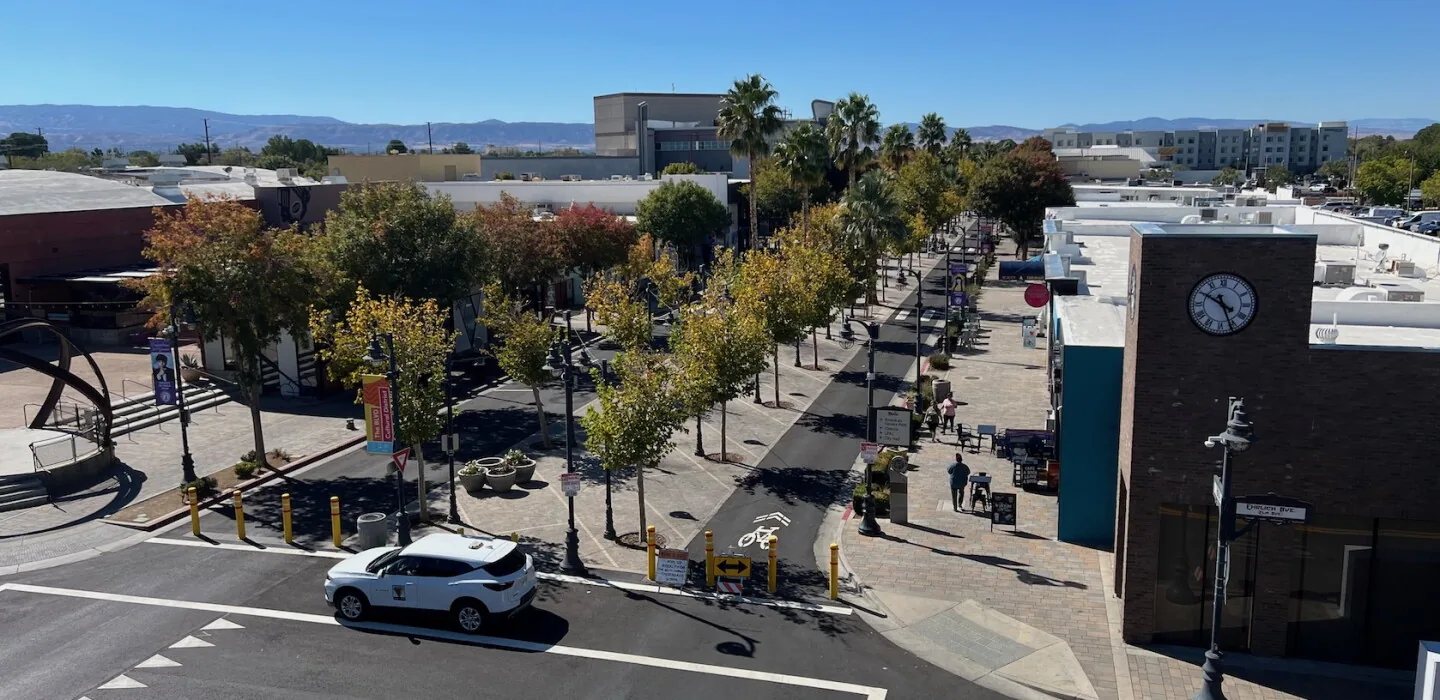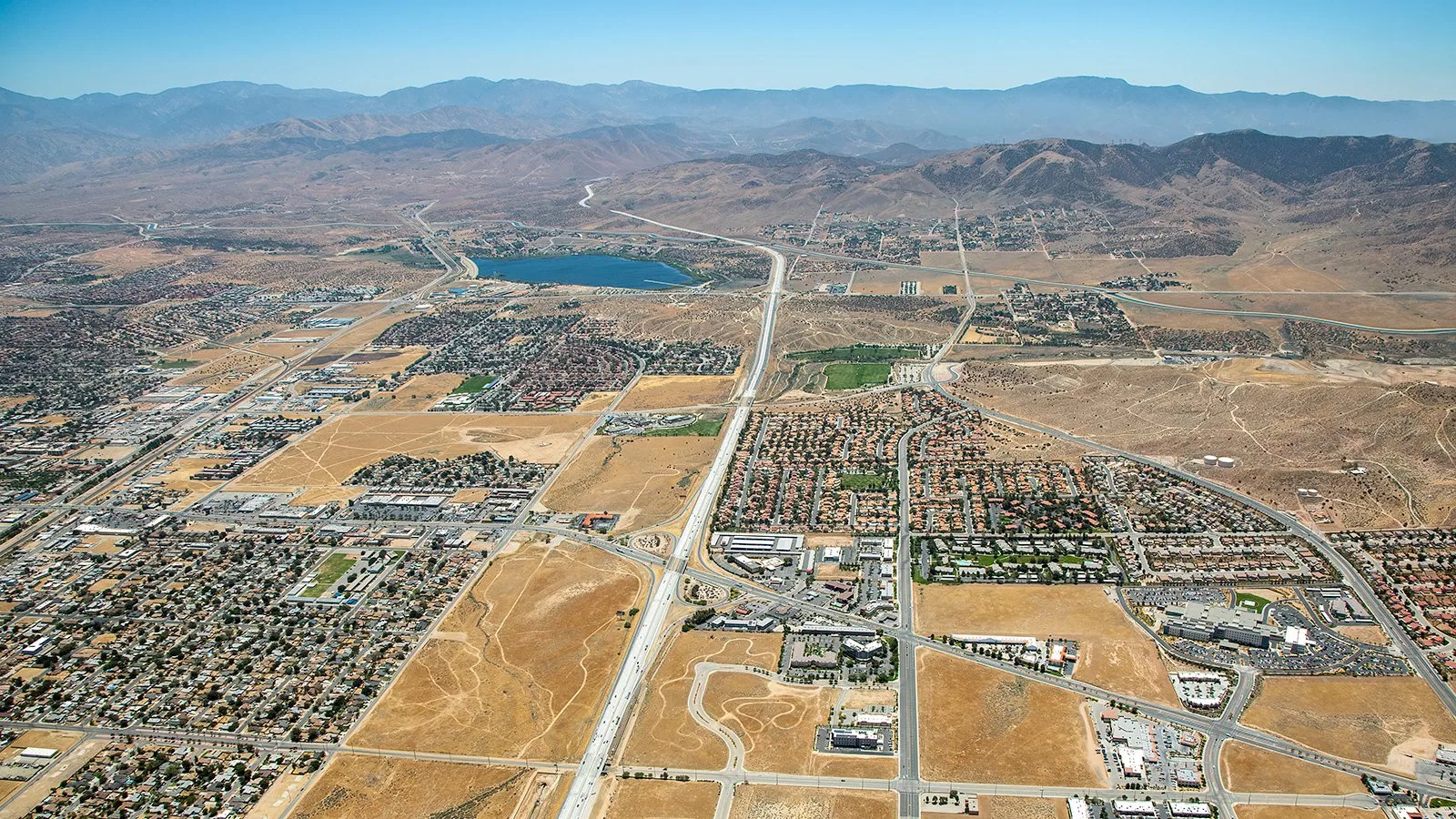
A membrane seam beside a curb can open under repeated heat movement, while water follows a different path across the insulation below. Commercial roof planning along Palmdale’s East Avenue S corridor starts with identifying the property, the roof assembly, and the work decision in front of the owner. Retail development opportunities near Avenue S and 40th Street East, and separately near Avenue S and 47th Street East, give this corridor more than one planning node. They do not make the roof scopes interchangeable. We document each building or proposed project on its own terms.
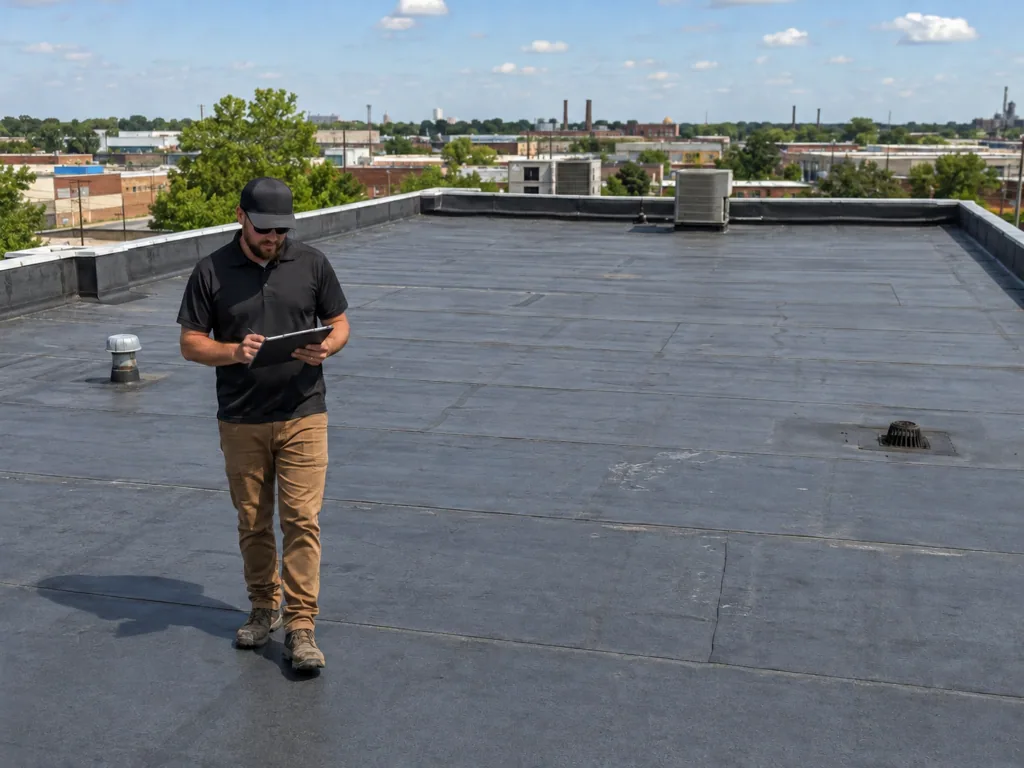
For an existing property, the first walk records active leaks, drainage, penetrations, edges, and prior repairs. For a new or substantially altered building, we review available roof plans and interfaces before work begins. Palmdale’s economy includes aerospace, manufacturing, logistics, medical, and retail activity, so operating access may differ from one project to another. A useful recommendation connects the observed roof condition to a defined repair, maintenance step, or capital scope.
Set the project boundary before pricing
Two commercial opportunities near Avenue S can lead to different roof requirements even when the sites share a corridor. One may involve a new membrane installation; another may need a leak investigation or a review of an existing system. We begin with the intended scope, available drawings, roof access, and the operation below. That prevents a replacement allowance from being confused with a repair price and gives the owner a clear list of assumptions to resolve before mobilization.
On an existing low-slope roof, we identify whether the surface is TPO, PVC, EPDM, modified bitumen, built-up roofing, or a coating where the material can be confirmed. The distinction affects seam repair, flashing preparation, and compatible materials. A TPO roof assembly has welded seams, while other systems use different lap or flashing details. We record what is visible and note where a test opening would change the scope. Appearance alone is not enough to select a repair method.
Follow the water path through the assembly
A ceiling mark is a starting point, not a repair boundary. Water can move beneath the membrane, along a deck flute, beside a wall, or around a curb before it reaches the room. We compare the reported location and timing with seams, penetrations, drains, and transitions above. An on-roof inspection records the likely path and the evidence for a proposed correction. When the roof contains more than one elevation or addition, we label those areas separately so the owner can see which assembly is involved.
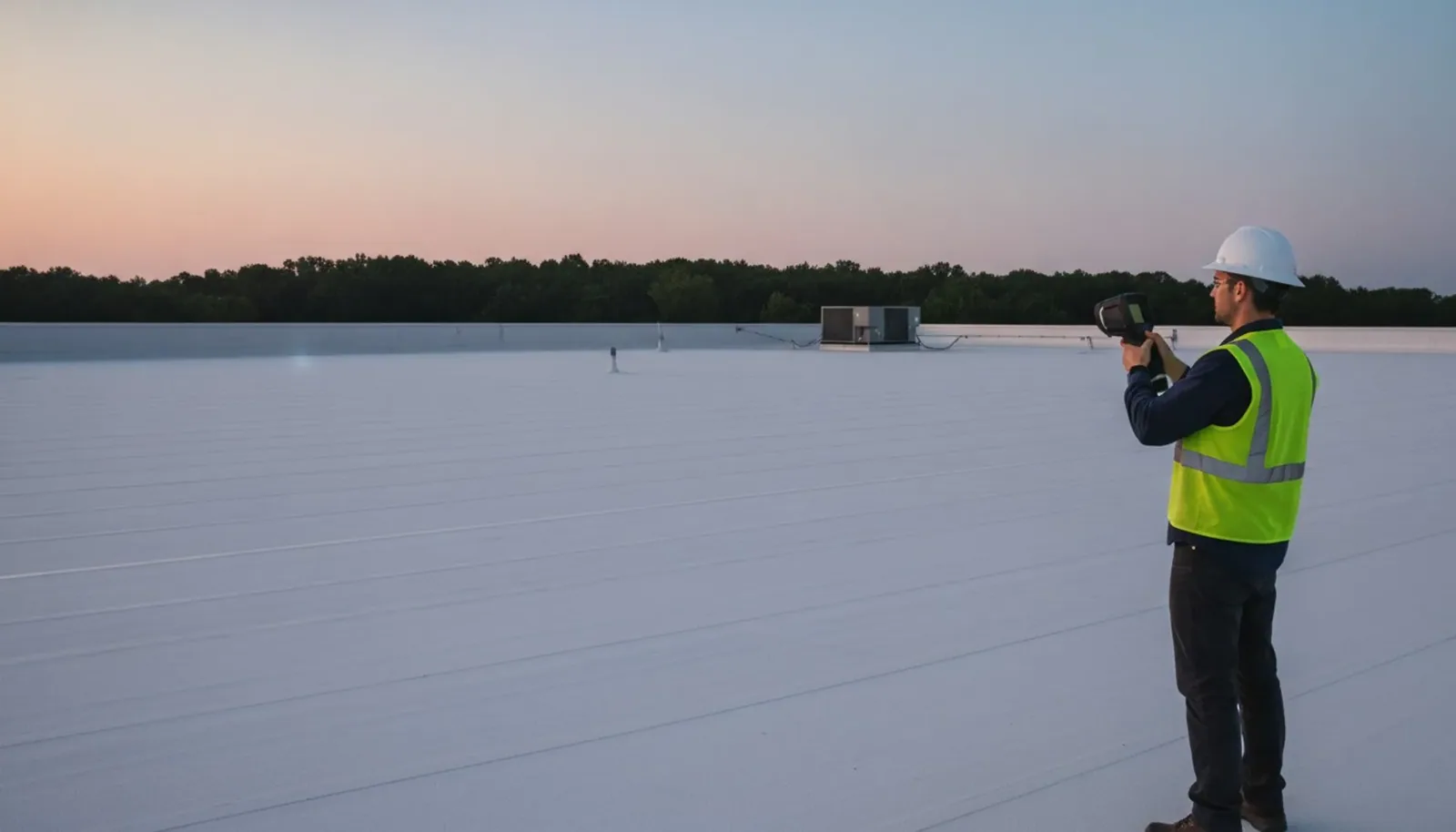
Infrared patterns can help direct attention when moisture may be beneath the surface, but the pattern needs confirmation in context. We compare the scan with visible conditions and use a test opening only when its result could change the decision. The report should identify where the test was made, which layers were found, and how the opening was protected afterward. A moisture survey can be useful when it narrows the area for further review rather than standing alone as a diagnosis.
Account for Lancaster heat and seasonal movement
Heat acts on exposed membranes, sealants, edge metal, and equipment supports throughout summer. At Lancaster’s William J. Fox Field station, climate normals set the August daytime high at 97.8 degrees and put July at 31 days averaging 90 degrees or warmer. Regional heat cycling can stress exposed laps, metal terminations, and sealants, which we inspect across each accessible roof zone before selecting the appropriate repair for this property. Repeated expansion and contraction can stress laps, curb corners, and terminations.
The station’s normal January overnight low is 31.3 degrees, compared with 67.2 degrees in July. That seasonal range reinforces the need to inspect transitions and sealant movement across the year. We look for open laps, split flashing, displaced fasteners, brittle sealant, and patches that no longer bond to the surrounding surface. If a repair reaches sound material and restores the failed detail, it may remain localized. Wider moisture or recurring movement can change the recommendation.
Compare a repair with broader roof work
A repair is appropriate when inspection locates a contained failure and the surrounding assembly can receive a durable tie-in. The estimate should name the roof zone, preparation, materials, and detail being restored. If wet insulation or a weak substrate extends beyond the visible leak, we document the added condition and discuss the revised boundary before proceeding. For repeated failures or widespread deterioration, compare the repair history with a replacement assessment instead of adding another patch without a system-level review.
A recover or coating evaluation has separate prerequisites. The retained layers must be suitable, the surface must be prepared, and drainage or trapped moisture concerns must be addressed. A new commercial project also needs clear coordination at edges, penetrations, and equipment curbs where other trades meet the roof. We can organize observations in a photo condition report so ownership can compare the options by scope and timing. Each alternative should explain what it resolves and what remains outside the work.
Plan access and closeout with the work
Staging, deliveries, and roof access need to be coordinated with the actual tenant or construction schedule. Before mobilization, we confirm where materials may be placed, which entrances or service lanes must remain open, and who can approve a change if concealed damage appears. For a new or occupied building, a phased roof sequence can define which area opens first, where temporary protection ends each shift, and how crews keep active work separate from completed sections.
Closeout should preserve more than a final invoice. We label photographs by roof zone, record the material and repair boundary, and list any area that could not be reached or still needs testing. That record helps a future manager compare the same detail and distinguish a returning leak from a separate failure. Palmdale’s broader business context may include retail near Avenue S and logistics or manufacturing elsewhere; the access plan comes from the specific property contact, while the technical recommendation comes from the roof findings. Owners can also review our Palmdale service area and Quartz Hill coverage when coordinating properties in the wider market.
Commercial Roofing Questions
Are the Avenue S retail opportunities existing roof projects?
No. The listed opportunities are near Avenue S and 40th Street East and near Avenue S and 47th Street East. We assess an existing building or proposed construction scope separately and base the roofing recommendation on its plans and field conditions.
What should an owner provide before a roof assessment?
Available roof plans, leak locations, prior repair records, equipment changes, and access instructions help us prepare. We still verify the assembly in the field and identify any information that needs testing before a final scope is set.
Can you respond to an active leak outside normal business hours?
Emergency response is available around the clock, including holidays. We first address immediate exposure safely, then document what was stabilized and what permanent repair still requires inspection.
When does a local repair become a replacement discussion?
The boundary changes when moisture, weak attachment, or repeated failures extend beyond one detail. We document the affected areas and compare a contained repair with broader work that the assembly can support.
How do you keep a retail property accessible during roofing work?
We confirm delivery windows, entry routes, staging, and any tenant limits with the property contact. The sequence can then protect active areas and define where temporary closures or noisy work may occur.