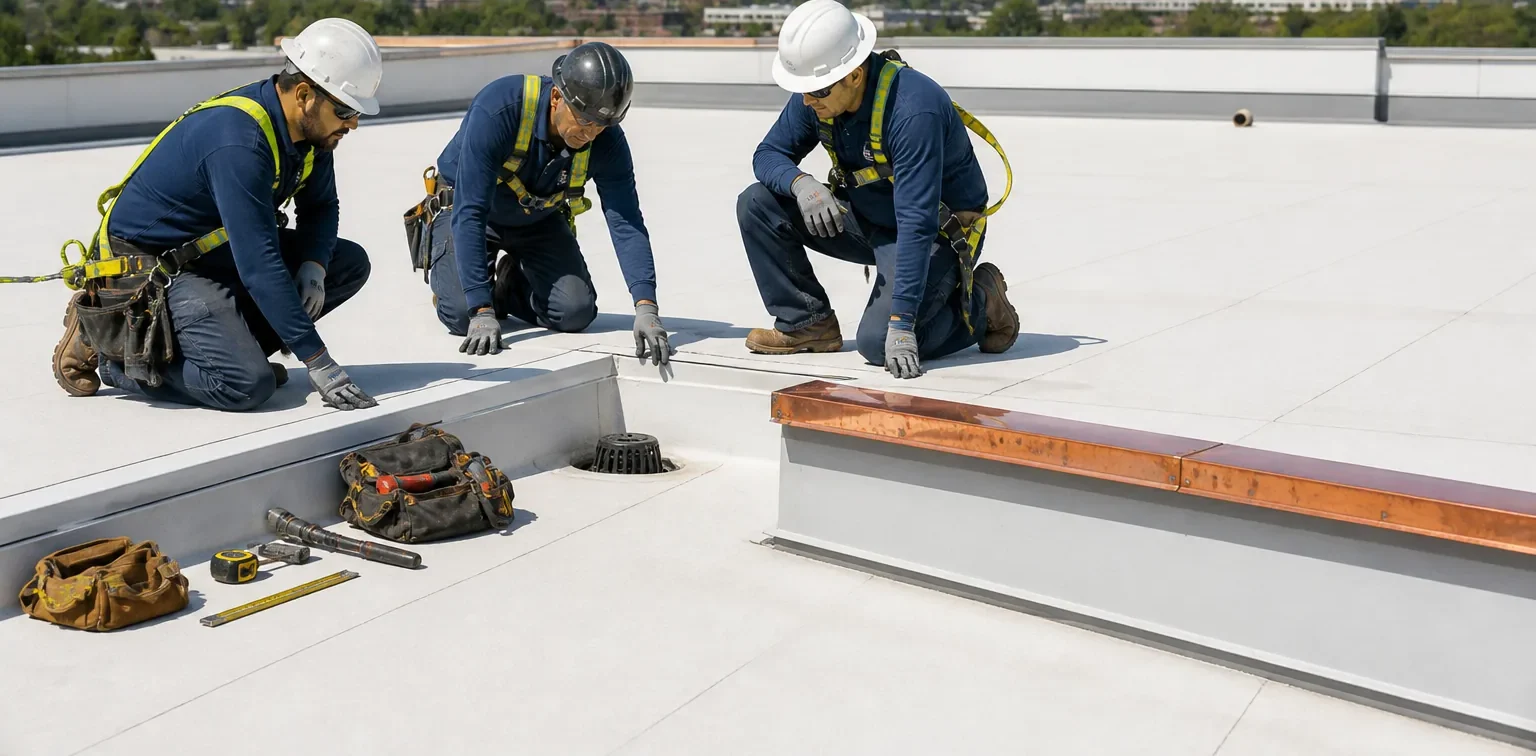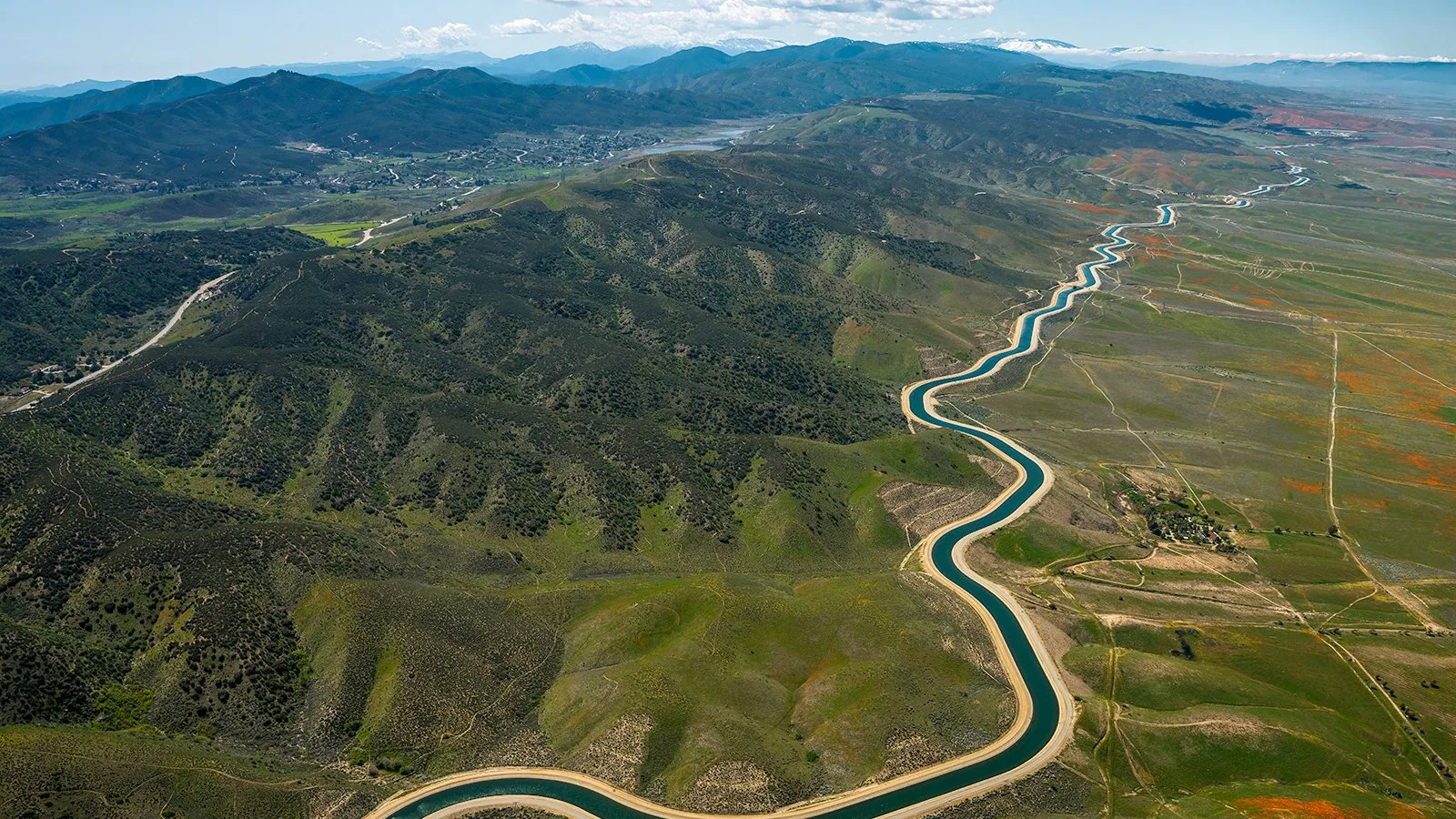
A roof issue at a hotel, event venue, or extended-stay property can touch guest rooms, kitchens, meeting space, and mechanical service in one visit. The first useful decision is where the water entered and which areas may need protection. We connect the reported room or corridor to roof details, document what was inspected, and define the repair boundary so the property team can coordinate work without overstating the condition of other buildings.
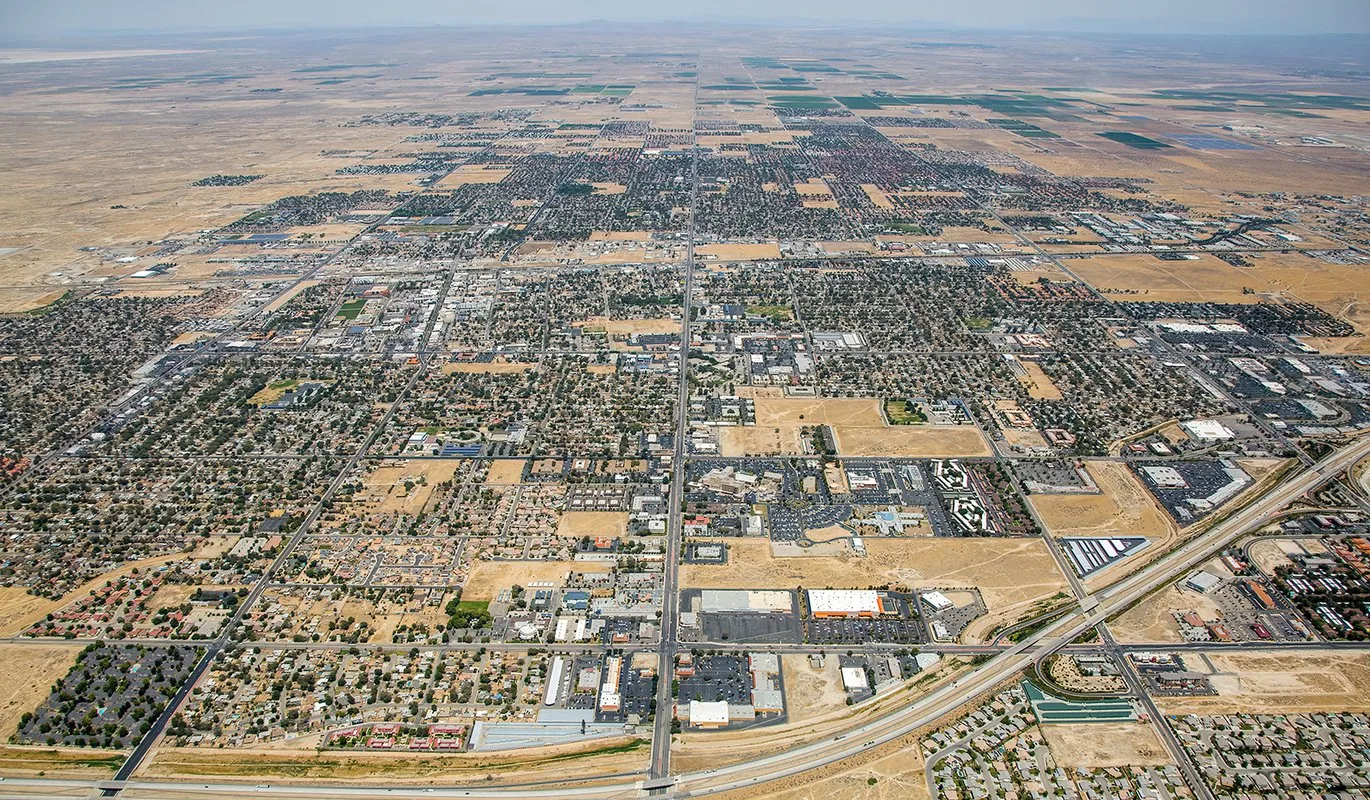
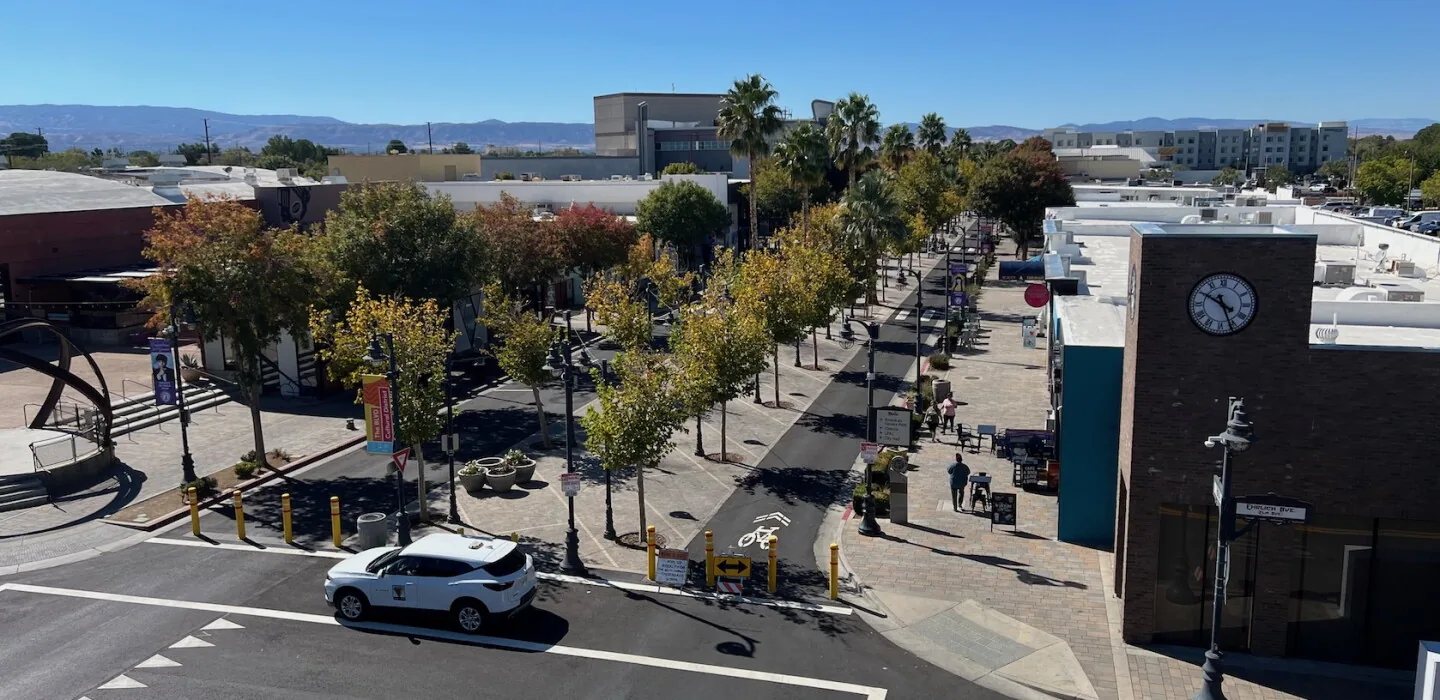
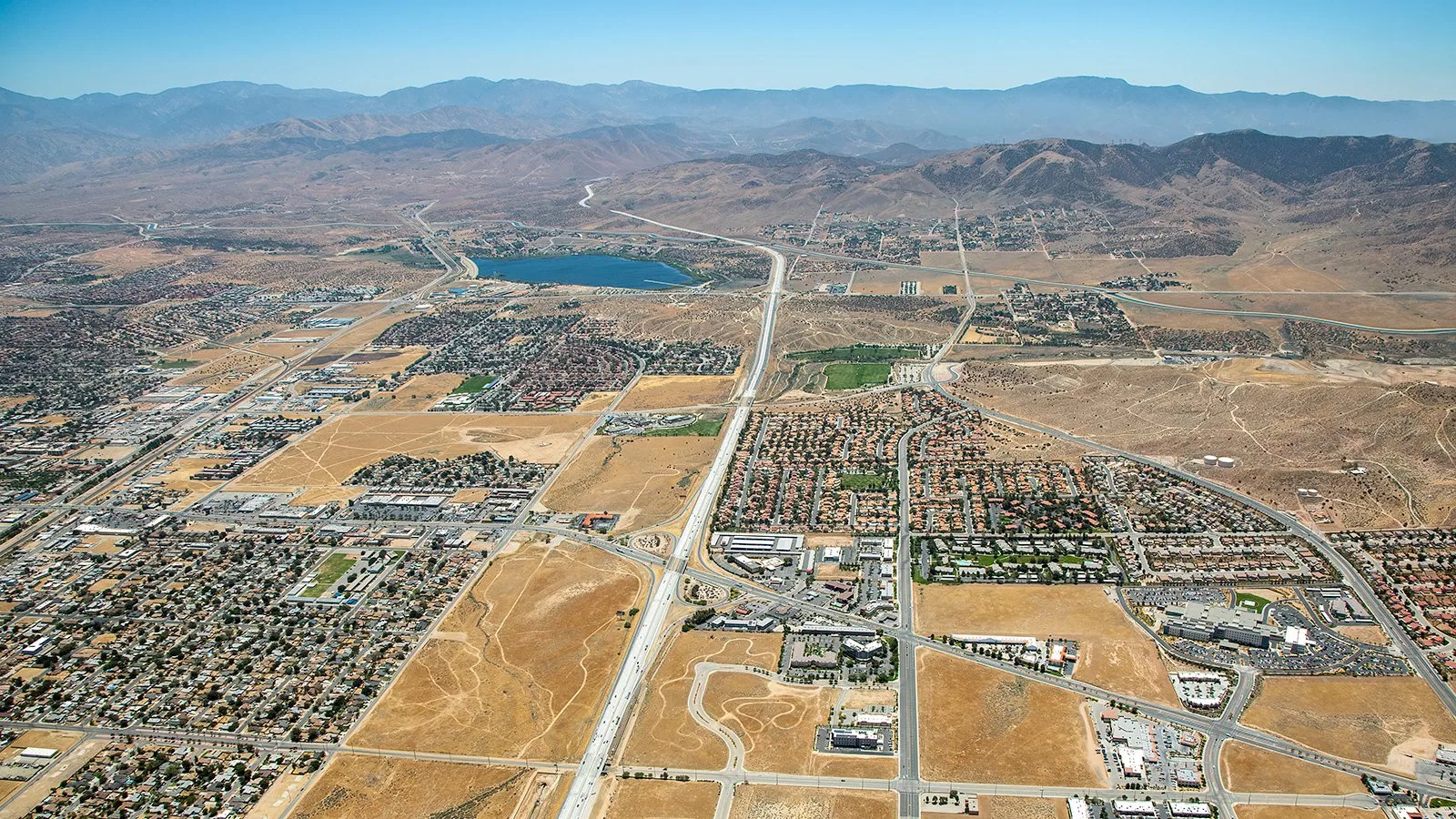
Neighboring Palmdale’s economy includes aerospace, advanced manufacturing, logistics, medical, and retail activity. Lancaster’s Amargosa Creek area includes office, retail, and major medical uses, alongside distinct business and industrial plan areas. A hotel next to a business park has different guest and delivery movement from a medical-area property. The roof scope should account for the actual layout, use, and access rules at that site.
Trace the Report through Guest and Service Areas
Record the room, floor, ceiling mark, and time the issue appeared, then compare that information with roof seams, drains, wall transitions, and mechanical curbs. Water can travel inside a roof assembly before reaching a guest room. A nearby exhaust fan or cooling unit may be involved, but proximity alone does not establish the leak entry point. The inspection should link photos to the roof zone and note whether selective testing was performed.
A commercial roof inspection can help a chief engineer distinguish a roof entry point from condensation, plumbing, or an interior mechanical issue. For a portfolio, a property management record can connect work orders to each building and room location. When a property has several additions, map their roof heights and drainage separately; a ballroom wing, guest tower, and service annex may not share an assembly or maintenance history.
Inspect Transitions Above Kitchens and Mechanical Rooms
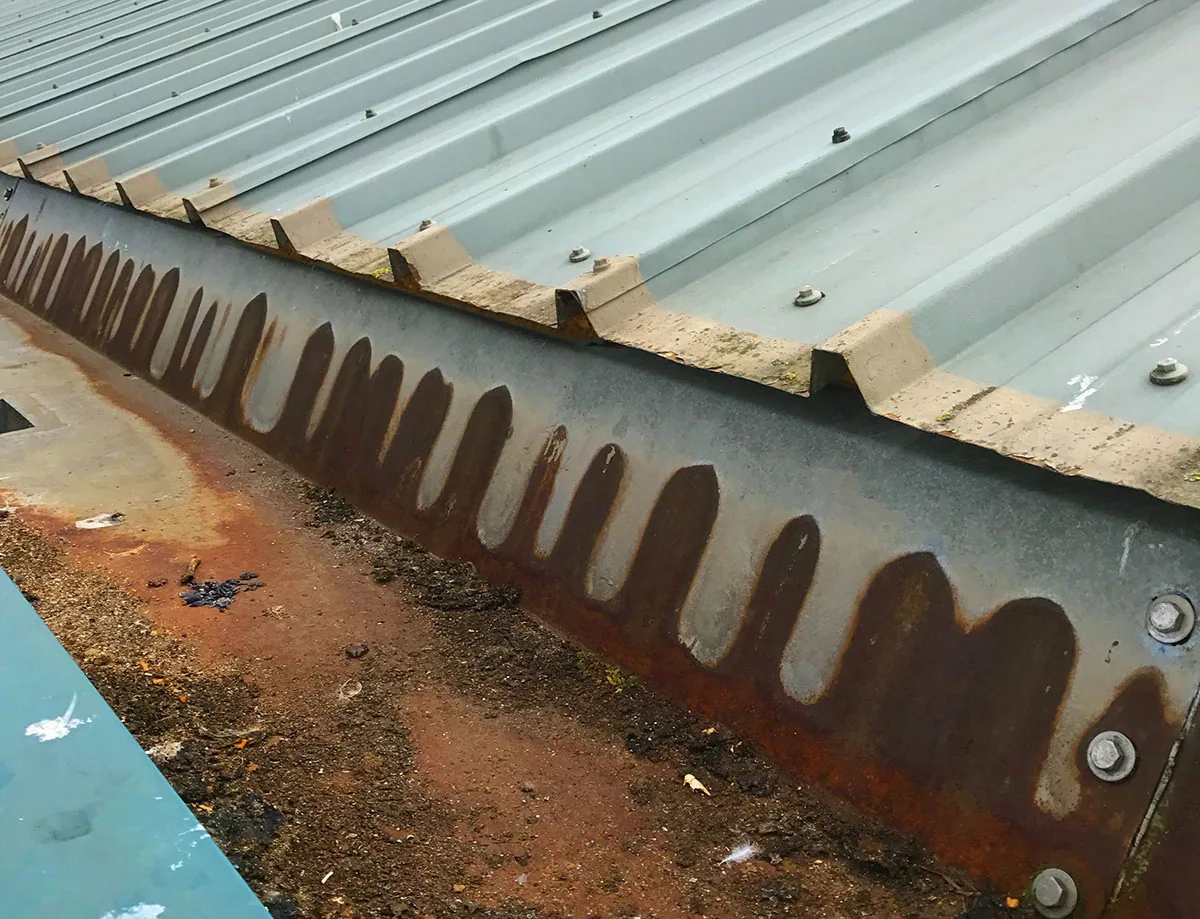
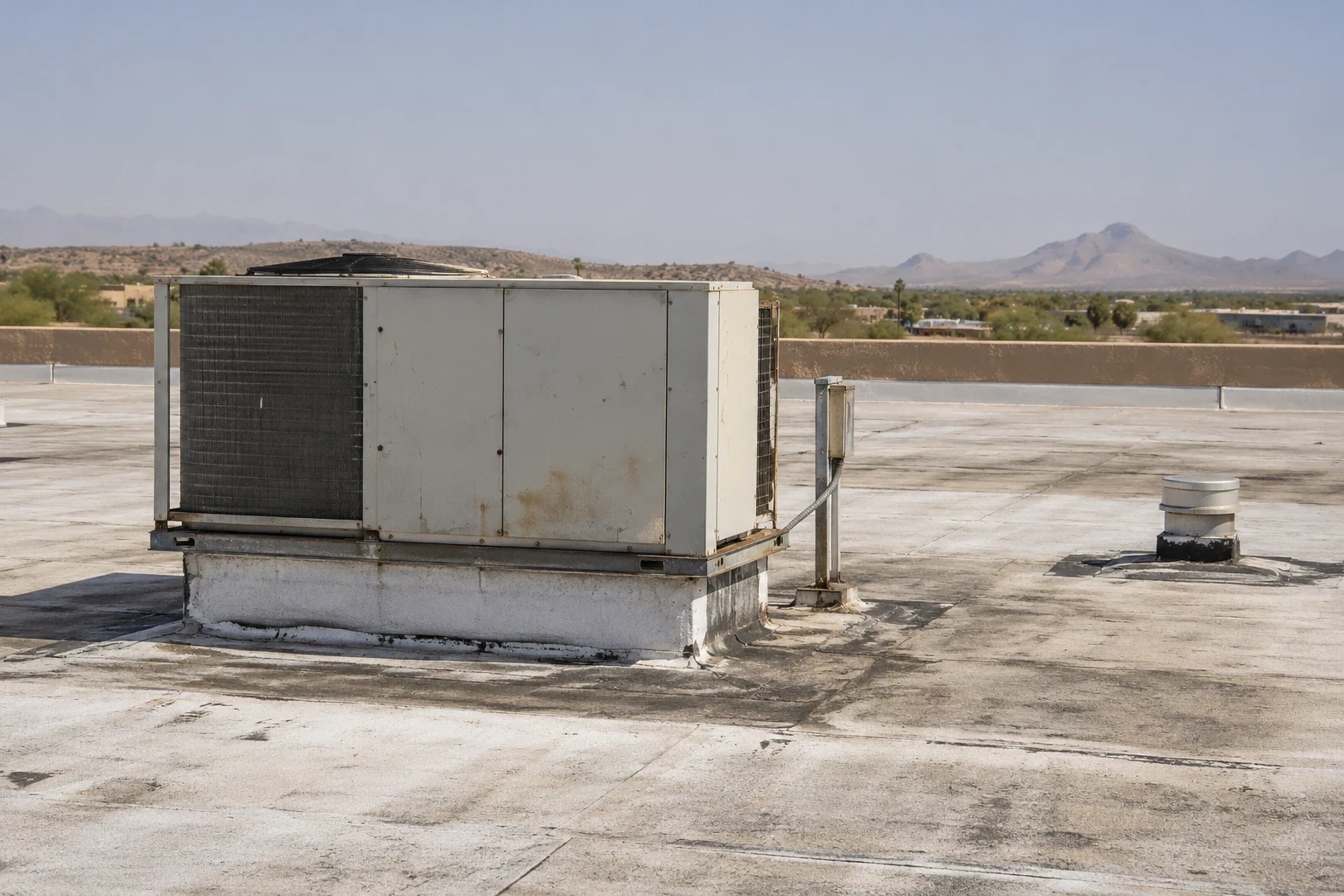
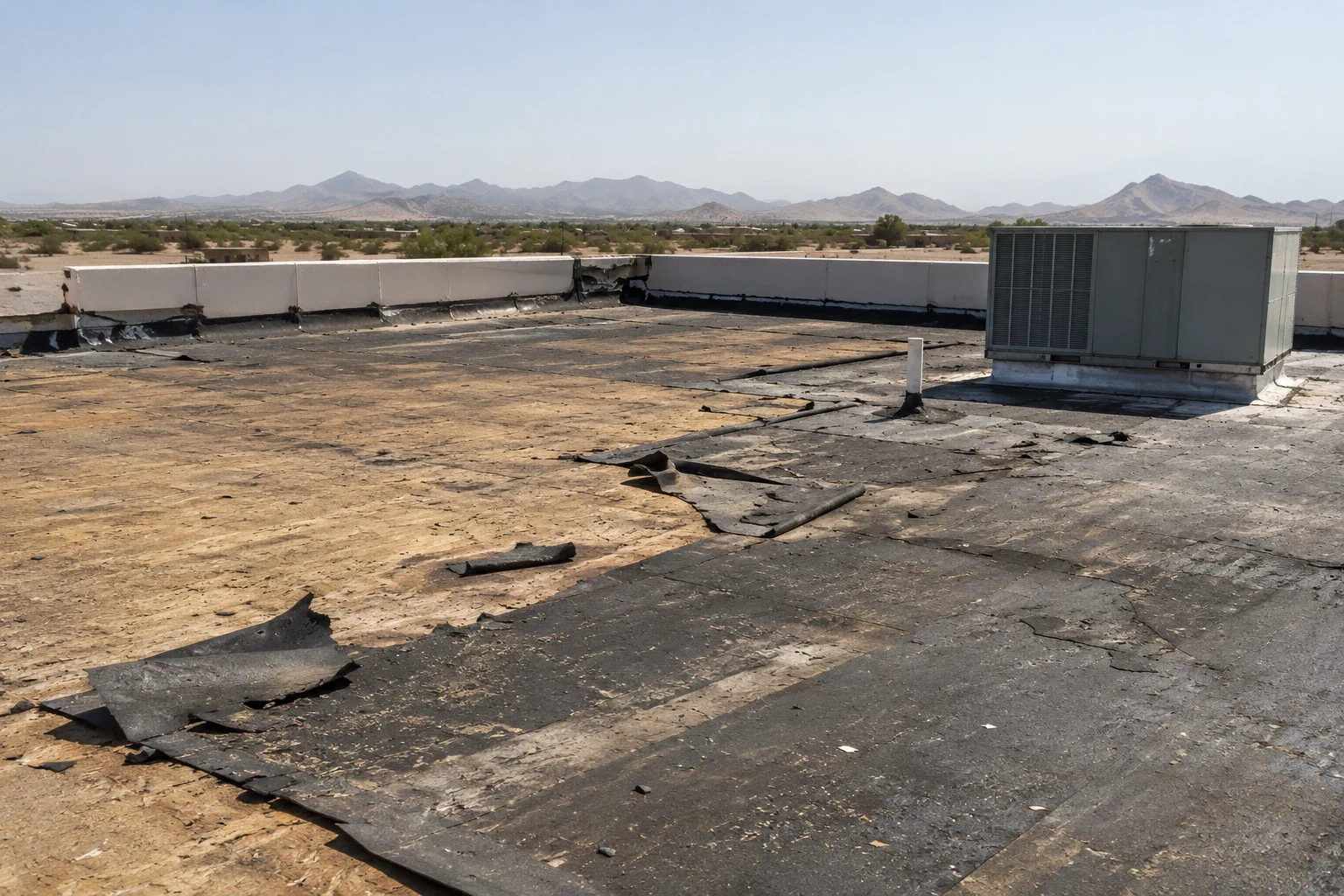
Hotel roofs often carry exhaust, fresh-air intakes, cooling equipment, kitchen penetrations, and service piping. Flashing can separate at a curb corner, a sealant joint can lose adhesion, or a drain transition can admit water after debris slows flow. We inspect the membrane, curb, edge, and drainage detail around the reported area. Where a kitchen exhaust carries grease to the roof surface, material compatibility and cleaning practices affect the repair preparation.
Guest-facing finishes can hide repeated moisture for a time, while a ceiling stain can appear after water has moved along a deck or framing line. We compare interior observations with roof conditions and identify any test opening or moisture survey that may narrow the area. If the substrate is soft or the wet zone extends, the work boundary should account for removal and a sound tie-in. Keep a separate list for conditions that require plumbing or mechanical review so each trade addresses the right cause.
Sequence Work Around Occupancy
Identify check-in peaks, quiet hours, food service, events, deliveries, and any room blocks that already exist. A roof crew may need an entry route through a service area rather than a guest corridor. Plan lift placement, staging, debris movement, and interior protection before the first work day. The property contact should identify where noise, odors, or temporary restrictions could affect guests and staff.
When work occurs above an occupied room, set a direct contact for the floor or department and explain what the crew may open. Roof work can often proceed without closing a whole property, but the actual sequence depends on the location and method. Confirm the room or public area that needs access and the time it can be released. If conditions change after opening, secure the area and agree on a revised plan before expanding the work footprint.
Separate Immediate Protection from Capital Work
A contained flashing repair may resolve a local defect if adjacent membrane and substrate remain serviceable. Repeated leaks across a wing, widespread moisture, or several failing transitions may support a broader section repair or replacement review. The findings should show where testing occurred, what remains dry or untested, and why the recommendation follows from those observations. The hotel can compare one mobilization with phased work around occupancy and planned renovations.
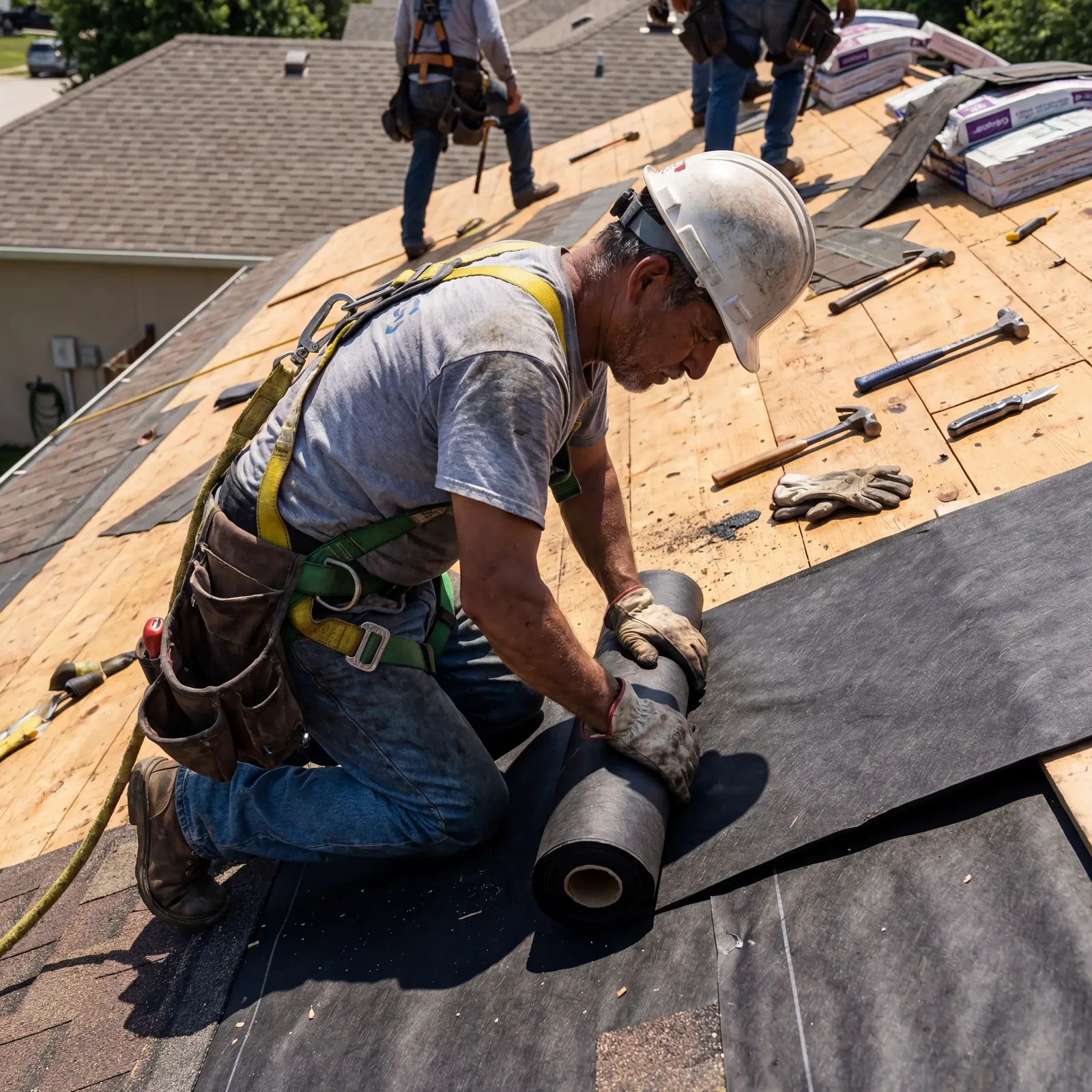
For active water entry, emergency roof repair can limit continued exposure while staff protect interiors. A targeted correction may be suitable for an isolated detail. When larger areas are affected, review replacement planning alongside the renovation calendar and equipment needs. A maintenance visit can monitor drains and repaired transitions between larger projects.
Keep the Roof History with the Property
The closeout should identify roof zone, material installed, photos, testing, and repair limits. Preserve unresolved items and inaccessible areas in the same record rather than leaving them only in an email. When guest-room renovations, kitchen upgrades, or mechanical replacements add penetrations, update the roof plan and work history. This makes it easier for the next chief engineer to tell whether a leak is new or a return at a known transition.
Properties that include banquet kitchens or restaurant tenants can also coordinate exhaust access with a retail and restaurant roof program, while keeping the hotel roof map and room reports separate. That distinction matters when a shared service area carries different equipment or maintenance responsibility. A single property schedule may help organize a visit, but each roof area still needs a clear owner contact, access route, and list of open repairs. Record which items are temporary and which have a funded permanent scope, especially before scheduling a roof opening above an occupied guest wing.
Lancaster's normal annual precipitation is modest, with most precipitation arriving from November through March at the William J. Fox Field station. Before that period, facilities staff can review open drain and flashing items. A property in Amargosa Creek may sit near medical and retail uses, while the Antelope Valley's hospitality settings also connect to nearby regional activity. The inspection remains specific to each roof and its immediate access conditions.
Questions from Hospitality Operators
Guest comfort and roof condition have to be managed together, especially when a property remains open. These answers focus on the information that lets facilities teams choose a safe and practical work window.
Commercial Roofing Questions
Can roof repairs happen while guests are staying below?
They can when the work zone, room access, protection, noise, and material requirements can be coordinated with hotel operations. Identify the exact guest or service area and set a contact before work starts.
What should an engineer share about a recurring room leak?
Provide the room or corridor, dates, weather, HVAC status, ceiling photos, and prior repairs. That record helps compare the affected space with roof transitions above and distinguish a recurring roof path from another building system.
How should a hotel handle kitchen exhaust residue on the roof?
Inspect where residue lands and how it affects the membrane or flashing. Cleaning and repair preparation should suit the roof material, and kitchen service changes should be coordinated with the facilities contact.
When is a temporary repair enough?
It can be a reasonable immediate measure when conditions require weather protection before a permanent scope is ready. The record should say what the temporary work covers, how it will be checked, and what permanent decision remains.
Can several additions share one roof warranty or maintenance plan?
A portfolio schedule can coordinate visits, but each addition needs its own assembly, detail, access, and warranty record. Confirm the documents held for that section before planning a repair.
What if a leak appears after a room renovation?
Compare the renovation work, new penetrations, and any ceiling or HVAC changes with the roof history. The investigation should include the roof and interior building systems before assigning the condition to one trade.